
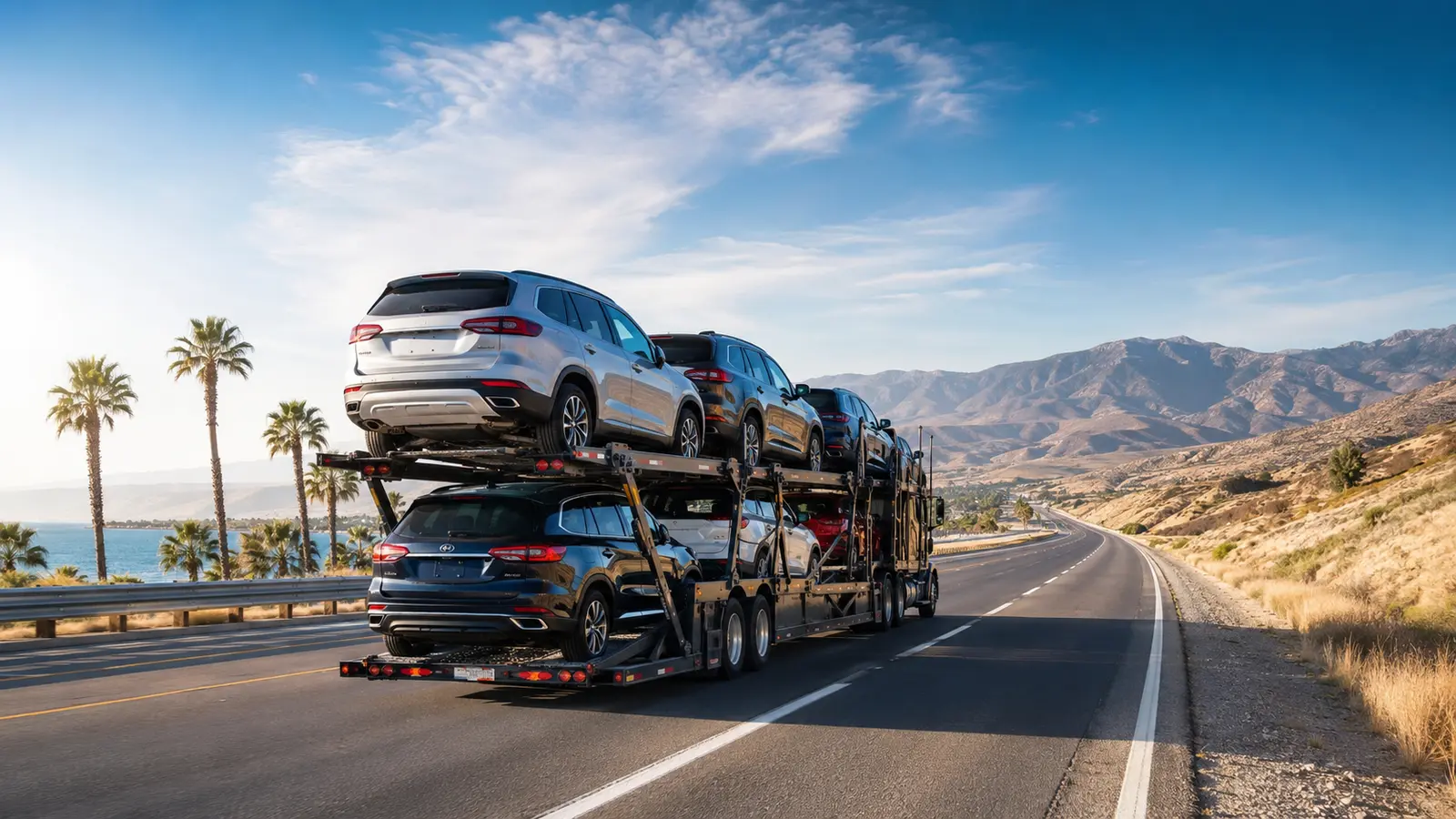
A practical guide to pricing factors, scheduling, carrier access, open and enclosed transport, inspection and delivery for vehicles moving from Florida to California.
Read customer reviews on Facebook →Florida to California car shipping connects two of the country’s largest vehicle markets, but a successful shipment depends on more than choosing two states on a map. Miami to Los Angeles behaves differently from Jacksonville to Sacramento. A running sedan can use more equipment than a lifted pickup, while a low-clearance sports car may require special loading or an enclosed trailer. Season, fuel conditions, traffic, weather and the number of carriers already moving through each city all affect the plan. The most useful quote therefore starts with precise information rather than a broad state-to-state average.
NIKI Auto Transport arranges transportation with independently operated motor carriers. The broker’s role is to understand the shipment, communicate it accurately, identify an appropriate carrier and keep the customer informed as the move develops. The assigned motor carrier performs the physical pickup, transportation and delivery. Keeping those roles clear helps you know who issues the carrier paperwork, who completes the vehicle inspection and which written terms apply during transit.
This guide explains the route from a planning perspective. It covers how origin and destination access shape price, why a pickup window matters, when open or enclosed equipment makes sense, what to remove from the vehicle, how the bill of lading protects both parties and which questions to ask before accepting an assignment. It also links to NIKI’s detailed service pages so you can move from general research to a quote based on your actual Florida and California addresses.
How Florida-to-California car shipping works
The basic process is simple: submit the vehicle and route details, review the proposed terms, allow the broker to coordinate an appropriate motor carrier, meet the carrier for the origin inspection and receive the vehicle after a destination inspection. The operational details matter because this is a coast-to-coast lane. The carrier must fit your vehicle into a multi-stop route while observing driving-hour rules, weight limits, safe loading order and access restrictions.
Door-to-door means the closest safe, legal access point
Door-to-door transport usually means the carrier attempts pickup and delivery at the addresses you provide. It does not mean a large auto transporter can enter every residential street, gated community, steep driveway or downtown loading zone. Low branches, tight turns, parked cars and local truck restrictions may require a nearby meeting point such as a wide commercial lot. Agreeing on that point before the truck arrives prevents last-minute confusion and protects landscaping, vehicles and overhead structures.
Florida high-rise communities and coastal neighborhoods can be congested, while parts of Los Angeles, San Francisco and other California cities can limit commercial access. Give the coordinator gate instructions, parking restrictions and contact details early. If either end is an auction, dealership, military installation or port-related facility, provide its hours and release procedure as well.
- Confirm exact pickup and delivery ZIP codes
- Disclose gates, height limits and steep approaches
- Provide a reachable adult contact at both ends
- Use a safe nearby lot when residential access is limited
The broker and assigned carrier have different jobs
An auto transport broker does not simply hand out a truck number. A useful broker collects the shipping facts, explains service options, communicates special requirements, seeks a registered carrier for the lane and relays pickup and delivery updates. The assigned carrier supplies the truck and driver, conducts the inspections, transports the vehicle and issues the carrier’s bill of lading. Read documents from both entities and keep copies.
FMCSA advises consumers to distinguish brokers from motor carriers and verify registration. That distinction is especially important on a long route, where several conversations may occur before pickup. Ask who is contacting you, which company will physically transport the vehicle and when carrier information will be provided. Do not assume a logo in an advertisement is the name on the truck.
Florida and California city pairs change the plan
Large metropolitan areas usually provide more recurring freight than remote points, but congestion and truck access can offset that advantage. A route near established interstates may be easier to combine with other vehicles. A rural origin far from the carrier’s path adds unpaid repositioning miles, so the carrier may need a stronger rate or a more flexible schedule.
Florida origins: South Florida, Central Florida and North Florida
Miami, Fort Lauderdale and West Palm Beach create significant vehicle volume, yet South Florida is a long peninsula. A carrier collecting there must travel south before turning back toward the national highway network. Orlando and Tampa also have strong population and auction activity, but they approach the westbound route from different corridors. Jacksonville can be attractive for a carrier already moving along I-10, while Naples, the Keys and smaller coastal communities may require extra planning.
Do not choose a false city simply to obtain a lower preliminary number. The carrier still needs the actual pickup point. If you can genuinely meet at an accessible metro-area location, tell the broker before a carrier is assigned and document the agreed address. A flexible handoff can help, but only when it is safe and practical for you.
- Miami–Fort Lauderdale–West Palm Beach
- Orlando and the I-4 corridor
- Tampa Bay and Gulf Coast origins
- Jacksonville and North Florida
- Rural Panhandle or Keys pickups
California destinations: Southern California, Bay Area and inland markets
Los Angeles, Orange County, Riverside, San Bernardino and San Diego are major Southern California markets, but a carrier’s final approach may involve heavy traffic and restricted streets. Bay Area deliveries can involve bridges, hills and dense neighborhoods. Sacramento and Central Valley cities often provide different routing possibilities, while far-northern or mountain destinations can add distance away from the carrier’s next load.
California is not one delivery zone. A quote to San Diego should not be treated as interchangeable with a quote to San Francisco, Sacramento or Redding. If your final address is difficult for a large truck, propose a commercial meeting location near the interstate. Make sure the person receiving the car understands the plan and can inspect it in daylight.
| Route example | Planning consideration | Useful flexibility |
|---|---|---|
| Miami to Los Angeles | Long peninsula pickup plus a major coast-to-coast lane | Wide pickup window and accessible metro handoff |
| Orlando to San Diego | Strong metro origin with a destination south of Los Angeles | Coordinate around traffic and legal truck access |
| Jacksonville to Sacramento | North Florida origin may connect efficiently with I-10 | Be open to a nearby commercial pickup point |
| Tampa to San Francisco Bay Area | Gulf Coast start and dense destination streets | Confirm bridge, hill and neighborhood access |
What affects the cost to ship a car from Florida to California?
There is no responsible one-price answer for every Florida-to-California shipment. The amount a carrier will accept reflects the work required at that moment: route miles, pickup and delivery access, current vehicle volume, fuel, trailer space, season and the characteristics of the vehicle. Online averages are useful only as context; they are not a substitute for a live route-specific quote.
Vehicle size, condition and equipment choice
A compact sedan occupies less deck space and adds less weight than a full-size SUV, heavy pickup or modified vehicle. Lift kits, roof racks, oversize tires and added equipment can affect safe loading and the carrier’s total capacity. An inoperable vehicle may require a winch and must still roll, steer and brake unless a different arrangement is documented. A vehicle with locked wheels, missing tires or severe damage may need specialized equipment rather than standard open transport.
Open transport is commonly selected for everyday vehicles because equipment is widely available and several vehicles can share the trip. Enclosed transport usually costs more because the trailer carries fewer vehicles and offers a different loading environment. It can be appropriate for valuable, rare, low-clearance or especially sensitive vehicles. Choose based on the vehicle and risk tolerance, not on a blanket claim that one option is always best.
- Year, make and model
- Accurate height, weight and modifications
- Running or non-running condition
- Open or enclosed equipment
- Special loading needs
Timing, demand and address flexibility
A narrow pickup requirement can reduce the number of carriers able to help, especially when the truck must cross the country and coordinate several other stops. More flexibility gives the broker a larger pool of possible routes. Seasonal moves, major holidays, severe weather and sudden regional demand can also change the market. California fuel and traffic conditions, Gulf storms or closures along western interstates may affect operations.
A very low offer can remain unaccepted if it does not reflect current carrier conditions. A high quote is not automatically better either. Ask what is included, whether the amount is an estimate, when the carrier portion is due and which events could change the arrangement. Compare written scope and communication, not only a headline price.
Pickup windows and realistic transit planning
Customers often ask for the exact day and hour the car will arrive before a carrier has even accepted the shipment. Auto transport does not operate like a parcel network with fixed terminals and daily scans. The truck’s progress depends on earlier pickups, inspections, loading order, traffic, weather, required rest and delivery access. Good planning uses windows and communication checkpoints.
Separate booking lead time, pickup window and transit time
Booking lead time is the period before your first acceptable pickup date. The pickup window is the range of dates during which the vehicle can be released. Transit time begins after the vehicle is loaded; it does not include the days spent arranging a carrier. Keeping these periods separate prevents a common misunderstanding in which a customer interprets an initial planning date as a guaranteed truck arrival.
On a Florida-to-California lane, build buffer around flights, lease deadlines, closings and work start dates. Do not leave your only keys with an unavailable person or schedule a delivery for the same hour you land. A trusted adult can often release or receive the vehicle if that person has the required identification, keys, payment instructions and authority.
- Book before the car becomes urgent
- Offer more than one acceptable pickup day
- Keep both contacts reachable
- Leave buffer around travel and housing dates
What can change the timeline?
Severe weather, wildfires, hurricanes, snow in mountain corridors, traffic incidents, mechanical problems and legally required driver rest can all affect a long trip. So can a previous customer who is unavailable at a stop. These possibilities do not mean the shipment lacks a plan; they mean the plan must account for real highway operations.
Ask how updates will be communicated and when the assigned carrier expects to contact each party. The driver may provide a more useful arrival range as the truck gets closer. Keep the delivery location flexible enough to accommodate a large vehicle and inspect in good light whenever possible.
Open versus enclosed transport on this route
Both open and enclosed carriers can move vehicles safely when the equipment, loading method and carrier match the shipment. The decision is about exposure, availability, loading requirements and budget. It is not a substitute for reviewing the assigned carrier’s terms or documenting the vehicle’s condition.
When open transport is a practical fit
Open carriers are the familiar multi-level trucks seen on interstates and near dealerships. They generally offer broader availability and cost efficiency for standard sedans, SUVs, pickups and operable everyday vehicles. The vehicle is exposed to ordinary road and weather conditions during transit, much as it would be while driven, though it is not accumulating driving mileage.
Remove loose accessories, close the windows and disclose any fluid leak or mechanical issue. Do not place a cover on the vehicle; a loose cover can damage the finish and create a hazard. Ask about personal-item rules rather than assuming the trunk can be used as a moving container.
When enclosed transport deserves consideration
Enclosed transport reduces direct exposure and may offer lift-gate or low-angle loading depending on the trailer. Owners often consider it for collector cars, luxury and exotic vehicles, very low ground clearance, fresh restoration work or a vehicle whose replacement or repair would be unusually difficult. Equipment features vary, so disclose clearance, tire condition and dimensions before assignment.
Enclosed service can require more planning because fewer enclosed trucks serve a given lane. Ask whether the proposed trailer and loading method fit the car. The word “enclosed” alone does not answer questions about lift gates, soft straps, upper-deck placement or carrier limits.
- Standard open carrier
- Enclosed multi-car trailer
- Lift-gate or low-angle loading when available
- Accurate clearance and modification disclosure
| Factor | Open transport | Enclosed transport |
|---|---|---|
| Typical use | Daily drivers and standard vehicles | Collector, luxury, exotic or sensitive vehicles |
| Exposure | Open to normal road and weather conditions | Reduced direct exposure inside trailer |
| Availability | Generally broader | More limited on some lanes |
| Cost | Usually lower | Usually higher |
How to prepare the vehicle for coast-to-coast shipping
Preparation protects the inspection process and helps the carrier load safely. Complete it before the pickup window begins, not while the truck waits. If someone else will release the vehicle, give that person the checklist and confirm that the car has enough power and fuel to be moved.
Mechanical and access preparation
The vehicle should have a charged battery, properly inflated tires, functioning steering and brakes and enough fuel for loading and unloading—often about one-quarter tank unless the carrier instructs otherwise. Report warning lights, fluid leaks, starting procedures, disabled alarms and any tendency to overheat. A carrier cannot safely plan for a non-running car if it was presented as operable.
Provide working keys for the ignition, doors and any locking wheel or battery system the carrier must use. Remove toll tags or deactivate them so the account is not charged while the vehicle rides on the transporter. Retract or remove loose antennas, racks and aftermarket accessories when possible.
- Wash enough to see existing marks
- Photograph all sides and close details
- Check battery, tires, steering and brakes
- Reduce fuel to the instructed level
- Remove loose and prohibited items
- Provide keys and special operating notes
Photos and the origin inspection
Take time-stamped photos in good light before the carrier arrives. Include wide views of every side, roof and glass when visible, wheels, interior areas relevant to the move and close images of existing damage. The carrier then completes an origin condition report, usually on the bill of lading. Walk around the car with the driver and make sure the report is legible before signing.
Photos support the written inspection; they do not replace it. Save the booking documents, carrier information, bill of lading, payment records and communications together. The same disciplined process should be repeated at delivery before the vehicle is driven away.
Delivery, inspection and payment
The receiving contact should be prepared before the carrier reaches California. Confirm the proposed location, know who will be present, understand the carrier’s accepted payment method and have the origin inspection available for comparison. If the truck cannot enter the address, choose the alternative meeting point before arrival.
Inspect before signing the delivery record
Examine the car in daylight or under strong lighting. Compare the body, glass, wheels and visible areas with the origin report and your photos. Do not rush because another vehicle is waiting. If you notice a new issue, write a specific exception on the delivery bill of lading before signing and take clear photographs. A generic note made hours later is less useful than contemporaneous documentation.
If delivery occurs in poor light, photograph the vehicle immediately and note the conditions. Follow the carrier’s written claim instructions and deadlines. Do not repair, discard parts or alter the evidence before the insurer or carrier explains the next step, except when an emergency requires action to prevent further damage.
- Compare with origin report
- Check all accessible sides and glass
- Photograph any new concern
- Write exceptions before signing
- Keep a copy of the final bill of lading
Understand who is paid and when
Broker and carrier payment arrangements vary. Your order documents should state the amount, timing and accepted methods. The person receiving the vehicle should know whether a balance is due and should not assume the driver can accept every form of payment. Ask before pickup, not when the truck is waiting at delivery.
Never send unexpected money to a party you cannot identify merely because a caller creates urgency. Confirm changes through the contact information and written order you already have. If the carrier, payment method or amount differs from the written arrangement, pause and contact the broker.
Mistakes that make a long-distance shipment harder
Most preventable problems begin with missing information or unrealistic assumptions. Accurate details let the broker and carrier plan the vehicle correctly; timely communication keeps the multi-stop route moving. The following issues can delay assignment, create additional cost or make the pickup unsafe.
Information and scheduling mistakes
Common errors include listing the wrong model, failing to disclose a lift kit, describing a non-running vehicle as operable, using a ZIP code that is not the real pickup location and waiting until the day before a flight to arrange transport. Another mistake is making one person the only contact when that person cannot answer during the pickup window.
Use a written checklist and review the order confirmation. If the vehicle, address or schedule changes, tell the broker before assignment. A change that seems minor to the customer can affect trailer clearance, route mileage, loading order or the carrier’s ability to serve the stop.
- Do not hide modifications or inoperability
- Do not promise access you have not checked
- Do not treat estimates as guaranteed appointments
- Do not pack the vehicle without approval
- Do not sign an inspection you did not review
Price-only decisions
Choosing only the lowest preliminary number can backfire if the quote does not reflect the actual route or current carrier market. A useful comparison looks at the scope, entity roles, cancellation terms, payment timing, equipment, communication and what happens if conditions change. Verify the companies involved through official records.
A broker should be able to explain why the exact cities, vehicle condition and dates matter. Be cautious with absolute promises that ignore traffic, weather and carrier acceptance. Reliable planning is specific, documented and realistic.
Plan your shipment with route-specific details
For a useful Florida-to-California estimate, provide the real pickup and delivery ZIP codes, vehicle year/make/model, running condition, modifications, preferred date range and whether you are considering open or enclosed transport.
Florida-to-California car shipping FAQs
These answers cover common planning questions. Your assigned motor carrier’s written terms, operating requirements and pickup instructions control the actual shipment.
How far in advance should I arrange Florida-to-California car shipping?
Begin before the vehicle becomes urgent. More lead time and a wider pickup window give the broker more opportunity to identify a carrier whose route, equipment and available space fit the shipment. Very early inquiries remain estimates because market conditions can change.
Can I request one exact pickup date?
You can state your requirement, but an exact date is not automatically guaranteed. Ask whether a guaranteed or expedited option is available and get any commitment in writing. Standard auto transport is usually planned around a pickup window.
How long does coast-to-coast vehicle transit take?
Transit depends on the exact cities, route, weather, traffic, required rest, earlier stops and equipment. The transit estimate starts after loading and is separate from the time needed to assign a carrier. Build buffer around travel and work dates.
Is open transport safe for a regular car?
Open transport is commonly used for everyday vehicles. The vehicle remains exposed to normal road and weather conditions, so document its condition and review the carrier’s terms. Enclosed transport is available when reduced exposure or special loading is a priority.
Should I choose enclosed shipping for a luxury or classic car?
It is worth considering for valuable, rare, low-clearance or sensitive vehicles. Confirm the trailer type and loading method rather than assuming every enclosed carrier has the same equipment. Compare the added protection and availability with the added cost.
Can I put personal belongings in the vehicle?
Do not assume so. Carrier rules, weight limits and insurance treatment of personal property vary, and prohibited items must never be packed. Ask for written approval and limits before placing anything in the car.
Does the carrier come directly to my home?
The carrier attempts service as close to the requested address as it can safely and legally reach. Gated communities, narrow streets, low trees, steep grades and local restrictions may require a nearby commercial meeting point.
What if my Florida pickup is in the Keys or a rural area?
Remote points can require extra repositioning and may have fewer carrier routes. An accessible alternative location and a flexible window may help if you can genuinely use them. Always quote the actual plan, not a false metro address.
Can someone else release or receive my car?
Usually an authorized adult can help, subject to the written order and carrier instructions. Give that person the keys, inspection guidance, identification, payment details and authority needed to sign the bill of lading.
What happens if the vehicle does not run?
Disclose the condition before assignment. A non-running vehicle may need a winch and must often roll, steer and brake. Locked wheels, missing tires, severe damage or low clearance can require specialized equipment and different pricing.
How should I document the vehicle?
Take clear time-stamped photos before pickup, participate in the origin inspection and save the bill of lading. At delivery, compare the car before signing and note any new issue specifically on the delivery record.
Is the quoted price guaranteed?
That depends on the written terms. A preliminary estimate is not the same as a guaranteed price. Ask what is included, what information the quote assumes and which changes—such as address, vehicle condition or dates—could affect it.
Authoritative resources used for this guide
- FMCSA automobile transporter consumer advisory — broker-versus-carrier roles, registration checks and consumer precautions
- FMCSA licensing and insurance public search — official company registration and authority lookup
External requirements and marketplace procedures can change. Check the linked official source and your shipment documents for the current rule that applies to your vehicle.
Continue planning your vehicle shipment
NIKI Auto Transport is an FMCSA-authorized auto transport broker that arranges vehicle transportation with independently operated motor carriers. NIKI is not the motor carrier. Pickup and delivery dates are estimates unless a written agreement states otherwise.