Restored classics
Preserve careful presentation with covered transport and documented loading requirements.

Collector vehicle logistics
Coordinate enclosed or open transport for restored, original, collectible, and project vehicles. NIKI helps match the car’s clearance, operability, value, and handling needs with an appropriate motor carrier.
Plan with confidence
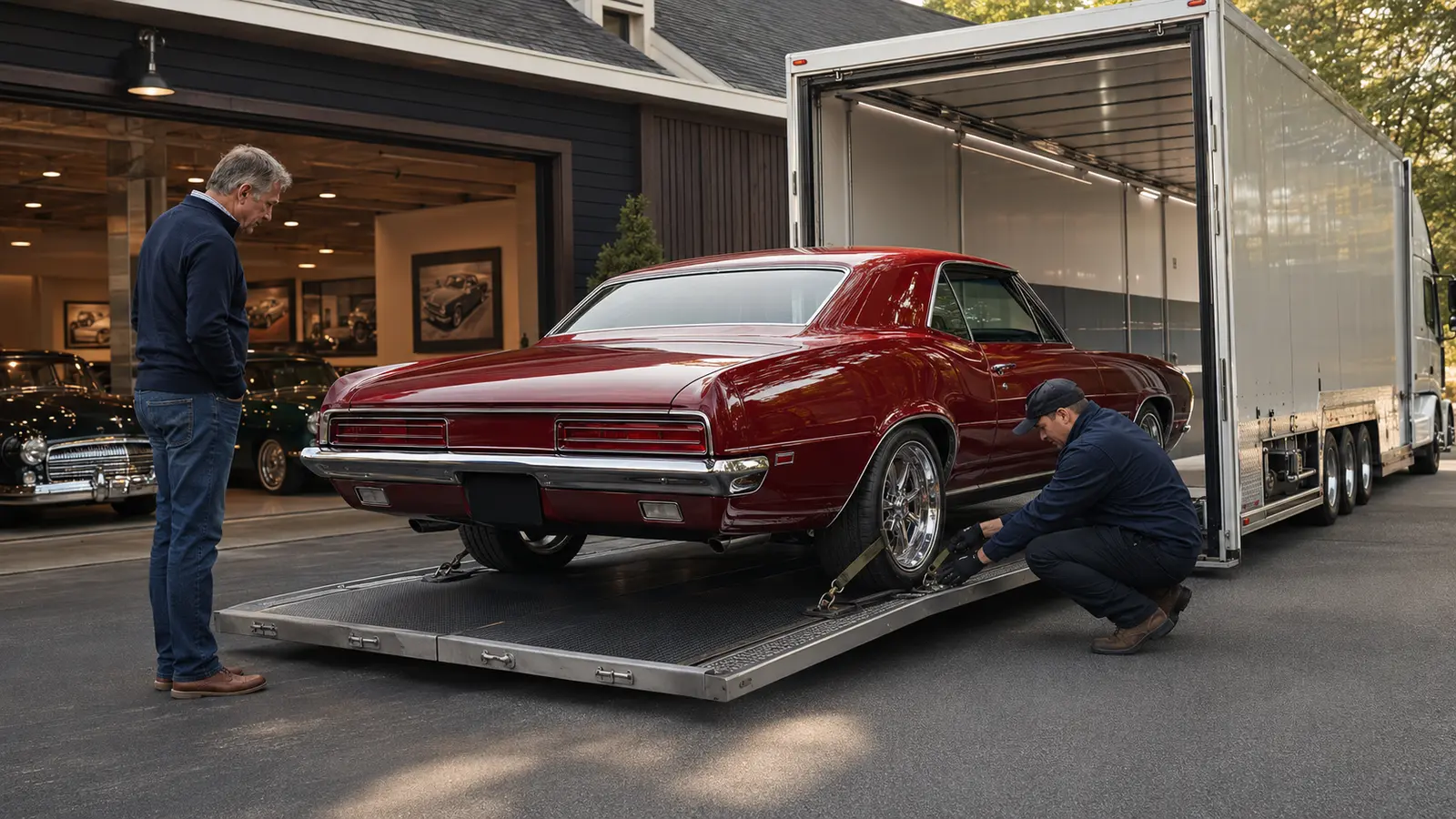
A classic car can be a restored showpiece, a family heirloom, an original survivor, or a non-running project. Those differences change the equipment and experience the shipment requires. NIKI coordinates classic car shipping as a broker, using the vehicle’s specifications and route to seek an appropriate licensed motor carrier.
Enclosed transport is often the preferred option because it reduces exposure to weather, road debris, and public handling. It is not automatically the correct answer for every project or budget, however. A running, standard-clearance classic may travel on an open carrier, while a low, fragile, modified, or high-value vehicle may call for enclosed transport and specialized loading.
Accuracy protects the shipment. Provide recent photos, running condition, braking and steering status, exact ground clearance, wheelbase, dimensions, fluid leaks, modifications, spare parts, and the pickup environment. A carrier selected without those facts may arrive with unsuitable equipment.
Preserve careful presentation with covered transport and documented loading requirements.
Plan around delicate finishes, aged seals, and vehicle-specific operating instructions.
Disclose rolling, steering, braking, winch, and loose-parts needs before carrier assignment.
Coordinate seller, auction, or buyer contacts with release documents and inspection records.
From quote to delivery
Share VIN, dimensions, clearance, operability, modifications, photos, and the pickup and delivery environments.
Review open versus enclosed service, ramp angle, lift-gate needs, winch needs, and trailer access.
Photograph the car and review paint, glass, trim, wheels, interior notes, and loose components on the bill of lading.
Use good light, compare the delivery condition with pickup records, and document any exception before signing.
Compare your options
Choose according to the vehicle’s condition, clearance, value, and exposure tolerance. Ask what equipment the assigned carrier will actually use.
| Transport | Advantages | Questions to ask |
|---|---|---|
| Enclosed carrier | Covered trailer; reduced exposure to road debris and weather; often selected for finished collector vehicles | Is the trailer hard- or soft-sided? Does it have a hydraulic lift gate, drip pans, wheel nets, and suitable ramp angles? |
| Open carrier | Often more economical and widely available; may suit project cars or standard-clearance classics | Can the vehicle load safely on the available ramps? How will a non-running car be handled? |
| Specialized inoperable service | Winch-equipped loading for vehicles that cannot move under their own power | Does the vehicle roll, steer, and brake? Are tires inflated, wheels unlocked, and loose pieces secured? |
Transparent planning
Price depends on more than stated value. The equipment, route, vehicle condition, and access requirements determine which carriers can safely accept the job.
Enclosed capacity, lift gates, winches, soft straps, and special ramp systems affect availability.
Low splitters, exhausts, running boards, and long wheelbases can require shallow loading angles.
A car that does not start, steer, brake, or roll requires disclosure and appropriate equipment.
Museums, auctions, residences, workshops, and rural properties offer different truck access.
Auction deadlines, event dates, and short notice can restrict the carrier pool.
Popular transport lanes may have more carrier frequency than remote collector-car routes.
Before pickup
Document originality and secure fragile components without altering the car unnecessarily.
A vehicle can look stock and still have a vulnerable exhaust, lowered suspension, long overhang, or delicate front valance. Measure rather than estimate. If a hydraulic lift gate or extended race ramps are required, include that requirement before booking so NIKI can search for compatible equipment through enclosed car transport options.
Tell us whether the car rolls freely, steers, holds air in the tires, and can brake. A seized wheel, locked steering column, missing axle, or active fluid leak is different from a car that simply needs a battery. The loading surface and pickup access also matter; a winch cannot solve every recovery situation.
A classic’s patina, lacquer checking, stone chips, repaired panels, and aged trim can be hard to capture quickly. Clean the car enough for inspection and take your own time-stamped photos. At pickup, review the carrier’s bill of lading. At delivery, inspect before signing, especially if the car arrives after dark or in bad weather.
Good to know
Ask for the assigned motor carrier’s current cargo insurance certificate and written terms. Coverage, exclusions, valuation methods, deductibles, and claim procedures vary. Your collector policy may also have transport requirements, so confirm those with your insurer before the handoff.
Use exact locations and vehicle details for the most useful quote. We will explain the next step and the information still needed before carrier assignment.
See recent customer comments on our public Facebook reviews page before you decide.
Keep planning
Use these focused guides to compare services and prepare the next part of your move.
Questions answered
Clear answers for planning, pickup, carrier assignment, and delivery.
No, but many owners choose it for reduced weather and road exposure. The decision depends on the car’s finish, value, rarity, clearance, operability, route, and budget.
A lift gate raises or lowers the vehicle on a level platform rather than driving it up steep ramps. It can be helpful for very low-clearance or delicate vehicles, but it must be requested and confirmed.
Often, yes, when its exact condition is disclosed. Explain whether it rolls, steers, brakes, has inflated tires, leaks fluids, or has locked or missing components so suitable equipment can be sourced.
Measure the lowest fixed point under the car and note long front or rear overhangs. Include spoilers, exhaust, suspension, and side-pipe details, plus clear photos from low angles.
Loading and securement methods vary by trailer. Ask the assigned carrier how the vehicle will be secured and communicate any wheel, tire, suspension, or body restrictions before pickup.
Do not make assumptions. Tell the carrier about a master cutoff, alarm, fragile electrical system, or special starting process and follow the agreed loading instructions.
Loose parts can shift or cause damage and may not be covered. Disclose any parts before booking, package only what is expressly permitted, and keep valuables and irreplaceable components out.
Provide the release number, VIN, lot location, removal deadline, operating status, auction hours, and authorized contact. Confirm that storage fees and gate requirements are handled before dispatch.
Disclose the type and severity. Some enclosed carriers use drip pans, but an unsafe or uncontrolled leak may prevent loading. Repair or contain it according to carrier requirements.
Transport times are estimates. Traffic, weather, legal driving-hour limits, loading, and mechanical issues can alter the schedule. Plan event or auction deadlines with reasonable buffer.
Compare all panels, paint, glass, trim, wheels, tires, and visible underside areas with your pickup photos and bill of lading. Record any exception before signing.
Provide the exact route, year/make/model, dimensions, operability, clearance, current photos, trailer and equipment needs, access limitations, and date range.
Start with accurate details
Tell us where the vehicle is, where it is going, when it will be available, and anything that affects loading. NIKI will coordinate the next step with clarity.
Quotes and timing depend on route, vehicle, equipment, access, carrier availability, and current market conditions. NIKI is an auto transport broker; the assigned motor carrier performs transport.