Exotic and supercars
Plan around front splitters, carbon components, lift systems, wide tires, and long overhangs.

High-value vehicle logistics
Plan covered transport for low-clearance, high-performance, rare, and high-value vehicles. NIKI coordinates equipment, access, inspection, and carrier documentation around the exact car.
Plan with confidence
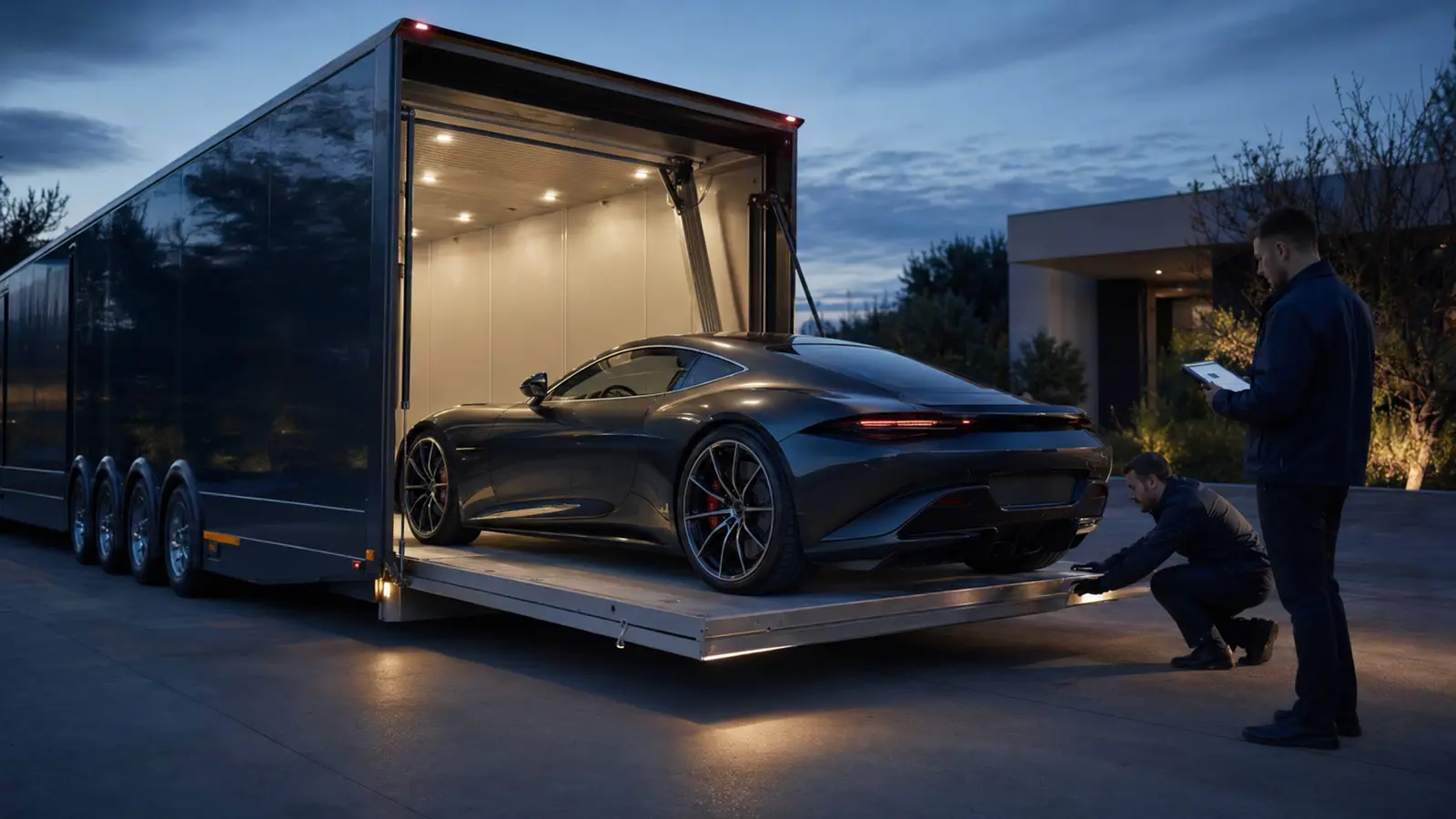
Luxury and exotic cars combine high value with unusual loading requirements: very low noses, long overhangs, wide tires, carbon-fiber aero, delicate wheels, adaptive suspensions, and complex security systems. A carrier must know those details before arriving. NIKI uses them to coordinate an appropriate motor carrier rather than treating the vehicle like a standard sedan.
Enclosed transport is the common choice for reduced exposure to road debris, weather, and public access. Equipment still varies inside the enclosed category. Some trailers use hydraulic lift gates, some use extended ramps, and securement approaches differ. Ask what the assigned trailer will provide and confirm it matches the vehicle.
No marketing phrase replaces documentation. Take detailed photos, obtain the assigned carrier’s cargo insurance information, read applicable exclusions and deductibles, and review the bill of lading at both handoffs. Our role as a broker is to arrange and coordinate; the motor carrier operates the truck and provides the coverage applicable to transport.
Plan around front splitters, carbon components, lift systems, wide tires, and long overhangs.
Coordinate high-value daily vehicles with covered options and residence access.
Document mileage, finishes, accessories, and vehicle-specific starting instructions.
Align showroom, service center, auction, storage, or event contacts at both ends.
From quote to delivery
Share VIN, exact trim, dimensions, ground clearance, wheel width, modifications, operability, photos, and special controls.
Confirm enclosed trailer type, lift gate or ramp approach, winch limitations, securement, and pickup access.
Photograph bodywork, glass, carbon fiber, wheels, tires, interior notes, odometer, and existing marks.
At delivery, compare the vehicle with pickup records and document any concern before signing the bill of lading.
Compare your options
Ask about the actual equipment being assigned. The label “enclosed” describes coverage from outside exposure, but not every loading or securement feature.
| Equipment | Why it matters | Confirm before pickup |
|---|---|---|
| Hydraulic lift gate | Moves the car vertically on a level platform, reducing ramp-angle concerns for very low vehicles | Platform dimensions, vehicle weight capacity, loading approach, and availability on the assigned trailer. |
| Extended or race ramps | Create a shallower loading angle than standard ramps | Lowest ground clearance, wheelbase, front and rear overhang, and whether the car’s lift mode can remain engaged. |
| Wheel-net or tire securement | Can reduce contact with suspension or chassis points when properly configured | Tire width, wheel design, manufacturer restrictions, and the carrier’s planned method. |
| Hard-side or soft-side enclosure | Both reduce normal outside exposure; structure, access, and loading layout differ | Trailer type, interior clearances, drip protection, and how adjacent vehicles are positioned. |
Transparent planning
Specialized equipment and limited enclosed capacity can matter more than mileage alone.
Low, long, wide, or heavy vehicles limit compatible trailer positions and equipment.
Lift-gate, hard-side, single-car, multi-car, and other enclosed options have different availability.
High-rise garages, private roads, gated homes, and dealership docks may require an alternate meeting point.
Events, deliveries, and purchases with narrow windows reduce routing options.
Running status, tire condition, fluid leaks, and security systems affect loading.
Carrier frequency, repositioning mileage, tolls, and seasonal demand influence current pricing.
Before pickup
Use a documented, vehicle-specific handoff instead of relying on general assumptions.
A lift gate can be valuable for very low or long vehicles, but it is not included with every enclosed carrier. Some vehicles can load using extended ramps and a factory lift system; others require a level platform. Disclose measurements and manufacturer instructions early so enclosed transport can be matched to the car.
Wide tires, center-lock wheels, carbon wheels, air suspension, and manufacturer tow-point limits deserve discussion. Ask the assigned carrier to explain the intended securement method. Do not direct a technique that conflicts with the carrier’s equipment or the automaker’s transport guidance; resolve the plan before loading.
Residential pickup is subject to truck access and local rules. For gated estates, towers, showrooms, or secure storage, plan a legal staging area with enough space. Share only the operational information needed for the handoff and remove personal documents, registration copies not required for release, garage remotes, and stored navigation addresses.
Good to know
The assigned carrier’s cargo policy, exclusions, deductibles, limits, and claims process control transport coverage. Confirm that the vehicle and stated use fit those terms, and consider speaking with your own insurer about collector, exotic, or agreed-value policy requirements.
Use exact locations and vehicle details for the most useful quote. We will explain the next step and the information still needed before carrier assignment.
See recent customer comments on our public Facebook reviews page before you decide.
Keep planning
Use these focused guides to compare services and prepare the next part of your move.
Questions answered
Clear answers for planning, pickup, carrier assignment, and delivery.
It is commonly selected because it reduces exposure to normal weather and road debris. Confirm that the specific trailer also has the loading angle, dimensions, and equipment your vehicle needs.
No. Some use lift gates and others use ramps. If a lift gate is required, state that clearly and verify it on the assigned carrier before pickup.
Measure ground clearance and overhang, share low-angle photos, explain factory lift modes, and confirm the loading method. Never assume a standard ramp will fit.
Methods vary. Tell the carrier about tire width, wheel material, center-lock hardware, carbon components, suspension restrictions, and manufacturer guidance so the planned method can be reviewed.
Do not assume that. Obtain the assigned carrier’s insurance information and review limits, exclusions, deductibles, valuation, and claims procedures. Ask your own insurer about any additional requirements.
Follow the manufacturer’s guidance and the assigned carrier’s loading plan. Explain lift, tow, neutral, alarm, battery, and transport-mode procedures before the handoff.
Large auto haulers often cannot enter parking structures or private drives. Plan a flat, legal, accessible meeting point outside restricted or low-clearance areas.
Capture every panel, glass, wheels, tires, carbon components, splitters, diffuser, interior sills, odometer, roof, and existing marks in good light.
Remove loose or valuable accessories unless they are integral to the vehicle and expressly addressed in writing. Cargo coverage may not include personal property or loose items.
Transport timing is estimated because traffic, weather, earlier loads, and driving-hour rules can change. Build buffer days before an event, auction, service appointment, or flight.
NIKI coordinates the order as a broker. The assigned licensed motor carrier supplies the truck, equipment, driver, operating authority, and applicable cargo insurance.
Provide exact route, year/make/model/trim, value context, dimensions, ground clearance, wheel and aero details, running condition, equipment requirements, access constraints, and date range.
Start with accurate details
Tell us where the vehicle is, where it is going, when it will be available, and anything that affects loading. NIKI will coordinate the next step with clarity.
Quotes and timing depend on route, vehicle, equipment, access, carrier availability, and current market conditions. NIKI is an auto transport broker; the assigned motor carrier performs transport.