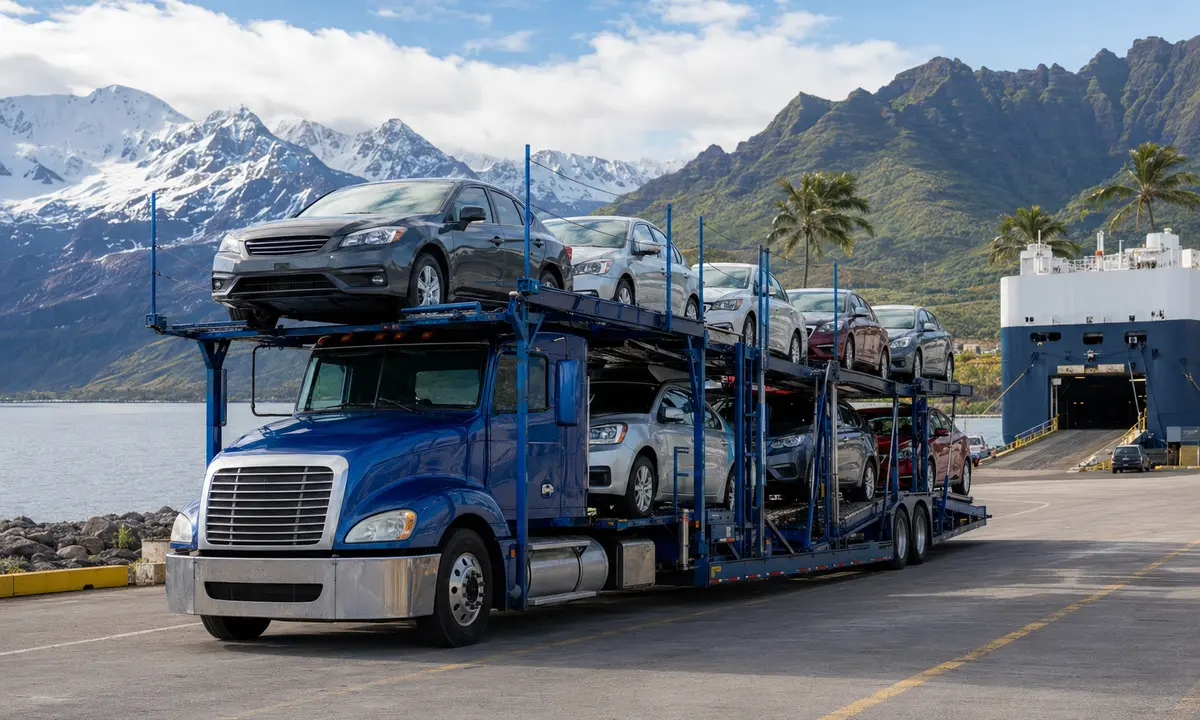
Pickup Anywhere in Alaska. Delivery Anywhere in Hawaii.
NIKI coordinates open and enclosed vehicle shipping from Alaska to Hawaii through licensed and insured motor carriers. Get a quote based on the exact ZIP codes, vehicle, condition and first available date.
Route-specific vehicle shipping from Alaska to Hawaii.
20+YEARS IN BUSINESS
Route overview
Distance, Transit Time and Current Pricing
Plan your Alaska to Hawaii vehicle shipment with broad route guidance, then request a live quote based on exact ZIP codes, vehicle details, condition and first available date.
This route is a multi-stage port-to-port move rather than a continuous highway distance. Planning commonly involves Alaska terminal handling, possible mainland staging and scheduled ocean service to the selected Hawaii port.
Anchorage and Southcentral Alaska handle much of the state's vehicle movement, while Fairbanks, Southeast Alaska and island communities require route-specific planning. Not every city has the same terminal, sailing or door-service options. At the origin, Alaska shipping is different from a standard Lower 48 truck route. Depending on the origin and destination, the plan may combine ground transport, terminal handling and scheduled ocean service. Exact port options and sailings must be confirmed for the requested date.
Delivery planning changes when the shipment reaches Hawaii. Service options vary by island, port and vehicle. Exact origin, destination, dimensions, running condition and ownership documents are required before a reliable plan can be prepared. Ocean carriers commonly require a clean vehicle, limited fuel, no prohibited personal items and specific documents. Current requirements must be confirmed for the selected sailing.
That is why a quote using only two state names can be misleading. A shipment from Anchorage to Honolulu does not require the same carrier miles, access plan or local timing as a move from Ketchikan to Lihue. Full ZIP codes and complete vehicle specifications produce a more useful estimate.
Carrier lanes and exact addresses shape pricing and timing.
Auto Transport Pricing and Transit Planning from Alaska to Hawaii
This shipment includes terminal or ocean-service variables, so it should not be priced like a continuous highway move. Current sailing and port requirements must be confirmed.
01
Distance and exact locations
The mileage and the carrier’s additional travel from an active lane to each address influence the quote from Alaska to Hawaii. Complete ZIP codes are more useful than state names alone.
02
Vehicle size and condition
A sedan, lifted pickup and oversized SUV use different trailer space. An inoperable vehicle may require a winch and must be disclosed before dispatch.
03
Transport method
Open transport is commonly selected for everyday vehicles. Enclosed equipment provides added protection from outside exposure and normally has a higher rate.
04
Timing and market capacity
Seasonal demand, fuel, weather, route direction and available carrier space can change pricing from one week to another.
How much flexibility exists around pickup
Whether the addresses are near active carrier lanes
The trailer and loading equipment required
Seasonal, weather and traffic conditions
NIKI does not publish a made-up guaranteed price for every city pair. A live quote reflects your route, vehicle, dates and current carrier or sailing capacity.
Carrier access is generally strongest around Anchorage, Fairbanks, Wasilla and Honolulu, Hilo, Kahului, but service can be coordinated beyond those markets. Rural pickups, mountain roads, islands, gated communities and dense urban addresses should be identified before dispatch.
Open transport generally provides the broadest carrier availability.Enclosed transport is available for customers seeking added protection.
NIKI Makes Shipping a Car from Alaska to Hawaii Simple
Four clearly defined stages keep the shipment organized.
1
Request a route-specific quote
Provide the pickup and delivery ZIP codes, vehicle year, make and model, running condition, transport preference and first available date. These details allow NIKI to evaluate a realistic shipment from Alaska to Hawaii.
2
Review and schedule the shipment
Confirm the addresses, contact people, timing window and service choice. NIKI coordinates the order through a licensed and insured motor carrier whose equipment fits the vehicle and route.
3
Prepare for pickup and inspection
Clean the exterior, remove loose or valuable items, leave roughly one-quarter tank of fuel, check for leaks and take date-stamped photos. At pickup, the carrier and responsible adult document the vehicle on the bill of lading.
4
Inspect at delivery
Keep the receiving contact available as the truck approaches. Compare the vehicle with the pickup inspection before signing the delivery bill of lading and note any concern while the carrier is present.
Open vs. Enclosed Transport Between Alaska and Hawaii
Choose equipment based on the vehicle and your protection preference, not only on the lowest displayed price.
Open Car Transport
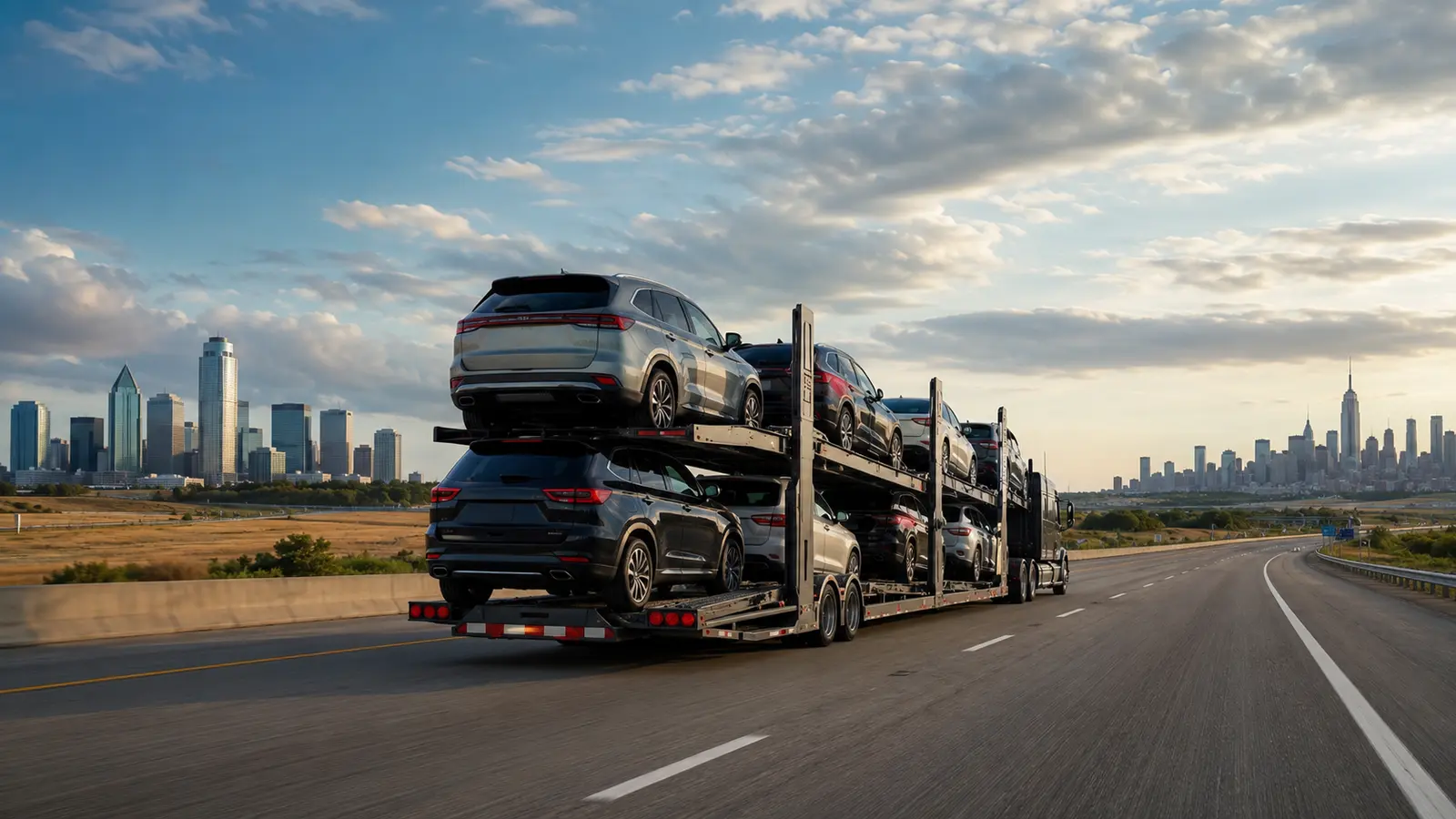
Open carrier shipping is the most widely available option for standard sedans, SUVs, crossovers and pickups. Vehicles share trailer space with other shipments traveling on compatible lanes, which generally makes open transport the practical value choice.
Enclosed auto transport adds a covered trailer around the vehicle. Customers commonly request it for classic, exotic, luxury, restored or low-clearance automobiles when reduced exposure to weather and road debris is a priority.
When a schedule has limited flexibility, NIKI can review faster pickup options based on current carrier capacity. Expedited service affects pricing and still depends on safe equipment and route feasibility.
A non-running vehicle can often be transported when it rolls, steers and brakes and when the assigned carrier has suitable loading equipment. Tell us the actual condition before a quote is finalized.
For Alaska to Hawaii car shipping, open equipment usually offers the largest carrier pool. Enclosed equipment is more specialized. Modified, low-clearance, oversized and inoperable vehicles require precise information before a trailer is selected.
Open carriers expose a vehicle to ordinary weather and road environment, similar to driving it on the highway, while the vehicle remains secured to a purpose-built trailer. Enclosed trailers add walls and a roof around the shipment. Neither option removes the need for pickup and delivery inspections, accurate condition notes and careful loading.
If you are shipping a daily driver, open service is usually the starting point. If the vehicle is rare, restored, especially valuable or sensitive to outside exposure, ask for an enclosed quote and describe ground clearance. Availability varies by direction and season, so compare the complete service rather than assuming both trailers can meet the same pickup date.
Pickup and Delivery Access Across Alaska and Hawaii
At the Alaska end, major routes include port terminals, Alaska Highway connections and the Parks, Glenn and Richardson highway systems. Customers should confirm identification, registration or title requirements, lienholder authorization when applicable, vehicle cleanliness rules and terminal procedures before drop-off. Requirements can vary by ocean carrier and destination.
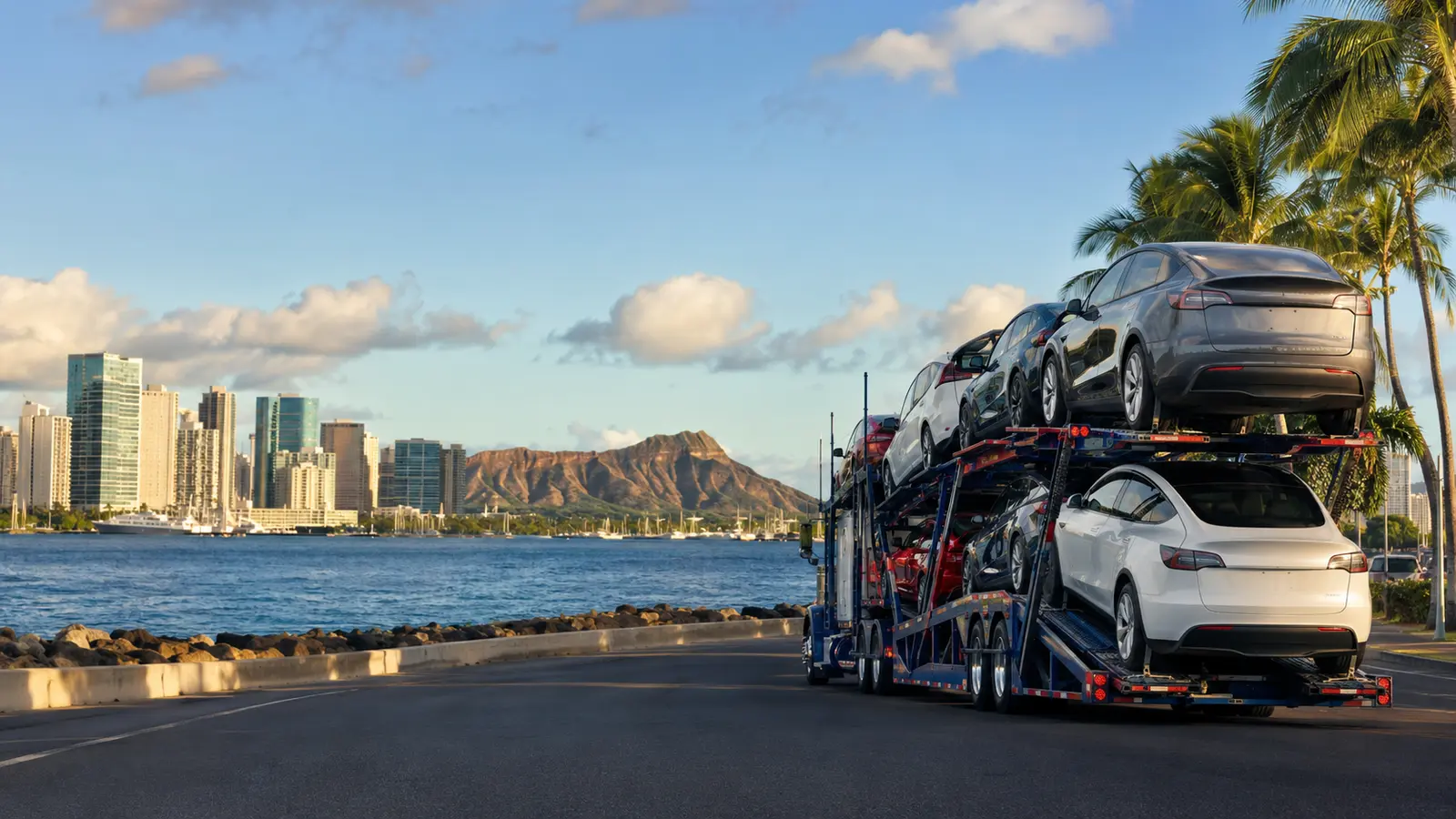
At the Hawaii end, planning may involve designated mainland ports, island terminals and scheduled ocean service. Hawaii shipping requires an ocean segment. The plan may include ground transport to a mainland port, terminal acceptance, sailing and pickup or onward coordination on the destination island.
Door-to-door service means coordination near the provided addresses; it does not mean a carrier must enter a location that is unsafe or legally restricted. Car haulers are long, tall and slow to turn. Low branches, weight restrictions, parked cars, school zones, private security rules and narrow drives can make a nearby commercial location the better choice.
Safe carrier access is confirmed near pickup and delivery.
Seasonal Planning for the Alaska–Hawaii Route
Marine schedules, winter weather, port cutoffs, wildfire conditions and long distances between communities can change timing. Early planning is especially important for remote areas and winter moves.
Sailing schedules, port cutoffs, holiday demand and weather can affect timing. Customers should plan around terminal appointments rather than treating the move like a continuous truck route.
A flexible pickup window gives a coordinator more options to match your vehicle with a carrier already traveling in the correct direction. Very narrow dates, remote addresses, holidays and peak moving seasons can increase the cost because fewer trucks can satisfy the request. When timing is critical, explain the real deadline before booking so expedited capacity can be evaluated honestly.
Ocean-connected shipping requires current terminal rules, documentation and sailing availability. Do not deliver a vehicle to a port until the booking and acceptance instructions are confirmed.
How to Prepare Your Vehicle for Shipping
Good preparation prevents avoidable delays before Alaska-to-Hawaii transport. Wash the exterior enough to make existing marks visible, photograph each side of the vehicle in daylight and save the images. Remove toll tags, loose accessories, valuables and removable roof equipment. Fold mirrors when appropriate, check tire pressure, confirm the battery is secure and disclose leaks or mechanical limitations.
Keep fuel near one-quarter tank unless the assigned carrier or ocean terminal gives a different instruction. Extra fuel adds weight, while too little can make loading difficult. Disable alarms and provide one working key. If the vehicle is modified, lifted, lowered, oversized or non-running, share measurements and condition details before a carrier is assigned.
A responsible adult must normally be available at pickup and delivery to exchange keys and sign inspection documents. That person should understand the vehicle’s starting condition and should not sign the final bill of lading until the delivery inspection is complete. Personal property rules vary by carrier and ocean service; items are generally not treated as insured vehicle cargo, so confirm the written policy rather than assuming belongings are permitted.
Who Ships Vehicles from Alaska to Hawaii?
Customers use this route for household moves, seasonal relocation, military or university changes, online purchases, dealer transfers, inherited vehicles and family assistance. Each situation creates different pickup responsibilities. A dealership may require a buyer number or gate pass, while a private seller needs a confirmed payment and a person available to release the key. A family member receiving the vehicle must be prepared to inspect and sign even if the booking customer is in another state.
Origin markets such as Anchorage, Fairbanks, Wasilla often connect with destination markets including Honolulu, Hilo, Kahului, but a carrier’s actual lane depends on all vehicles loaded on the trailer. A flexible customer may benefit from broader dispatch options, while a fixed-date move may require an expedited search and a different rate. The quote should reflect the real schedule rather than an artificially broad date that will later change.
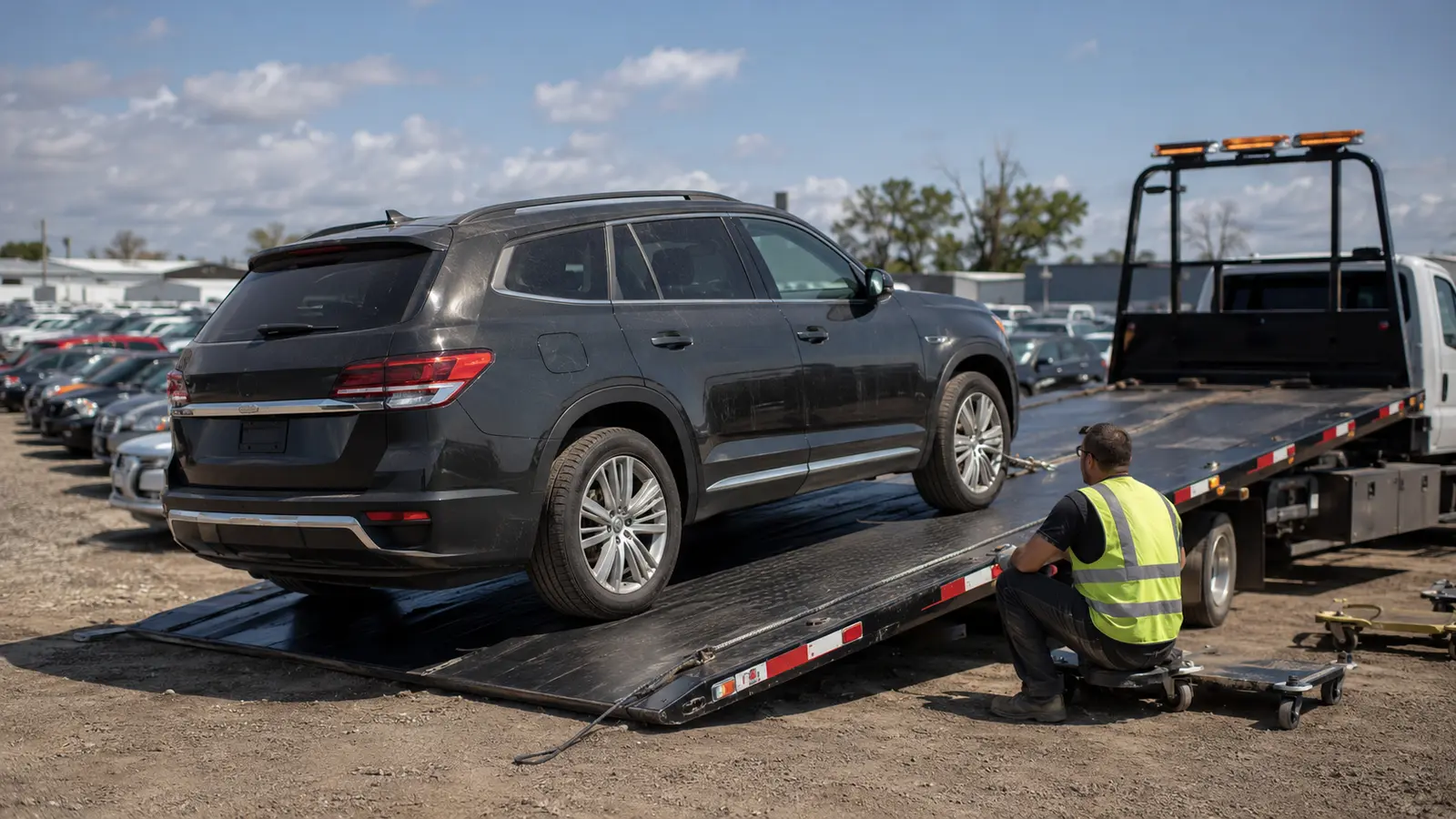
Online and auction purchases require special attention to vehicle condition. Listings may describe a vehicle as running even when it cannot drive safely onto a trailer. Confirm that it starts, rolls, steers and brakes, and ask whether tires are inflated or keys are present. If a winch, forklift or special release appointment is necessary, NIKI and the assigned carrier need that information before pickup.
Dispatch Time Is Different from Transit Time
Transit estimates describe carrier travel after pickup. Dispatch is the separate process of finding suitable equipment moving in the correct direction and confirming a pickup window. A two- or three-day regional drive can still require time for dispatch, while a long-distance carrier may be available sooner if the lane has strong demand. That is why a page-level estimate should be used for planning rather than treated as a guaranteed appointment.
Once loaded, the vehicle may share the trailer with other cars. The motor carrier plans a safe sequence of pickups and deliveries while following driving-hour rules. Congestion, severe weather, road closures, inspection stations, mechanical issues and customer availability at earlier stops can affect the estimated arrival. The carrier normally provides more precise communication as the truck approaches Hawaii.
If travel plans depend on delivery, keep a reasonable buffer. Avoid scheduling a flight, closing or work start time immediately after the earliest estimated arrival. A trusted adult can often receive the vehicle if the customer cannot be present, provided that person has the keys or payment instructions required and is ready to review the bill of lading.
Why Choose NIKI for Alaska to Hawaii Vehicle Shipping?
NIKI Auto Transport focuses on clear shipment details, realistic communication and equipment-matched coordination. We arrange vehicle transportation through licensed and insured motor carriers rather than representing that every truck or driver is owned by NIKI. That distinction matters because the selected carrier is responsible for the physical transportation and bill-of-lading inspections.
For a move between Alaska and Hawaii, the useful questions are practical: Is the vehicle operable? Does it have unusually low ground clearance? Are both addresses accessible to a long trailer? How flexible are the dates? Does the customer want open or enclosed service? Addressing those points early creates a more reliable dispatch plan and a more meaningful quote.
No web page can guarantee an exact pickup moment, transit time or rate without current shipment details and carrier confirmation. NIKI uses the information you provide to coordinate a suitable option, explain the variables and keep the contact process straightforward from booking through delivery.
Review common questions about cost, timing, equipment, access, preparation and delivery.
How much does it cost to ship a car from Alaska to Hawaii?
Pricing depends on the exact cities or ZIP codes, vehicle dimensions and condition, open or enclosed equipment, dates, season and current carrier capacity. Request a personalized quote instead of relying on a generic state-center price.
How long does Alaska to Hawaii car shipping take?
The route is a multi-stage port-to-port move rather than a continuous highway distance, with schedule-dependent and commonly measured in weeks, not days often used as a planning range after pickup. Dispatch time is separate, and weather, traffic, prior stops and ocean schedules can change the estimate.
Does NIKI offer door-to-door transport from Alaska to Hawaii?
NIKI coordinates pickup and delivery as close to each address as a large carrier can safely and legally reach. A nearby wide street or commercial lot may be used when access is restricted.
Is open transport available from Alaska to Hawaii?
Open transport is commonly available and is usually the practical option for standard vehicles. Actual capacity depends on the route direction and requested pickup dates.
Can I request enclosed shipping from Alaska to Hawaii?
Yes. Enclosed service is available for customers seeking added outside-element protection. It typically costs more and may require additional scheduling flexibility.
Can NIKI arrange an inoperable vehicle on this route?
Often yes, when the vehicle rolls, steers and brakes and a carrier with winch equipment is available. Disclose mechanical condition before pricing and dispatch.
How far ahead should I book this route?
One to three weeks is helpful for many standard moves. More lead time is recommended for rural locations, enclosed service, peak seasons or routes involving ocean terminals.
What happens at pickup in Alaska?
The responsible adult gives the keys to the carrier and reviews the vehicle condition on the pickup bill of lading. Take dated photos and retain the document.
What should I do at delivery in Hawaii?
Inspect the vehicle before signing the delivery bill of lading. Compare it with pickup photos, note any issue while the carrier is present and keep a copy of the completed paperwork.
Can personal belongings travel inside the car?
Do not assume they can. Carrier and ocean-service rules vary, and personal items are generally not covered as vehicle cargo. Remove valuables and confirm the applicable policy in writing.
What can delay a shipment between Alaska and Hawaii?
Severe weather, congestion, construction, mechanical problems, prior delivery stops, terminal cutoffs and address access can affect timing. Flexible communication helps manage these variables.
What details produce a more accurate quote?
Use full pickup and delivery ZIP codes, the exact vehicle year, make and model, operability, modifications, transport preference and realistic availability date.
Get a Personalized Alaska to Hawaii Car Shipping Quote
Share the exact ZIP codes, vehicle, condition and date to receive a route-specific estimate.