
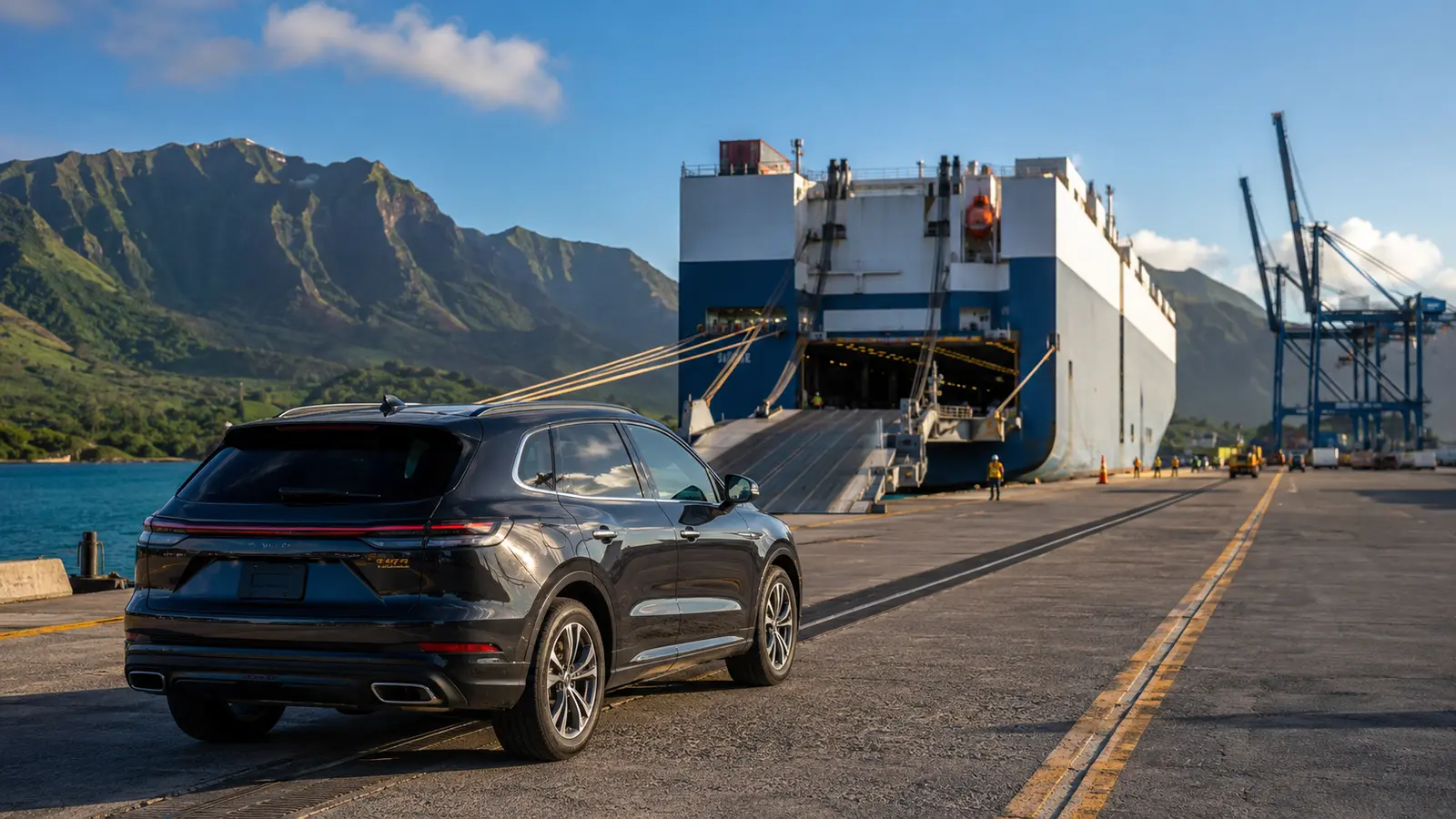
Understand the ocean and overland stages, Hawaii port options, booking documents, vehicle preparation, inspections and mainland delivery coordination.
Read customer reviews on Facebook →Hawaii-to-mainland car shipping is not the same as moving a vehicle between two continental states. The car must enter a controlled port process, travel by ocean vessel and be released at a mainland port. If pickup from a Hawaii address or delivery beyond the mainland port is included, one or more additional transportation stages must connect with the sailing. Each stage has its own operator, paperwork, condition record, timing and access rules.
The most important planning decision is the service scope. Port-to-port service begins when the customer delivers an eligible vehicle to the booked Hawaii terminal and ends when it is collected at the mainland terminal. Door-to-port can add local coordination before sailing, while port-to-door can add an assigned mainland motor carrier after release. “Door-to-door Hawaii shipping” should therefore be explained as coordinated stages, not one truck driving across the ocean.
NIKI Auto Transport arranges vehicle transportation and can coordinate mainland motor-carrier service where applicable. The ocean carrier operates the vessel and terminal process; an assigned motor carrier physically performs any overland stage. Requirements can change by operator, port, vehicle type and sailing. This guide gives a reliable framework, but the current booking instructions and written terms from the actual ocean carrier and motor carrier control.
Understand the ocean and mainland transport stages
A Hawaii shipment works best when every party knows where one operator’s custody ends and the next begins. The broker coordinates the requested scope, the ocean carrier controls port acceptance and vessel movement, and a motor carrier performs any overland auto transport. The customer or an authorized contact may be responsible for a terminal handoff.
Port-to-port, door-to-port and port-to-door
Port-to-port is the most direct ocean arrangement. You deliver the vehicle to the specified Hawaii terminal after meeting the booking requirements, and the authorized receiver collects it at the mainland port after release. Door-to-port can involve local pickup before terminal delivery, subject to island equipment and access. Port-to-door adds mainland transportation after the vessel unloads and the vehicle is released.
Ask for the exact start and end points in writing. A phrase such as “shipping to California” could mean collection at a West Coast port or delivery to an inland California address. Storage, terminal handling, local trucking and overland mileage may be separate components. Confirm who is responsible for each handoff and which contact receives arrival notices.
- Exact Hawaii handoff point
- Booked ocean departure and mainland port
- Person authorized to release and receive
- Any local-island or mainland transport stage
- Storage and terminal responsibility
Different companies issue different documents
The ocean booking confirmation describes the vessel and terminal stage. A mainland motor carrier may issue a separate dispatch confirmation and bill of lading. The broker’s order describes the arranged service and payment terms. Keep the documents separated by stage so you know which company had custody when each inspection occurred.
Do not assume an FMCSA motor-carrier record covers ocean vessel operations, or that an ocean carrier’s cargo terms govern a later independent truck. Verify the legal identity of every operator and save contact information before the vehicle changes hands.
Hawaii locations and port planning
Hawaii vehicle service is built around commercial harbors, not every shoreline. Honolulu on Oahu is the state’s largest hub, while service involving Hawaii Island, Maui and Kauai depends on the carrier’s network, sailing schedule and terminal capability. Do not promise a specific island routing until the booked ocean operator confirms it.
Oahu, Maui, Hawaii Island and Kauai
Honolulu commonly serves Oahu vehicle movements. Kahului is the principal commercial harbor on Maui; Hilo and Kawaihae serve Hawaii Island; Nawiliwili serves Kauai. Those names identify general port areas, not a guarantee that every ocean carrier accepts every vehicle at every terminal or on every date. Inter-island repositioning may be needed for some bookings.
Start with the island where the car is physically located and the terminal the ocean carrier designates. Calculate the time needed to drive or arrange local transportation to that terminal. If another person will deliver the car, make sure the booking permits it and that the person has the required identification and authorization.
- Honolulu, Oahu
- Kahului, Maui
- Hilo or Kawaihae, Hawaii Island
- Nawiliwili, Kauai
Terminal access is appointment-driven
Ports are secure operating environments. Gate hours, check-in locations, identification, safety rules and vehicle acceptance procedures are specific. Arriving at the wrong gate or outside the window can cause a missed handoff. Review the latest instructions shortly before the appointment because terminals and procedures can change.
Allow time for traffic, security and the inspection. Do not bring unauthorized passengers, pets or cargo into a restricted terminal. If a tow truck or local carrier will deliver the vehicle, confirm that the terminal accepts that equipment and that the driver has the booking details.
| Hawaii area | General commercial harbor | Planning question |
|---|---|---|
| Oahu | Honolulu Harbor | Which terminal and appointment instructions apply? |
| Maui | Kahului Harbor | Is direct vehicle acceptance available for this booking? |
| Hawaii Island | Hilo or Kawaihae | Which harbor is assigned and is repositioning required? |
| Kauai | Nawiliwili Harbor | What current schedule and drop-off procedure applies? |
Step-by-step Hawaii-to-mainland shipping process
The process becomes manageable when treated as a series of verified handoffs. Do not skip from “booked” to “at the port.” A document mismatch or ineligible vehicle can stop acceptance even when the sailing has space.
Before the Hawaii port appointment
First, provide the vehicle year, make, model, VIN, dimensions, operability, island location, mainland destination and ownership details requested for the booking. Review the quote scope and select the ocean port and any overland stages. Next, gather current documents and resolve title, lien or authorization questions before travel. Finally, prepare and photograph the vehicle using the operator’s checklist.
Confirm that the booking name, VIN and authorized contact match the documents. A single wrong VIN character can delay release. If a lienholder, lessor, employer, military office or absent owner is involved, ask what written authorization is required. International or non-U.S. ownership situations can add rules beyond this domestic guide.
- Verify VIN and registered-owner information
- Confirm the exact terminal
- Resolve lien or authorization needs
- Schedule island transport if required
- Prepare and photograph the vehicle
At sea, mainland release and inland delivery
At the Hawaii terminal, the ocean carrier checks documents, eligibility and condition according to its procedure. After acceptance, the vehicle is staged and loaded for the booked sailing. Vessel arrival is not always the same as immediate customer release; unloading, inspection and terminal processing occur first. Wait for the authorized release notice.
If the shipment ends at the port, the receiver follows the terminal’s pickup instructions and deadline. If inland delivery is arranged, the mainland motor carrier must coordinate after release. Port availability, a pickup appointment and truck routing can create a gap between ocean arrival and overland pickup. Keep both stages informed and know who is responsible for storage if the connection is delayed.
Documents, eligibility and authorization
Document rules are operator-specific and can change. Common needs may include government-issued identification, booking confirmation, vehicle registration or title information, lien or lease authorization and written permission when someone acts for the owner. The ocean carrier’s current checklist—not a blog summary—determines acceptance.
Match names and VIN information exactly
Compare the VIN on the vehicle, registration, title-related records and booking. Check all 17 characters when applicable. The registered owner’s name and the person at the gate may need a documented relationship. If the car was recently bought, confirm which ownership document the operator accepts and whether state processing is complete enough for shipment.
Do not alter a document or rely on an informal screenshot if the terminal asks for an original, certified copy or specific authorization. Contact the operator before the appointment and keep written guidance. Requirements for leased, financed, company-owned, inherited or jointly owned vehicles can differ.
- Booking confirmation
- Government-issued identification
- VIN and vehicle record
- Owner or authorized-agent documentation
- Lien or lease permission when required
Vehicle eligibility and special conditions
Disclose whether the car runs, steers and brakes; whether it has leaks; whether it is modified; and whether it is an EV, hybrid, alternative-fuel, damaged or recalled vehicle. Ocean carriers have safety and dimension rules that may be stricter than ordinary road transport. A vehicle accepted by a mainland tow truck is not automatically eligible for vessel loading.
Do not conceal battery damage, fuel conversion, fire history or hazardous contents. Ask for operator instructions about alarms, battery state, fuel level and charging. Severe damage or non-standard equipment may require a different service or may not be accepted.
How to prepare a vehicle for ocean transport
Ocean preparation emphasizes safety, clean inspection and compliance with terminal rules. Complete it before the appointment. A port is not the place to unpack household goods, repair a dead battery or search for a missing key.
Clean, inspect and remove contents
Wash the exterior and remove excessive mud from the undercarriage when instructed. Photograph every side, roof when visible, glass, wheels, interior and existing damage. Remove personal property unless the operator’s current written rule expressly allows a limited category. Household goods, food, plants, propane, fuel cans, weapons and hazardous items should never be assumed acceptable.
Remove roof boxes, loose racks, toll tags, hanging accessories and custom items that change the vehicle’s dimensions unless approved. Close windows and sunroof. Disable the alarm and provide all keys. Do not use a loose exterior cover.
- Exterior and interior photos
- No unapproved personal or hazardous contents
- Keys for ignition and locks
- Alarm disabled
- Loose accessories removed
- Dimensions reported accurately
Mechanical readiness
The battery should be charged, tires inflated and brakes and steering functional. Fuel must meet the ocean carrier’s current limit; do not rely on a general percentage. Report leaks, starting problems, transport modes and ground-clearance issues. Electric and hybrid vehicles may have specific state-of-charge or damage rules.
If the car is inoperable, confirm in writing that the operator and terminal accept it and what loading method is required. A vehicle that fails at the gate can miss the planned sailing and incur additional local costs.
| Preparation item | Why it matters | Who controls the rule |
|---|---|---|
| Fuel or battery state | Vessel and terminal safety | Booked ocean carrier |
| Personal contents | Safety, weight and cargo restrictions | Booked ocean carrier |
| Operability | Safe staging and loading | Terminal and ocean carrier |
| Mainland truck readiness | Overland loading after release | Assigned motor carrier |
What affects Hawaii-to-mainland cost and timing?
A complete quote may include multiple components: island pickup, ocean freight, terminal or documentation charges, mainland port pickup and inland delivery. The ocean sailing price is not automatically the total delivered cost. Ask for a line-by-line scope and responsibility for storage or missed appointments.
Cost variables
Vehicle size, oversize dimensions, operability, island of origin, assigned ocean port, mainland port, seasonal schedule and inland distance all affect cost. A standard operable sedan delivered to a designated terminal is different from a lifted truck requiring local pickup and inland enclosed delivery. Port storage can become an added expense if the receiver misses the collection deadline.
Avoid comparing a port-to-port advertisement with a door-to-door coordinated quote as if they were the same service. Confirm taxes, fees, local moves, terminal requirements and payment timing. If an estimate seems dramatically lower, ask which stage is missing.
- Island origin and terminal
- Vehicle size and condition
- Ocean route and sailing
- Mainland port
- Inland mileage and equipment
- Storage responsibility
Timing variables
Timing includes the wait for an available sailing, terminal cutoff, ocean transit, unloading and release, plus any local or mainland motor-carrier assignment. Vessel schedules can change with operations and weather. A mainland truck should not be promised for the moment the ship docks because the car may not yet be released.
Build buffer around mainland flights, moving-company arrivals and vehicle needs. Keep an authorized receiver available in case release occurs while you are traveling. Obtain the latest status from the operator responsible for the current stage.
Mainland port pickup and delivery beyond the port
Once the ocean carrier releases the vehicle, the customer either collects it or an assigned motor carrier begins the inland stage. The receiving port’s hours, identification rules and appointment system control access. A truck cannot retrieve a vehicle that is merely shown as vessel-arrived.
Coordinate the overland carrier after release
Provide the inland broker or carrier with the release status, terminal address, pickup number, hours, VIN, vehicle condition and authorized contact. Confirm whether the terminal requires a TWIC-qualified driver, appointment, escort or other credential. The assigned carrier must meet those requirements.
If the car is being delivered across California or farther inland, the motor carrier’s schedule begins after it gains custody. That overland transit has its own estimate, bill of lading and inspection. Keep the ocean release record with the truck’s origin inspection so the handoff is traceable.
- Wait for confirmed release
- Provide terminal pickup instructions
- Confirm driver credentials
- Record condition at the port handoff
- Start a separate inland transit estimate
Inspect at every custody transfer
The person collecting at the port should compare the vehicle with the Hawaii condition record when the operator makes that possible. Photograph the car before it leaves the terminal. If a motor carrier takes possession, review its origin bill of lading as a new condition record.
At final door delivery, inspect again before signing. If there is a concern, determine during which stage it appears to have occurred and follow that operator’s written process. Multiple handoffs make clear, time-stamped records especially important.
Hawaii car shipping mistakes to avoid
Hawaii shipments are unforgiving of assumptions because port access and sailings have cutoffs. A missing document, prohibited item or wrong terminal can turn a planned departure into storage and rebooking.
Booking and document mistakes
Do not book with an approximate VIN, assume a friend can release the car, or travel to a harbor without the operator’s current instructions. Resolve lien, lease and ownership questions early. Do not describe a port-to-port price as home delivery if no inland service is included.
Check the named ocean carrier and motor carrier separately. Save their legal identities, documents and contacts. Ignore unexpected payment-change messages until verified through established channels.
- Correct VIN and owner name
- Current port instructions
- Written authorization
- Clear service endpoints
- Verified operator identities
Vehicle and handoff mistakes
Do not leave personal cargo, conceal a leak or assume an inoperable vehicle will be accepted. Do not send a mainland truck before release. Do not skip condition photos at the island terminal, mainland port or final delivery.
Finally, avoid an inflexible travel schedule. Ocean operations and truck operations use estimates. A trusted contact and storage plan can prevent an otherwise small delay from becoming a missed release deadline.
Plan your shipment with route-specific details
Tell NIKI the island and actual vehicle location, preferred Hawaii terminal, mainland port or final destination, vehicle dimensions and operability, ownership situation and desired dates. The service can then be divided into clear ocean and overland stages.
Hawaii-to-mainland car shipping FAQs
These answers cover common planning questions. Your assigned motor carrier’s written terms, operating requirements and pickup instructions control the actual shipment.
Can a car be shipped from any Hawaiian island?
Service depends on the ocean carrier’s current network and terminal capability. Oahu, Maui, Hawaii Island and Kauai use different commercial harbors, and some bookings may require inter-island repositioning. Confirm before moving the car.
Is Honolulu the only Hawaii vehicle port?
Honolulu is the main Oahu hub, but commercial harbors also serve other islands. Availability for vehicle acceptance, sailing and destination depends on the booked operator and date.
What does port-to-door service mean?
It combines the ocean stage to a mainland port with a separate motor-carrier stage after release. The vessel and truck have different operators, schedules, inspections and documents.
Which documents do I need?
Requirements vary. They may include ID, booking confirmation, registration or title information, owner authorization and lien or lease permission. Use the ocean carrier’s current checklist.
Can someone else deliver my car to the Hawaii terminal?
Only if the booking and terminal rules allow it and the person has the required ID and authorization. Confirm the exact form before the appointment.
May I pack belongings in the vehicle?
Do not assume so. Ocean rules can prohibit or tightly limit contents. Remove personal, hazardous, valuable and irreplaceable property unless the booked carrier expressly approves it in writing.
How much fuel should be in the car?
Follow the booked ocean carrier’s current fuel rule. Limits can differ from mainland trucking guidance. Excess fuel may prevent acceptance.
Can an inoperable car ship from Hawaii?
Possibly only with prior approval and appropriate terminal capability, or it may be ineligible. Disclose whether it starts, rolls, steers and brakes and obtain written instructions.
Are electric vehicles accepted?
Acceptance and state-of-charge rules depend on the ocean carrier, vehicle condition and current safety procedures. Disclose the exact model, battery condition and any damage or recall.
Does vessel arrival mean I can pick up immediately?
No. Unloading, processing, inspection and release occur after arrival. Wait for the official availability notice and terminal instructions.
Who handles damage if there are two transport stages?
The facts and condition records help identify the custody stage. Each operator has its own terms and claim process. Photograph and inspect at every handoff and report concerns promptly.
How can I avoid mainland storage fees?
Track release notices, keep the receiver or motor carrier ready, understand the free-time deadline and have a backup plan. Do not schedule pickup before release, but do not ignore the notice once issued.
Authoritative resources used for this guide
- Hawaii Department of Transportation Harbors — official information about Hawaii’s commercial harbor system
- FMCSA automobile transporter consumer advisory — consumer guidance for the mainland broker and motor-carrier stage
External requirements and marketplace procedures can change. Check the linked official source and your shipment documents for the current rule that applies to your vehicle.
Continue planning your vehicle shipment
NIKI Auto Transport is an FMCSA-authorized auto transport broker that arranges vehicle transportation with independently operated motor carriers. NIKI is not the motor carrier. Pickup and delivery dates are estimates unless a written agreement states otherwise.