
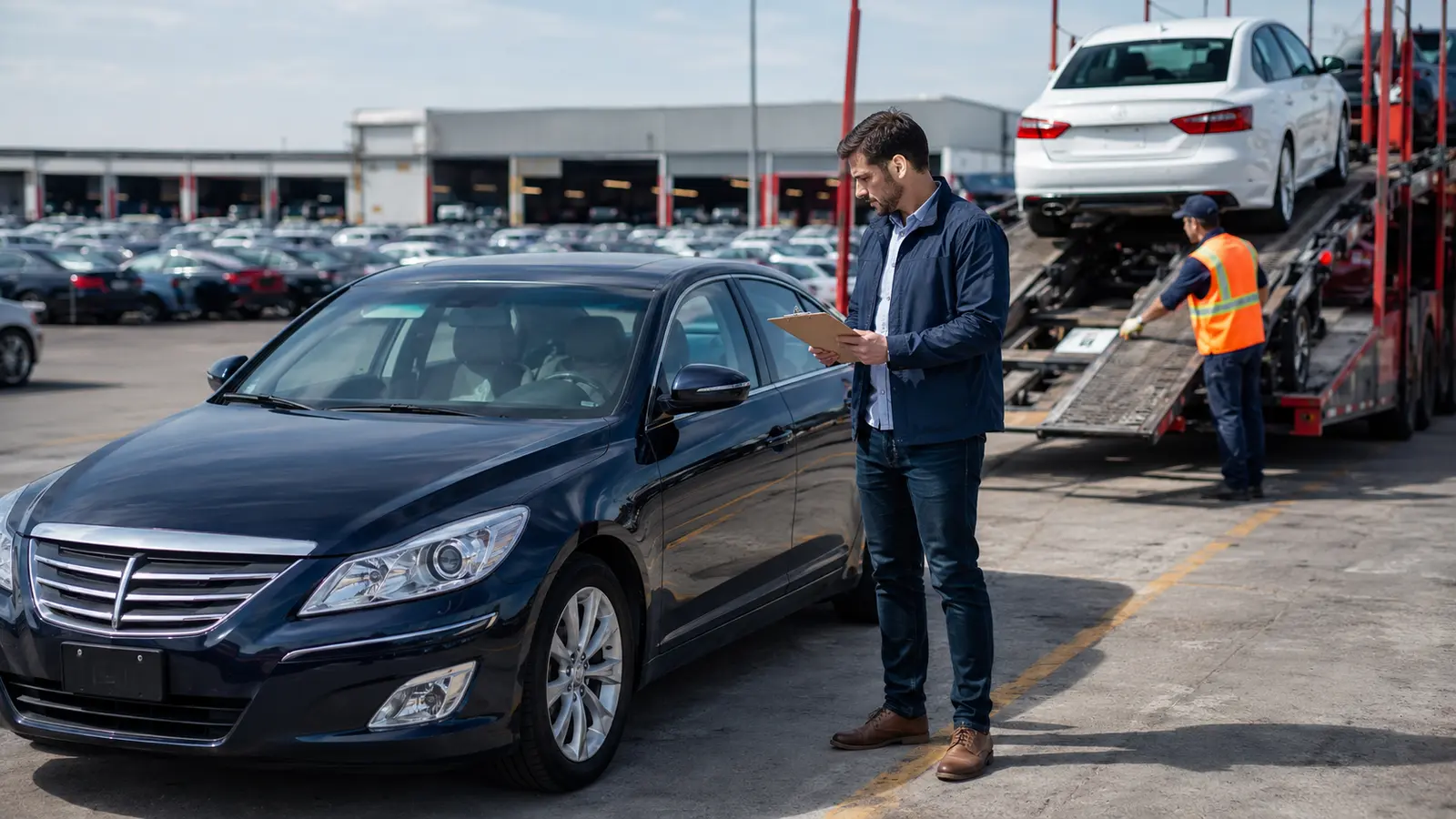
Turn a winning bid into a controlled pickup with accurate release data, operability, equipment, storage deadlines, condition records and buyer delivery.
Read customer reviews on Facebook →Winning an auction vehicle is only the beginning. The car may sit hundreds or thousands of miles away, inside a facility with limited hours, release codes, storage deadlines and loading rules. It may be listed as running but fail to start, or described as non-running while still able to roll and steer. Photos may not reveal loose parts, low clearance, missing keys or locked wheels. The transport plan must convert the auction listing into facts a carrier can safely use.
Auction shipping differs from an ordinary residential pickup because the seller and buyer are often absent. The facility controls access. The transporter may need a member number, buyer number, release document, gate pass, lot or stock number, VIN, appointment and the name of the authorized company. Payment usually must clear before release. When any of those details are wrong, the carrier can arrive and leave empty while storage continues.
NIKI Auto Transport arranges transportation with independently operated motor carriers. The broker communicates the vehicle and facility requirements; the assigned carrier performs the physical pickup, condition record and delivery. This guide covers the entire workflow for public, dealer, fleet, online and wholesale auction buyers without assuming that every marketplace uses the same rules.
Plan transportation before placing the bid
A remote bid should be evaluated as a delivered purchase. The hammer price is only one component. Buyer fees, taxes, title processing, inspection, repairs, storage, local towing and long-distance shipping can change whether the vehicle is still a good value.
Estimate the landed cost
Use the actual auction location and intended delivery ZIP code to request a planning estimate. Confirm whether the vehicle is standard-size, oversized, modified, inoperable or damaged. Add the marketplace’s published fees and a repair contingency. If the car has a branded title, flood exposure, missing keys or uncertain mileage, account for those risks separately from transportation.
Do not use the dealership or corporate address if the vehicle sits at a satellite yard. Carriers price the miles to the actual gate. A lot in a rural area can require significant repositioning, while a major auction corridor may offer more frequent capacity.
- Hammer price and buyer fees
- Title and tax obligations
- Inspection or condition-report cost
- Storage deadline
- Local loading or towing
- Long-distance transport and repair contingency
Research the vehicle beyond listing photos
Confirm the VIN and obtain an NMVTIS-based history report when appropriate. NMVTIS can provide title, brand, odometer and certain theft information, but it is not a mechanical inspection. Consider an independent inspection where the facility allows one. Ask whether keys are present and whether the vehicle starts, moves under its own power, rolls, steers and brakes.
Auction condition labels are snapshots, not transport guarantees. A battery can die after photography, a tire can lose air and loose damage can worsen. Bid with enough margin to handle new information at pickup.
Payment clearance and vehicle release details
A carrier cannot collect a vehicle merely because the buyer won it. The auction must show payment and fees cleared, authorize release and provide the pickup procedure. Those steps often belong to the buyer even when a broker arranges transportation.
Build a complete release packet
Gather the legal auction name and branch, street address, unit or lot number, VIN, buyer or member number, release code, gate pass, appointment requirement, hours and primary branch contact. Then add the authorized transporter name when the marketplace requires it. Review the VIN character by character; one error can send the driver to the wrong vehicle.
Ask when the auction considers funds cleared and when free storage ends. A payment receipt may not equal a release confirmation. Send the carrier only the credentials the facility authorizes and use secure channels for PINs or codes.
- Branch and exact address
- VIN and lot or stock number
- Buyer/member number
- Paid and released status
- Transporter authorization
- Appointment and gate instructions
Confirm hours, holidays and queue rules
Auction yards commonly limit pickups to business hours and may close for inventory, weather or holidays. Some use a virtual queue or scheduled appointment. A carrier arriving without the required check-in can lose hours or miss the day’s loading. Heavy waiting affects the rest of a multi-stop route.
Call or review the branch instructions shortly before pickup. If the marketplace changes the lot location, send the update immediately. Confirm whether the driver must present identification, an app credential, a printed document or a digital PIN.
Describe operability and damage accurately
The transport order should describe what the carrier will encounter at the yard, not the optimistic listing headline. “Runs and drives” does not necessarily mean roadworthy, and “inoperable” is incomplete without explaining whether the wheels and steering function.
Running, non-running and non-rolling are different
A standard operable vehicle starts, drives onto the trailer, steers and brakes. A non-running vehicle may still roll and steer and can often be winched. A non-rolling vehicle may have locked wheels, broken suspension, missing tires or collision damage and can require dollies, a forklift, flatbed or specialized recovery. Each category affects equipment and price.
Send current photos of every side, wheels, ground clearance and visible loose parts. Tell the broker about missing keys, deployed airbags, damaged glass, open hoods, leaking fluids, EV battery damage or fire history. The carrier may refuse an unsafe vehicle that was not disclosed.
- Starts and moves under power?
- Rolls freely?
- Steers and brakes?
- All tires and wheels present?
- Loose parts secured?
- Leaks or battery damage?
Loading assistance is not universal
Some auction locations use forklifts or loaders; others require the transporter to self-load. A forklift can place a vehicle on a suitable trailer, but unloading at a residential destination becomes a separate problem if the car cannot roll. The buyer must plan both ends.
For a severely damaged vehicle, a local flatbed to a repair shop or transport hub may be safer than standard multi-car service. Confirm the receiving location has space, permission and equipment to unload. Do not send a non-rolling unit to a driveway with no recovery plan.
| Auction condition | Possible equipment | Delivery requirement |
|---|---|---|
| Operable | Open or enclosed auto carrier | Keys and safe driving access |
| Non-running but rolling | Winch-capable carrier | Flat area and steering/braking control |
| Locked wheels or severe damage | Flatbed, dollies or specialized trailer | Recovery equipment at destination |
| Oversize or modified | Measured equipment match | Height, width, weight and clearance confirmed |
Pickup deadlines, storage and failed attempts
Auction storage can erase the savings from a low bid. The clock and fee structure belong to the marketplace, not the broker or carrier. The buyer should know the final free day and what happens if the branch cannot release or load the car.
Do not dispatch before release
Sending a carrier while payment is pending can create a dry run. The truck may have spent fuel, tolls and driving time reaching the branch, and the buyer can still owe storage. Wait for explicit release status and provide all codes before confirming pickup.
At the same time, do not wait until the last free hour to arrange transport. Carrier routes develop over days, and a rural or specialized vehicle can need more time. Begin the quote before the sale closes and activate the order when payment and condition are known.
- Know the last free storage day
- Pay within marketplace deadlines
- Confirm release, not merely payment
- Share credentials promptly
- Budget for a possible local move
Create a backup for difficult vehicles
If long-distance equipment cannot reach the auction before storage escalates, a local tow to a permitted storage or repair facility can sometimes separate the urgent deadline from the interstate move. That option adds handling, cost and another inspection, so compare it carefully.
The backup yard must accept the vehicle, especially if it leaks, lacks wheels or is oversized. Obtain written hours, fees and release rules. Never move a vehicle to a random lot or residence without owner permission.
What happens at auction pickup?
The driver checks in, presents the authorized credentials, locates the unit, evaluates whether the condition matches the order and completes a pickup record. Because the buyer is usually absent, the carrier’s photos and bill of lading are especially important.
Vehicle identity and condition check
The driver should verify the VIN or identifying number before loading. The vehicle may be dusty, closely parked or accessible only after facility staff move other units. Visible damage, loose parts and loading limitations should be documented. If the unit materially differs from the order, the driver may pause for instructions.
Ask the assigned carrier how photos are provided and keep the pickup bill of lading. Auction listing photos may predate additional handling. A new set at custody transfer is the relevant transport record.
- VIN verified
- Current condition photographed
- Loose items noted
- Keys received if present
- Loading method recorded
- Bill of lading saved
When the carrier cannot load
Common reasons include locked wheels, missing tires, undisclosed oversize dimensions, severe leaks, no release, no forklift when expected or unsafe loose body panels. The broker, buyer, branch and carrier then need to decide whether the unit can be secured, a different truck is needed or a local recovery service should act.
Do not pressure a driver to improvise an unsafe load. Obtain photos and a clear explanation, then update the equipment plan. The auction may continue charging storage until removal.
How a broker helps an auction buyer
An auction move involves more data than a normal driveway pickup. A broker can centralize the lane, facility, release and condition requirements, then seek a motor carrier with suitable equipment and timing. The value is coordination—not ownership of the truck.
Carrier matching and communication
The broker communicates the actual lot, vehicle dimensions, operability, loading method, deadline and receiver. It can ask a carrier whether the trailer and route fit before assignment. Once assigned, the legal carrier identity and contact should be shared so the buyer knows who will physically collect the vehicle.
The broker can relay branch changes and status, but the buyer remains responsible for auction payment and truthful condition information. A broker cannot override a marketplace’s release policy or guarantee a forklift that the branch does not offer.
Multi-unit and repeat-buyer workflows
Dealers and resellers benefit from a consistent manifest containing VIN, lot, condition, keys, release status, deadline and destination. Group vehicles by branch and delivery area when possible. Avoid mixing paid units with pending units on one urgent pickup instruction.
Track each handoff separately even when several cars share a truck. A unit-level condition record and delivery signoff make reconciliation easier for inventory teams and remote buyers.
- One manifest per branch
- VIN-level release status
- Operability and key status
- Storage deadline
- Destination receiver
- Pickup and delivery documents
Auction vehicle delivery and final documentation
The destination must be able to receive the actual vehicle. A repair shop may accept a non-runner with equipment; a residence may not. Confirm hours, truck access and unloading capability before the carrier leaves the auction.
Prepare the receiver
Give the receiver the VIN, carrier details, estimated range, origin photos and payment instructions. A dealership should identify the employee authorized to sign. A residential receiver should choose a broad, legal unloading area and have a plan to move a non-running car after it leaves the trailer.
Inspect the vehicle before signing the delivery bill of lading. Compare with the carrier’s auction pickup record, not only listing photos. Photograph all sides and note any new transport-related concern specifically.
- Truck-safe location
- Correct VIN expected
- Unloading equipment ready
- Origin record available
- Payment method confirmed
- Delivery signoff saved
Separate purchase condition from transport condition
A cracked panel shown in the auction report is not new transport damage. Conversely, the sale’s “as-is” rule does not erase a carrier’s responsibility under its applicable terms for damage during custody. Time-stamped records help separate those issues.
If a concern appears new, write it on the delivery bill before signing, take photographs and follow the carrier’s claim process. Notify the broker and preserve all auction and transport documents.
Auction transport mistakes to avoid
Auction buyers lose time when the order is built from guesses. A good transport file should allow a driver who has never seen the listing to identify, access, load and deliver the vehicle safely.
Release and condition mistakes
Do not confuse paid with released, omit the buyer number, transpose the VIN or assume the branch loads every car. Do not describe an inoperable unit as running to obtain a lower estimate. The mismatch usually appears at the gate, when options are most expensive.
Do not ignore missing wheels, loose parts, leaks, low clearance or battery damage. Send photos and obtain an equipment decision before dispatch.
- No unverified release
- No approximate VIN
- No hidden inoperability
- No assumed loading assistance
- No residence delivery without unloading plan
Deadline and documentation mistakes
Do not wait until storage begins to research transport, and do not send a truck before funds clear. Know the fee curve and create a local-tow backup for specialized units. Keep auction and carrier records as separate custody documents.
Finally, verify broker and motor-carrier roles through FMCSA. A marketplace listing, broker and truck are three different parties. Understand which one controls the sale, coordination and physical movement.
Plan your shipment with route-specific details
Provide the auction branch, exact VIN and lot, paid-and-released status, storage deadline, vehicle photos, keys, operability, dimensions, loading assistance and delivery capability. NIKI can use that file to seek suitable carrier equipment.
Auto auction car shipping FAQs
These answers cover common planning questions. Your assigned motor carrier’s written terms, operating requirements and pickup instructions control the actual shipment.
Should I get a shipping estimate before I bid?
Yes. Use the actual branch and likely vehicle condition. Include fees, storage, inspection, specialized loading and repair contingency when deciding the maximum bid.
What information does a transporter need?
Usually the branch, address, VIN, lot or stock number, buyer/member number, release authorization, hours, appointment rules, operability, photos and destination receiver.
Is payment confirmation enough for pickup?
Not always. The auction may still show a hold or require transporter assignment. Confirm that the exact VIN is released and the pickup credentials are active.
How quickly should an auction vehicle be collected?
Use the marketplace and branch’s current deadline. Storage can start soon after the sale. Arrange transport early, but dispatch only after release.
What does non-running mean for transport?
Explain whether the vehicle starts, rolls, steers and brakes and whether all tires are present. A rolling non-runner may use a winch; locked wheels or severe damage can require specialized equipment.
Will the auction load the vehicle?
Policies vary by facility and vehicle class. Some provide forklift assistance, others expect self-loading, and heavy units can have separate rules. Confirm with the branch.
Can a damaged auction car go on an open carrier?
Sometimes, if it can be loaded and secured safely and no loose or hazardous condition exists. Severe collision, leaks, battery damage or missing components may require another method.
What if the carrier arrives and the vehicle is not released?
The pickup can fail, the carrier may charge for lost time or a dry run, and storage may continue. Verify release before dispatch and maintain a current branch contact.
Can I ship several auction vehicles together?
Yes when equipment, route, release timing and space align. Use a VIN-level manifest and do not hold a ready truck for units that are still unpaid or unreleased.
Where should a non-running vehicle be delivered?
Choose a repair shop, dealership or location with legal truck access and equipment to move it after unloading. A residential driveway may not be suitable.
How do I document condition at an unattended pickup?
Request the carrier’s pickup photos and bill of lading, and compare them with auction listing images. Inspect again at delivery before signing.
Does an as-is auction sale remove transport protection?
The purchase condition and transport custody are separate issues. The carrier’s terms and condition records apply to transportation. Document both stages so pre-existing and possible transit damage can be distinguished.
Authoritative resources used for this guide
- NMVTIS consumer access — official vehicle-history information covering title, brands, odometer and certain theft data
- FMCSA automobile transporter consumer advisory — broker and motor-carrier roles and verification
External requirements and marketplace procedures can change. Check the linked official source and your shipment documents for the current rule that applies to your vehicle.
Continue planning your vehicle shipment
NIKI Auto Transport is an FMCSA-authorized auto transport broker that arranges vehicle transportation with independently operated motor carriers. NIKI is not the motor carrier. Pickup and delivery dates are estimates unless a written agreement states otherwise.