
Moving to New York with a car takes more planning than most interstate moves. You have 30 days to register the vehicle with the New York DMV, you need New York liability and no-fault insurance before you can register, and your car has to pass a New York State inspection soon after you arrive. If you are heading to New York City, parking, tolls and street-cleaning rules will shape almost every decision you make about the car. This guide walks through every step in the order you will actually do it, from deciding whether to bring the car at all to choosing a pickup date and getting your first New York inspection sticker.
NIKI Auto Transport moves cars into and out of New York every week, so this guide also covers the shipping side: how long transport takes, what drives the price and how to prepare the car. When you are ready for a price, our New York car shipping page has route details and a free quote form.

In this guide
- Should you bring your car to New York?
- Your moving timeline: 8 weeks to 30 days after arrival
- Drive it or ship it?
- How much it costs to ship a car to New York
- Transit times by route
- How to prepare your car for transport
- Registering an out-of-state car with the NY DMV
- New York insurance requirements
- New York State vehicle inspection
- Exchanging your driver license
- Owning a car in New York City
- Upstate and Long Island tips
- Getting your car ready for New York winters
- Common mistakes to avoid
- FAQ
Should you bring your car to New York?
Before you book anything, decide whether the car belongs in your new life. The answer depends almost entirely on where in the state you are moving.
Manhattan and most of Brooklyn and Queens: Many residents never own a car. The subway, buses, Citi Bike, ferries and commuter rail cover most daily trips, and keeping a car means paying for a garage or spending time moving it for alternate-side parking. If you only drive a few times a month, compare the full yearly cost of ownership with occasional rentals or car sharing before you ship.
Staten Island, the outer edges of Queens and the Bronx, Westchester and Long Island: A car becomes far more useful. Transit still works for trips into Manhattan, but grocery runs, school drop-offs and weekend trips are much easier with a vehicle.
Upstate New York (Albany, Buffalo, Rochester, Syracuse, the Hudson Valley): A car is close to essential. Distances are longer, transit is limited, and winter weather makes walking and waiting for buses harder.
Ask yourself three questions:
- Is the car paid off, or close to it? If you are leasing or financing, you will need your lender’s permission and paperwork to register it in New York (more on that below).
- Is the car worth more than the cost of moving and insuring it? An older car with high mileage may cost more to ship, insure and register than it is worth in the New York market.
- Is the car suited to New York? All-wheel drive and good winter tires matter upstate. A large truck can be hard to park in the city and may be restricted on parkways, where commercial vehicles are banned.
If the answer to all three points toward keeping the car, the rest of this guide shows you how to bring it with as little stress as possible.
Your moving timeline: from 8 weeks out to 30 days after arrival
The biggest source of stress in a New York move is timing. The table below lines up the car-related tasks with your move date.
| When | Task |
|---|---|
| 6–8 weeks before | Decide whether to drive or ship. Request car shipping quotes. Call your lender if the car is financed or leased. |
| 4–6 weeks before | Book transport, especially for summer moves and moves around September 1, when demand peaks in NYC. |
| 3–4 weeks before | Shop for New York auto insurance and secure a parking space or garage if you are moving to the city. |
| 1–2 weeks before | Gather documents: title, registration, ID, lender letter. Service the car and photograph its condition. |
| Pickup day | Inspect the car with the driver, sign the bill of lading, keep a copy and hand over one key. |
| Delivery day | Inspect the car again before signing. Note any new damage on the bill of lading. |
| Within 30 days of residency | Register the car with the NY DMV and exchange your driver license. |
| Soon after registering | Get the New York State safety (and, where required, emissions) inspection. |
Drive it or ship it?
Driving your own car to New York can make sense if you are coming from a nearby state such as New Jersey, Pennsylvania, Connecticut or Massachusetts. For a cross-country move, the numbers usually favor shipping once you count everything.
The real cost of driving cross-country
- Fuel: A 2,800-mile drive from Los Angeles at 25 miles per gallon uses about 112 gallons of gas.
- Hotels: Most people need four to six nights on the road.
- Food: Meals for several days for every person in the car.
- Time off work: Five to seven days of driving is a week of lost income or vacation.
- Wear on the car: Several thousand miles of tire wear, an earlier oil change and a higher risk of breakdowns far from home.
- Tolls into New York: Bridges and tunnels into New York City can cost more than $15 each way, and the Manhattan congestion pricing zone adds a daily charge below 60th Street.
When you add these together, driving across the country often costs as much as shipping or more, and it takes a week of your life. Shipping lets you fly, arrive rested and spend your first days setting up your apartment instead of recovering from the road.
When driving makes more sense
- You are moving fewer than about 300 miles.
- You need the car immediately on arrival and cannot wait for a delivery window.
- You are moving items in the car that cannot be shipped another way.

How much does it cost to ship a car to New York?
There is no single price for shipping a car to New York, because every quote depends on the same handful of factors. Understanding them helps you compare quotes fairly and avoid surprises.
What affects the price
- Distance and route: Popular corridors such as Florida to New York or California to New York have more trucks running them, which keeps prices competitive. Rural pickups away from major highways can cost more.
- Vehicle size and weight: A compact sedan takes up less space on a carrier than a full-size pickup or a three-row SUV.
- Open or enclosed transport: Open car transport is the most common and affordable option. Enclosed car transport costs more but protects luxury, classic and exotic cars from weather and road debris.
- Season: Summer and the late-August to early-September moving rush raise demand. Winter brings snowbird traffic between New York and Florida, which raises prices on that corridor in late fall and spring.
- Running condition: An inoperable car needs a winch and extra handling.
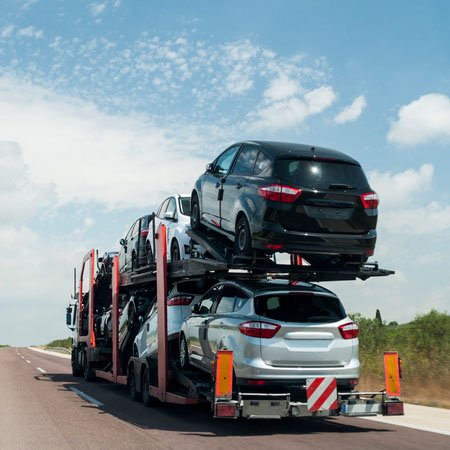
- Pickup and delivery access: Large carriers cannot always reach narrow city streets. In parts of New York City, the driver may ask to meet at a nearby wide street or lot.
- Timing flexibility: A flexible pickup window usually costs less than a guaranteed date or expedited service.
Typical planning ranges
For planning only, these are common industry ranges for an operable sedan on an open carrier. Your actual price depends on your exact addresses, vehicle and dates.
| Route | Approx. distance | Typical open-carrier range |
|---|---|---|
| Boston, MA to New York, NY | 215 miles | $400–$700 |
| Miami, FL to New York, NY | 1,280 miles | $800–$1,300 |
| Chicago, IL to New York, NY | 790 miles | $700–$1,100 |
| Dallas, TX to New York, NY | 1,550 miles | $900–$1,400 |
| Los Angeles, CA to New York, NY | 2,790 miles | $1,200–$2,000 |
Expect enclosed transport to cost roughly 30% to 60% more than open transport on the same route. For a price on your exact route, request a quote on our New York car transport page or use the car shipping calculator.
How to compare quotes fairly
The lowest quote is not always the best deal. Some companies quote a low number to win the booking, then raise the price when no driver accepts the job. Ask every company whether the price is locked in writing, whether insurance and door-to-door service are included, and what happens if your dates change. NIKI’s Price Guarantee means the price we quote is the price you pay once you book.
How long does it take to ship a car to New York?
Transit time is the number of days the car spends on the truck after pickup. Plan for a pickup window of one to five days before that, depending on the season and how flexible your dates are.
| From | Typical transit time after pickup |
|---|---|
| Northeast (MA, PA, CT, NJ) | 1–3 days |
| Southeast (FL, GA, NC) | 2–5 days |
| Midwest (IL, OH, MI) | 2–4 days |
| Texas and the South Central states | 3–6 days |
| West Coast (CA, WA, OR) | 7–10 days |
Weather, traffic and legal limits on driver hours all affect arrival. Winter storms in the Midwest and the Northeast can add a day or two between December and March. Your driver will call ahead before delivery, so keep your phone on and make sure the person receiving the car is available.
Popular New York routes include Florida to New York car shipping, California to New York car shipping and Texas to New York car shipping.
How to prepare your car for transport
A little preparation protects you if anything goes wrong and helps the pickup go quickly.
- Wash the car. A clean car makes it easy to spot and record existing scratches and dents during the pickup inspection.
- Photograph every side. Take dated photos of all four sides, the roof, the wheels and the interior, plus a photo of the odometer.
- Remove personal items. Carriers are not licensed to transport household goods, and personal items are not covered by the carrier’s cargo insurance. Remove valuables, loose items, toll transponders and parking permits.
- Leave about a quarter tank of fuel. That is enough for loading and unloading while keeping weight down.
- Check for leaks and fix known problems. Tell your transport coordinator about anything unusual, such as a weak battery, a sticky shifter or a low front spoiler.
- Disable the alarm or give the driver instructions for turning it off.
- Remove or secure accessories, such as bike racks, roof boxes and removable spoilers.
- Keep your E-ZPass separate. Remove it from the windshield so it is not charged while the car rides through tolls on the truck.
At pickup, the driver inspects the car with you and records its condition on the bill of lading. Check that it matches your photos, sign it and keep your copy. You will compare the car against the same document at delivery.
Registering an out-of-state car with the New York DMV
According to the New York State DMV, you must register your vehicle in New York within 30 days of becoming a resident. You cannot register a car in New York until you have New York insurance, so arrange coverage first.
Documents you will need
- Vehicle Registration/Title Application (form MV-82).
- Original proof of ownership, usually your out-of-state title. The DMV does not accept photocopies.
- Proof of New York State auto liability insurance, usually an insurance ID card issued by a company licensed in New York.
- Proof of identity and date of birth, such as your driver license.
- Payment for registration and title fees, plus sales tax if it applies to your vehicle. If you owned and used the car out of state before moving, you may qualify for a sales tax exemption; check the DMV’s sales tax information when you apply.
If your car is financed or leased
If a lender holds your title, contact them early. Many lenders will send the title to the New York DMV or provide a letter and a copy of the title so you can register. Leased vehicles often need written permission from the leasing company. This step can take several weeks, so start it as soon as you know your move date.
Registration by mail
The DMV also lets new residents mail their documents to a local DMV office. If you register by mail, the DMV includes a 10-day Inspection Extension Sticker in your registration package. You place it on the windshield when the car enters New York, not before, and it gives you time to get your first New York inspection. Allow about six weeks for registration documents to arrive by mail and up to 90 days for the title certificate.
Plates and fees
Your registration fee depends on the vehicle’s weight and the county where you live. Some counties in the New York City metro area add a supplemental fee for the Metropolitan Commuter Transportation District. You will receive New York plates, and you should return or dispose of your old plates according to your previous state’s rules.
New York car insurance requirements
New York is a no-fault insurance state, and its required coverage is higher than in many other states. Before you register, you need a policy from an insurer licensed in New York that includes at least the state minimums:
- Bodily injury liability: $25,000 per person and $50,000 per accident, rising to $50,000 and $100,000 when the accident causes a death.
- Property damage liability: $10,000 per accident.
- Personal injury protection (no-fault): $50,000.
- Uninsured motorist coverage: $25,000 per person and $50,000 per accident.
Most drivers buy more than the minimum, especially in the city, where repair and medical costs are high. Rates in Brooklyn, the Bronx and Queens are among the highest in the country, so get quotes before you commit to an apartment if a car is part of your plan. Do not cancel your old policy until the new one starts; New York takes gaps in coverage seriously and can suspend a registration when insurance lapses.
New York State vehicle inspection
Every registered vehicle in New York needs a yearly state inspection at a licensed inspection station, which is often a repair shop or dealership. New residents get their first inspection after registering, using the 10-day extension sticker if they registered by mail.
The safety inspection checks items such as brakes, steering, tires, lights, horn, windshield wipers, seat belts and the windshield. Most gasoline vehicles also get an emissions inspection, which in most cases is an onboard diagnostics (OBD) check of the car’s computer. If your check engine light is on, fix the problem before your inspection appointment.
Tinted windows are a common reason for failed inspections. New York has strict rules for front-side window tint, and tint that was legal in your previous state may not pass here.
Exchanging your out-of-state driver license
New residents should exchange their out-of-state driver license for a New York license within 30 days of moving. In most cases you can exchange a valid license without retaking the road test. Bring proof of identity, proof of your Social Security number, proof of New York residency and your current license. Consider applying for a REAL ID or Enhanced license at the same visit, because it will also work as identification for domestic flights.
Owning a car in New York City
If you are moving to one of the five boroughs, the practical side of car ownership will matter as much as the paperwork.
Parking
- Garages: Monthly garage parking in Manhattan commonly costs several hundred dollars and can run much higher in prime neighborhoods. Prices in the outer boroughs are lower but rising.
- Street parking and alternate-side rules: Most residential streets have alternate-side parking on certain days so the city can clean the streets. You will need to move the car during the posted window or risk a ticket. The city publishes a calendar of days when the rules are suspended, usually holidays.
- Snow: After a heavy snowfall, plows can bury cars parked on the street. Keep a shovel and an ice scraper in the trunk.
Tolls and congestion pricing
Most bridges and tunnels into Manhattan charge tolls, and the Central Business District congestion pricing program charges vehicles that enter Manhattan below 60th Street. Get an E-ZPass after you arrive; it is cheaper than pay-by-mail and works throughout the Northeast.
Delivery logistics in the city
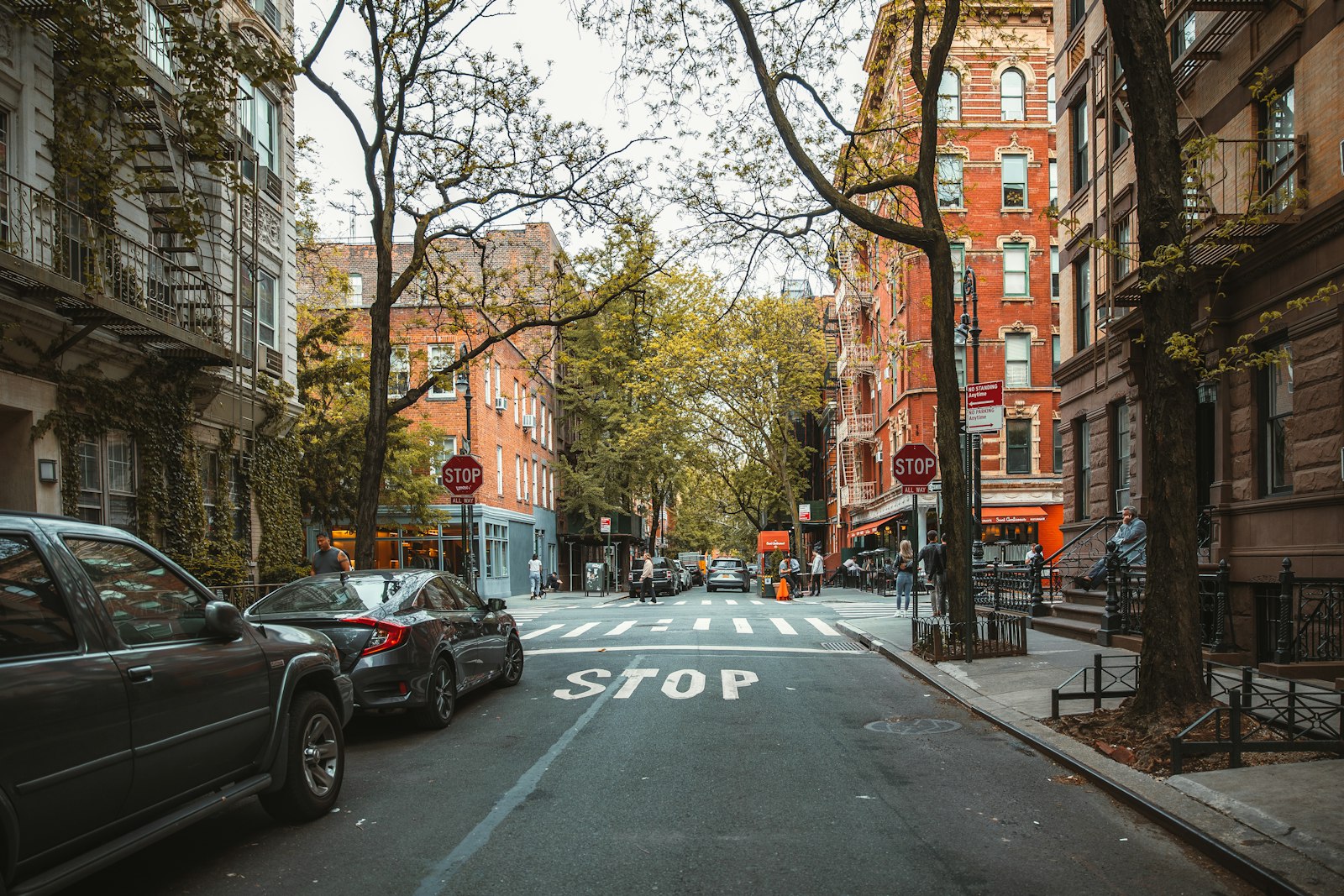
A full-size car carrier can be up to about 80 feet long, and many city blocks cannot handle a truck that size safely or legally. When you book, give us your exact address and any access issues, such as a narrow street, a low-clearance garage or a doorman building with loading rules. Your driver may suggest meeting at a nearby wide avenue, a big-box store parking lot or a terminal. If you live in Manhattan or Brooklyn, see our pages for Manhattan car transport, Brooklyn car transport and New York City car shipping.
Upstate New York and Long Island tips
Outside the city, car ownership in New York looks more like the rest of the country, with a few local twists.
- Long Island: Many parkways ban trucks and commercial vehicles, and low bridges on routes such as the Southern State Parkway are a real hazard for tall vehicles. If you are moving a pickup truck with a lift kit or towing a trailer, plan routes on expressways.
- Hudson Valley and the Capital Region: Expect hills and winding roads, and keep an eye on deer at dawn and dusk.
- Western and Central New York: Buffalo, Rochester and Syracuse get heavy lake-effect snow. All-wheel drive and dedicated winter tires make a real difference. See our Buffalo car shipping and Albany car shipping pages if you are moving upstate.
- Road salt: Salt keeps roads usable but speeds up rust. Wash the underside of your car regularly during winter and consider an undercoating if your car came from a dry state.
Getting your car ready for a New York winter
If you are moving from Florida, Texas, California or Hawaii, your car may never have seen a real winter. Before your first one:
- Install winter tires if you live upstate or drive frequently in snow. All-season tires lose much of their grip below about 45°F.
- Test the battery. Cold weather exposes weak batteries quickly.
- Switch to winter washer fluid rated well below freezing.
- Replace wiper blades and consider winter-rated blades.
- Check the coolant to make sure it is mixed for freezing temperatures.
- Pack a winter kit: an ice scraper, a brush, a small shovel, a blanket, a phone charger and sand or cat litter for traction.
Common mistakes to avoid
- Booking too late. Late summer is the busiest moving season in New York City. Booking four to six weeks ahead gives you better dates and prices.
- Choosing the lowest quote without reading the terms. Make sure the price is locked in writing and that door-to-door service and carrier insurance are included.
- Leaving valuables in the car. Personal items are not covered and can be lost or damaged.
- Skipping the pickup inspection. Without a signed bill of lading that shows the car’s condition, it is very hard to prove new damage.
- Missing the 30-day deadline. Driving on out-of-state plates after you become a New York resident can lead to tickets and insurance problems.
- Forgetting the lender. A financed car cannot be registered in New York without the lender’s cooperation, which can take weeks.
How NIKI Auto Transport helps you move a car to New York
NIKI Auto Transport is a licensed and bonded auto transport broker (USDOT 4535689, MC-1799148). We match your shipment with vetted, insured carriers, give you a written price and keep you updated from pickup to delivery. Every booking includes:
- Door-to-door service wherever a carrier can safely reach your address
- Open and enclosed transport options
- Carrier insurance on every shipment
- NIKI’s Price Guarantee on your booked price
- Updates throughout the shipment
Ready to plan your move? Visit our New York car shipping and car transport services page for routes and a free quote, or call (818) 732-1805.
Frequently asked questions
How long do I have to register my car after moving to New York?
You must register your vehicle in New York within 30 days of becoming a resident. You need New York insurance first.
Do I have to get my car inspected in New York?
Yes. New York requires a yearly safety inspection, and most gasoline vehicles also need an emissions inspection. New residents do their first inspection after registering.
Is it cheaper to drive or ship a car to New York?
For short moves from nearby states, driving is usually cheaper. For cross-country moves, shipping often costs about the same as driving once you add fuel, hotels, food, tolls and time off work, and it saves several days.
How long does it take to ship a car to New York?
Transit takes one to three days from nearby Northeast states and about seven to ten days from the West Coast, after a pickup window of one to five days.
Can I put personal items in my car when I ship it?
You should remove personal items. Carriers are not licensed to move household goods, and items left in the car are not covered by the carrier’s insurance.
Can a car carrier deliver to my street in Manhattan?
Sometimes. Large carriers cannot safely reach many city streets, so the driver may meet you at a nearby wide street or parking lot. Tell us about access issues when you book.
Requirements and fees change. This guide reflects New York DMV guidance as of 2026; confirm current rules at dmv.ny.gov before you apply.