
Moving to Florida with a car moves faster than you might expect. Florida gives new residents only 10 days after establishing residency to register their vehicles, and first-time Florida registrations usually come with a one-time $225 initial registration fee. You need Florida insurance with personal injury protection (PIP) before you can register, and your car needs a VIN verification. The good news: Florida has no annual safety or emissions inspection. This guide covers every step, plus the shipping, snowbird and hurricane-season details that are unique to the Sunshine State.
NIKI Auto Transport ships cars to Florida year-round, from Jacksonville and Pensacola to Orlando, Tampa, Fort Myers and Miami. For a price on your route, visit our Florida car shipping page.

In this guide
- Should you bring your car to Florida?
- Your Florida moving timeline
- Drive it or ship it?
- How much it costs to ship a car to Florida
- Snowbird season and the best time to ship
- Transit times
- Preparing your car for transport
- Registering an out-of-state car in Florida
- Florida registration fees
- Florida insurance and PIP
- Getting a Florida driver license
- Rules for snowbirds and part-time residents
- Driving in South, Central and North Florida
- Protecting your car in Florida’s climate
- Common mistakes
- FAQ
Should you bring your car to Florida?
Almost certainly. Outside small parts of Miami, Miami Beach and downtown Orlando and Tampa, Florida is built around the car. Most neighborhoods are suburban, distances between towns are long, and public transit is limited. Retirees, families and remote workers all tend to rely on driving.
Bringing the car you already own is usually the simplest choice if it is reliable and suited to the climate. A few things to check before you move:
- Air conditioning: Florida summers are long, hot and humid. A weak A/C system will be a daily problem.
- Rust: If your car spent years on salted roads up north, look underneath for rust and treat it before the humidity and salt air speed it up.
- Financing: If a lender holds the title, you will need their help to title the car in Florida.
Your Florida moving timeline
| When | Task |
|---|---|
| 6–8 weeks before | Request car shipping quotes and contact your lender if the car is financed. |
| 4–6 weeks before | Book transport, especially from October through December when snowbird demand peaks. |
| 2–3 weeks before | Buy a Florida insurance policy with PIP and property damage liability that starts on your move date. |
| 1 week before | Gather your title, registration and ID. Wash, photograph and service the car. |
| Delivery day | Inspect the car with the driver and sign the bill of lading. |
| Within 10 days of residency | Get a VIN verification and register the car at your county tax collector’s office. |
| Within 30 days of residency | Get your Florida driver license. |
Drive it or ship it?
The I-95 drive from New York to Miami is about 1,280 miles, roughly two long days. From Chicago it is about 1,380 miles, and from California more than 2,700. Driving can make sense from Georgia, Alabama or the Carolinas. For longer moves, shipping is often worth it:
- You save several days and arrive rested, which matters when you have only 10 days to register.
- You avoid winter driving through the Northeast and Midwest if you move between November and March.
- You avoid thousands of miles of wear on your car.
- You can ship a second car without needing a second driver.
Many retirees and seasonal residents fly to Florida and ship their car every year. If that is your plan, our snowbird car shipping service is built around those seasonal moves.

How much does it cost to ship a car to Florida?
Florida is one of the busiest destinations for car shipping in the country, and I-95 and I-75 are among the most heavily traveled car carrier corridors. That volume keeps routes competitive. Your price depends on:
- Distance and route: Northeast-to-Florida routes are busy and well priced, but direction matters (see the snowbird section below).
- Vehicle size: Sedans cost less than full-size trucks and SUVs.
- Transport type: Open car transport is standard. Enclosed car transport is popular for luxury cars heading to Naples, Palm Beach and Miami.
- Season: Prices on routes into Florida rise in fall and early winter and drop once the southbound rush ends.
- Hurricane season: Storms can delay pickups and deliveries between June and November.
- Location: Major metros are easy to serve. Gated communities and narrow island roads may require a nearby meeting point.
Typical planning ranges
These are common industry ranges for an operable sedan on an open carrier, for planning only.
| Route | Approx. distance | Typical open-carrier range |
|---|---|---|
| Atlanta, GA to Orlando, FL | 440 miles | $500–$800 |
| New York, NY to Miami, FL | 1,280 miles | $800–$1,300 |
| Boston, MA to Tampa, FL | 1,350 miles | $850–$1,350 |
| Chicago, IL to Fort Myers, FL | 1,320 miles | $850–$1,300 |
| Houston, TX to Jacksonville, FL | 870 miles | $700–$1,100 |
| Los Angeles, CA to Miami, FL | 2,730 miles | $1,200–$1,950 |
Your actual price depends on exact addresses, vehicle and dates. Get a written quote on our Florida car transport page.
Snowbird season and the best time to ship a car to Florida
Florida’s car shipping market follows the snowbirds. Every fall, tens of thousands of seasonal residents head south, and every spring they head back north. That creates a predictable pattern:
| Period | Northbound (from Florida) | Southbound (to Florida) |
|---|---|---|
| October–December | Lower demand, often better prices | Peak demand, higher prices, book early |
| January–February | Moderate | Moderate |
| March–May | Peak demand, higher prices, book early | Lower demand, often better prices |
| June–September | Moderate; watch for hurricanes | Moderate; watch for hurricanes |
If your dates are flexible, moving to Florida in late spring or summer usually costs less than moving in November. If you must move during peak season, book four to six weeks ahead.
How long does it take to ship a car to Florida?
| From | Typical transit time after pickup |
|---|---|
| Georgia, Alabama, the Carolinas | 1–3 days |
| Northeast (NY, NJ, PA, MA) | 2–5 days |
| Midwest | 3–5 days |
| Texas | 3–5 days |
| West Coast | 7–10 days |
Add a pickup window of one to five days. Popular routes include New York to Florida car shipping, California to Florida car shipping and Texas to Florida car shipping.
Why transit times vary
Car carriers usually haul seven to ten vehicles at a time, so your car shares the truck with others going the same way. The driver plans the route around every pickup and delivery on the load, and federal hours-of-service rules limit daily driving time. Florida adds a few local factors. During peak snowbird weeks, trucks fill quickly and pickup windows can stretch. In hurricane season, carriers may pause service near a storm’s path for safety, then catch up quickly afterward. Winter storms up north can also slow southbound trucks before they ever reach Florida.
Door-to-door delivery in Florida communities
Many Florida homes are in gated communities, condo buildings or 55-plus communities with strict rules about large trucks. Barrier islands such as Key Biscayne, Siesta Key and Anna Maria Island have narrow roads and bridges that a full-size carrier cannot always use. If you live in one of these places, tell us when you book. The driver will call ahead and arrange to meet you at a nearby shopping center, clubhouse lot or wide main road. Let your gate guard or HOA know the delivery date so the driver is not turned away.
Shipping a second car or a golf cart
Many retirees ship two vehicles to Florida. Shipping both on the same carrier keeps delivery dates aligned and can reduce the per-vehicle cost. If you are also moving a golf cart, motorcycle or small trailer, ask us first, because standard car carriers are built for cars, SUVs and pickups, and some items need different equipment.
How to prepare your car for transport
- Wash the car and photograph every side, the roof, the wheels, the interior and the odometer.
- Remove personal items, toll transponders and garage remotes. Personal belongings are not covered by carrier insurance.
- Leave about a quarter tank of fuel.
- Check the battery and tires, especially if the car has been sitting.
- Disable the alarm, or tell the driver how to turn it off.
- Tell us about access issues, such as gated communities, HOA rules, narrow island streets or low-clearance garages.
- Keep your keys and paperwork together, including your title or lender letter, so you can register quickly after delivery.
Registering an out-of-state car in Florida
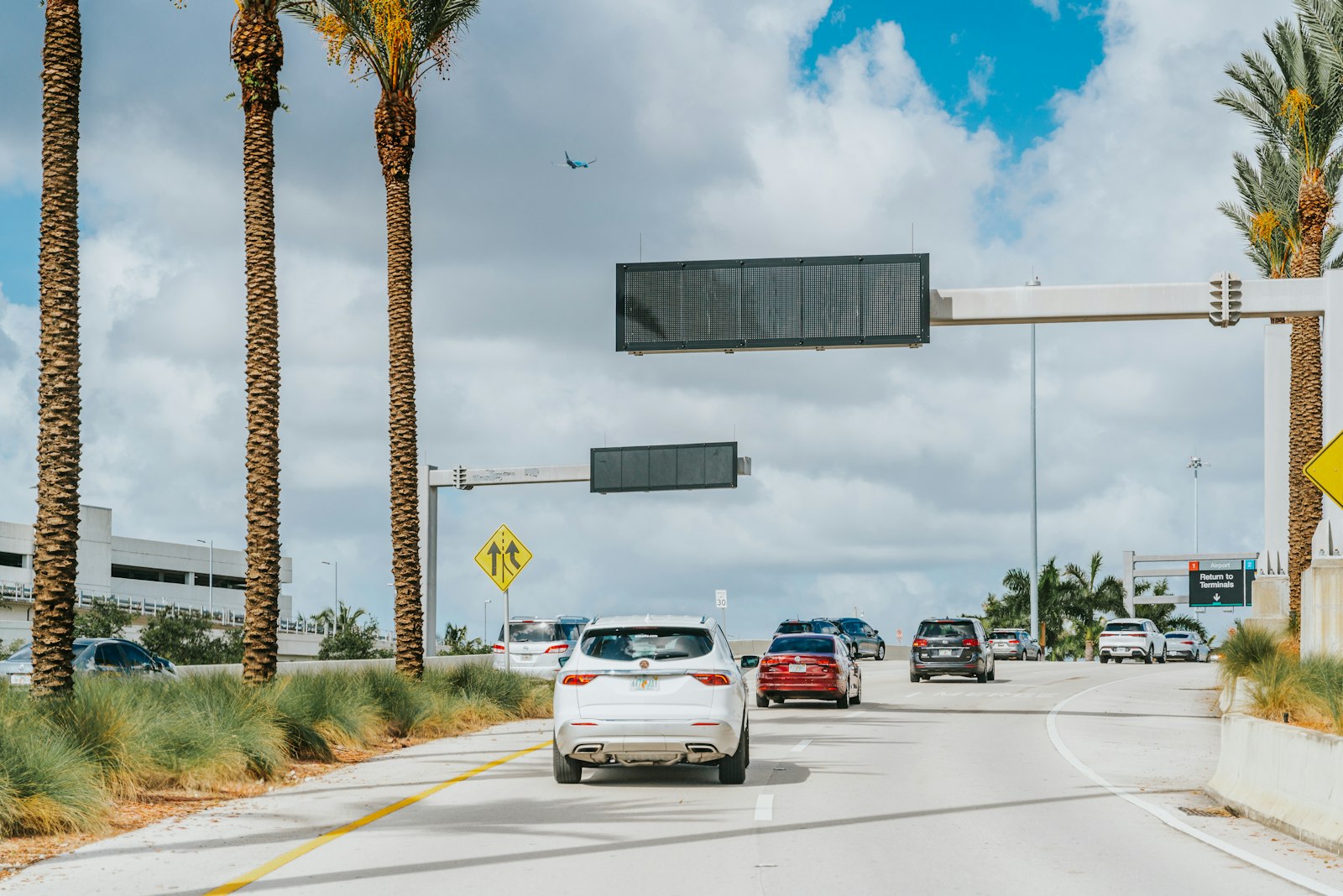
Florida requires new residents to register their vehicles within 10 days of establishing residency. You become a resident for this purpose when you start a job in Florida, enroll a child in a Florida public school or register to vote here, among other things. Registration is handled by your county tax collector’s office, which acts as the agent for the Florida Department of Highway Safety and Motor Vehicles (FLHSMV).
What to bring
- Application for Certificate of Title (Form HSMV 82040)
- VIN verification. An out-of-state vehicle needs its VIN physically verified. The verification can be done on the title application or on a separate VIN and odometer verification form (HSMV 82042). Florida law enforcement officers, licensed Florida dealers, notaries and tax collector employees can do it. Some tax collector offices verify the VIN in their parking lot.
- Your out-of-state title, or lender information if the title is held by a lender.
- Proof of Florida insurance with PIP and property damage liability.
- Your driver license or other photo ID.
- Payment for title, registration, plate and initial registration fees.
If your car is financed
If a lender holds the title, the tax collector will request it or work with the lender to issue a Florida title that lists the lien. Call your lender early, because this step often takes the longest.
Florida registration fees
- Initial registration fee of $225 for vehicles getting a Florida plate for the first time. If you are transferring a Florida plate from a vehicle you already own, this fee may not apply.
- Title fee for the new Florida title
- Annual registration fee, based mainly on vehicle weight
- Plate fee and small county service fees
Florida has no annual safety or emissions inspection, so once you are registered, your yearly renewal is mostly paperwork and fees.
Florida insurance and PIP
Florida is a no-fault state. To register a vehicle, you need a policy issued in Florida that includes at least:
- $10,000 in personal injury protection (PIP)
- $10,000 in property damage liability (PDL)
You may have seen headlines about Florida repealing PIP. Bills to replace PIP with required bodily injury coverage have been introduced several times, but as of 2026 PIP remains required. Florida does not require bodily injury liability for most drivers, but many drivers buy it anyway, along with uninsured motorist coverage, because Florida has one of the highest rates of uninsured drivers in the country.
Florida also requires you to keep insurance continuously while a car is registered. If you cancel coverage without turning in your plate, your license and registration can be suspended.
Questions to ask your insurer before you move
- When does the Florida policy start? Have it start on or before the day your car is delivered, so you can register right away.
- Does the policy include comprehensive coverage? Comprehensive pays for hurricane, flood, hail and theft damage, which are common Florida risks.
- How much uninsured motorist coverage do you recommend? With so many uninsured drivers, this coverage protects you if the other driver cannot pay.
- Do rates change by ZIP code? Florida rates vary widely. Miami-Dade, Broward and Palm Beach counties are often more expensive than North Florida.
- Can I bundle home and auto? Homeowners insurance in Florida can be expensive and hard to find, so ask whether a bundle helps.
Keep your old policy active until the Florida policy starts, then cancel it and return your old plates if your previous state requires it. Some states suspend a registration if insurance ends while plates are still active.
Getting a Florida driver license
New residents must get a Florida driver license within 30 days of becoming residents. Applications must be done in person at a driver license office or a county tax collector that offers license services. Bring proof of identity, your Social Security number and two proofs of your Florida address, along with your current license. If you have a valid license from another state, you usually will not need to retake the road test.
Rules for snowbirds and part-time residents
Not everyone who spends the winter in Florida needs to register a car here. The 10-day rule applies to people who become Florida residents. If you keep your permanent home in another state and spend only part of the year in Florida, you can usually keep your home-state registration and insurance, as long as your insurer knows where the car is kept. Rules can change if you start working in Florida, enroll children in school or claim a homestead exemption. When in doubt, ask your county tax collector.
Many snowbirds ship their cars both ways each year. Booking the southbound trip for late October or early November and the northbound trip for late April or May helps avoid the busiest weeks. Our snowbird car shipping page has more details.
Driving in South, Central and North Florida
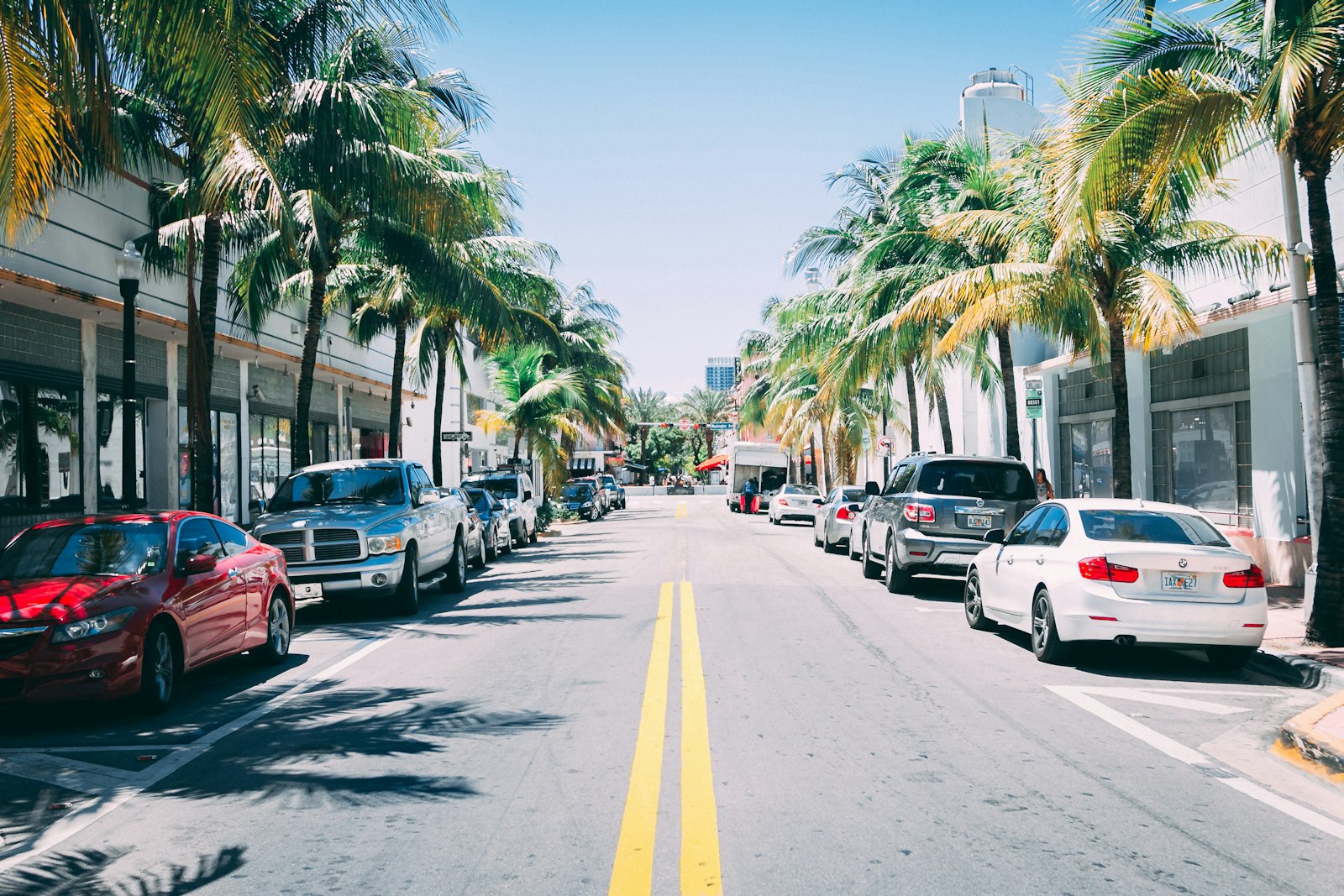
South Florida (Miami, Fort Lauderdale, Palm Beach)
Expect dense traffic on I-95 and the Palmetto Expressway, express lanes with variable tolls, and expensive parking in Miami Beach and Brickell. See our Miami car shipping page.
Central Florida (Orlando, Tampa, the Space Coast)
Theme-park traffic around Orlando and heavy congestion on I-4 are a fact of life. Tampa Bay drivers deal with busy bridges such as the Howard Frankland. See our Orlando car shipping and Tampa car shipping pages.
North Florida (Jacksonville, Tallahassee, Pensacola)
North Florida feels more like the rest of the Southeast, with lighter traffic and more rural driving. Jacksonville’s large military presence means many PCS vehicle moves. See our Jacksonville car shipping page.
Tolls
Florida has an extensive toll road network, including Florida’s Turnpike and many expressways around Miami, Orlando and Tampa. Get a SunPass or a compatible transponder such as E-PASS or E-ZPass; toll-by-plate is more expensive.
Protecting your car in Florida’s climate
- Heat and sun: Use a windshield sunshade and park in the shade or a garage when you can. UV damages dashboards, paint and headlights over time.
- Batteries: Heat shortens battery life. Many Florida batteries last only two to three years.
- Salt air: Wash your car regularly, including the underside, if you live near the coast.
- Rain: Summer afternoon storms are almost daily in some areas. Replace worn wipers and tires with good tread.
- Hurricanes: Hurricane season runs June 1 to November 30. Keep your gas tank at least half full during an active storm, know your evacuation route, and make sure your policy includes comprehensive coverage for flood and wind damage.
Electric vehicles in Florida
Florida has one of the fastest-growing EV markets in the country, with good charging coverage along I-95, I-75, I-4 and Florida’s Turnpike. A few tips if you are moving an EV:
- Charge level for shipping: Aim for about 30% to 50% battery charge at pickup.
- Evacuations: During a hurricane evacuation, charging stations along evacuation routes can get crowded. Keep your battery well charged when a storm is forecast.
- Heat: Precondition the cabin while plugged in during summer to save range.
- Flood risk: Never drive an EV through flood water, and have a technician check it if it has been sitting in salt water.
Buying a car in Florida after you move
If you decide to sell your old car and buy in Florida, be careful with used cars after major storms. Flood-damaged cars sometimes end up for sale with clean-looking interiors. Run a vehicle history report, look for water lines, rust under the seats and a musty smell, and have a trusted mechanic inspect any used car before you buy. Florida also charges sales tax on vehicle purchases, plus county surtaxes in many areas.
Common mistakes to avoid
- Missing the 10-day registration deadline. It is one of the shortest in the country.
- Arriving without Florida insurance. You cannot register without a Florida policy.
- Forgetting the VIN verification. Have it done when you register, or have an authorized person complete it beforehand.
- Booking southbound transport in November at the last minute. Book four to six weeks ahead in peak season.
- Leaving personal items in the car during transport.
- Not getting the price locked in writing.
How NIKI Auto Transport helps you move to Florida
NIKI Auto Transport is a licensed and bonded auto transport broker (USDOT 4535689, MC-1799148). We arrange door-to-door shipping to every Florida city with vetted, insured carriers, offer open and enclosed transport, and back your booked price with NIKI’s Price Guarantee. Seasonal residents can book both directions with us each year.
Get a free quote on our Florida car shipping and car transport services page, or call (818) 732-1805.
Frequently asked questions
How long do I have to register my car in Florida after moving?
New residents must register their vehicles within 10 days of establishing Florida residency.
Does Florida require a vehicle inspection?
No. Florida has no annual safety or emissions inspection. Out-of-state vehicles do need a one-time VIN verification before their first Florida registration.
How much is the Florida initial registration fee?
Vehicles getting a Florida plate for the first time usually pay a one-time $225 initial registration fee, plus title and annual registration fees.
Is PIP still required in Florida?
Yes. As of 2026, Florida still requires $10,000 in personal injury protection and $10,000 in property damage liability.
When is the cheapest time to ship a car to Florida?
Southbound prices are usually lowest in late spring and summer and highest from October through December, when snowbirds head south.
How long does it take to ship a car to Florida?
One to three days from neighboring states, two to five days from the Northeast and seven to ten days from the West Coast, after a pickup window of one to five days.
Requirements and fees change. This guide reflects FLHSMV guidance as of 2026; confirm current rules with your county tax collector before you register.