
Service Comparison • NIKI AUTO TRANSPORT
A provider-selection framework covering federal authority, written terms, equipment, communication and service scope; this article answers the specific intent behind “cross country auto carrier” with practical decisions about vehicle condition, trailer type, timing, pickup access, documentation and delivery. This guide explains the decision in practical terms, including quote inputs, equipment, timing, pickup access, documentation and delivery.

Service Comparison
Start With the Real Shipping Question
People searching for cross country auto carrier often receive a fast answer before the shipment has been fully defined. The useful question is broader: which option better fits the vehicle, schedule, pickup environment, protection goal and total service scope. In this topic, the central issue is a provider-selection framework covering federal authority, written terms, equipment, communication and service scope; this article answers the specific intent behind “cross country auto carrier” with practical decisions about vehicle condition, trailer type, timing, pickup access, documentation and delivery.
Two customers can use the same search phrase and still need different plans. One may have a running sedan at an easy suburban address and a flexible week. Another may have a lifted truck, a secured auction release, a downtown street or a deadline tied to a flight. Mileage matters, but so do the details that determine whether a carrier can physically, legally and profitably accept the load.
The better option is the one matched to the actual shipment rather than the broadest claim. Write down the vehicle, both ZIP codes, the first available date, any final deadline, who will meet the driver and whether the vehicle rolls, steers and brakes. That short description is the foundation for every comparison in this guide.
Intent-specific guidance
Apply cross country auto carrier to a Real Shipping Plan
The search phrase is a starting point, not a complete order. A useful answer must connect the requested service to a real vehicle, two accessible locations and a date range a carrier can evaluate.
A provider-selection framework covering federal authority, written terms, equipment, communication and service scope; this article answers the specific intent behind “cross country auto carrier” with practical decisions about vehicle condition, trailer type, timing, pickup access, documentation and delivery.
Record the exact ZIP codes, identify the safest meeting points and decide which adult contacts can inspect and sign at each end. Separate the first available pickup date from any true deadline, then decide whether ordinary scheduling or expedited coordination fits.
Read deposit, payment, cancellation and change-order terms before booking, and save the written order with the condition photographs. These steps turn the keyword into a decision trail that the customer, coordinator and driver can all follow.
Build a Quote That Can Survive Dispatch
A quote becomes more accurate when it describes a shipment a real carrier can evaluate. A city or state is not as useful as an exact ZIP code. A model name may not reveal a lift kit, roof rack, oversized tires, low splitter or added equipment. “Runs” should mean the vehicle can start, move under its own power and load normally; otherwise, explain what it can and cannot do.
Ask whether the quote includes the full transportation service, which payment methods apply and what shipment changes could require a revision. If a number assumes an operable standard-size vehicle on open equipment, it should not silently be compared with a quote for enclosed service or an inoperable oversized vehicle.
For a shipment-specific starting point, use the NIKI car shipping quote form. Keep the same facts when comparing providers so the results describe the same job.
A Practical Preparation Checklist
Prepare for the actual handoff rather than only the drive. The driver needs a safe vehicle, clear access and a person authorized to inspect and sign. Complete these items before the pickup window opens:
- Wash enough of the exterior to make existing condition visible.
- Take dated photographs from every side, including wheels, glass and roof.
- Remove toll tags, valuables, loose electronics and unsupported accessories.
- Keep fuel near one-quarter tank unless the carrier gives different instructions.
- Check the battery, tires, parking brake and visible fluid leaks.
- Disable alarms and provide working keys or approved access devices.
- Fold or remove detachable antennas and secure convertible tops.
- Disclose low clearance, lift kits, racks, spoilers and non-factory dimensions.
- Confirm auction, dealer, port, storage or facility release requirements.
- Remove personal property unless the assigned carrier expressly approves it.
- Give both contacts the carrier’s communication and payment instructions.
- Keep the bill of lading and photographs after final delivery.
Never hide an inoperable condition to protect a low quote. A correct adjustment before dispatch is safer and less disruptive than a failed pickup. Likewise, tell the coordinator if an address changes or a facility has limited hours.
Verify the Company and Read the Written Terms
An interstate auto transport broker arranges transportation; a motor carrier operates the truck. Some websites make that distinction unclear. The FMCSA consumer advisory for automobile transporters recommends understanding the role and checking federal registration. The FMCSA SAFER Company Snapshot can be searched by company name, USDOT number or MC number.
Verification is one part of due diligence. Also review the legal business name, contact information, cancellation terms, deposit timing, balance payment, insurance documentation and the process for reporting a problem. Ask who will be the motor carrier and how that identity will be communicated before pickup.
Online reviews can reveal communication patterns, but they do not replace authority or written terms. Give more weight to specific accounts that describe route, vehicle, dates and resolution than to vague praise or anger. Reliable coordination is visible in clear answers before money or a vehicle changes hands.
Cost, Capacity and the Variables Behind the Number
Auto transport pricing is a live capacity decision. Distance contributes fuel, driver time and equipment use, yet the carrier must also consider where the truck is before pickup, where the vehicle leaves the trailer, how many other compatible vehicles can share the route and whether the timing works with legally required operating limits. A shorter difficult move can cost more per mile than a long, dense interstate lane.
Vehicle size and weight affect available trailer positions. Enclosed trailers usually carry fewer vehicles than open haulers. Winch loading, low-clearance loading, rural repositioning, ferries, ports, gated facilities and restricted urban streets add operational requirements. Seasonal flows can make one direction much busier than the reverse. These are not random surcharges; they are signals about the equipment and time needed to perform the move.
Use an auto transport cost guide for budgeting, then request a current quote with complete details. Avoid treating a national average or per-mile table as a promise. A transparent provider should explain the assumptions behind the number and contact you before making a material change.
Map the Shipment From Pickup to Delivery
- Describe the shipment. Confirm the vehicle, condition, locations, contacts and date requirements.
- Select the service. Match open or enclosed equipment and any special loading capability.
- Review the order. Read pricing assumptions, payment, cancellation and communication terms.
- Coordinate dispatch. Receive the carrier and driver details and confirm an accessible meeting point.
- Inspect at pickup. Photograph the vehicle and review the bill of lading before loading.
- Stay reachable. Keep both contacts available while the truck moves through traffic, weather and scheduled stops.
- Inspect at delivery. Compare condition before signing and keep the completed paperwork.
The pickup window and transit estimate are related but different. Dispatch identifies a compatible carrier; transit begins after the vehicle is loaded. A driver may safely update an estimate as conditions change, but a delivery window should never be treated like an airline arrival minute. Learn more in NIKI’s step-by-step car shipping overview.
The most effective customers plan a responsible window, identify a backup adult contact and avoid scheduling an irreversible flight, closing or event immediately after the earliest possible delivery time.
Choose Equipment for the Vehicle, Not the Headline
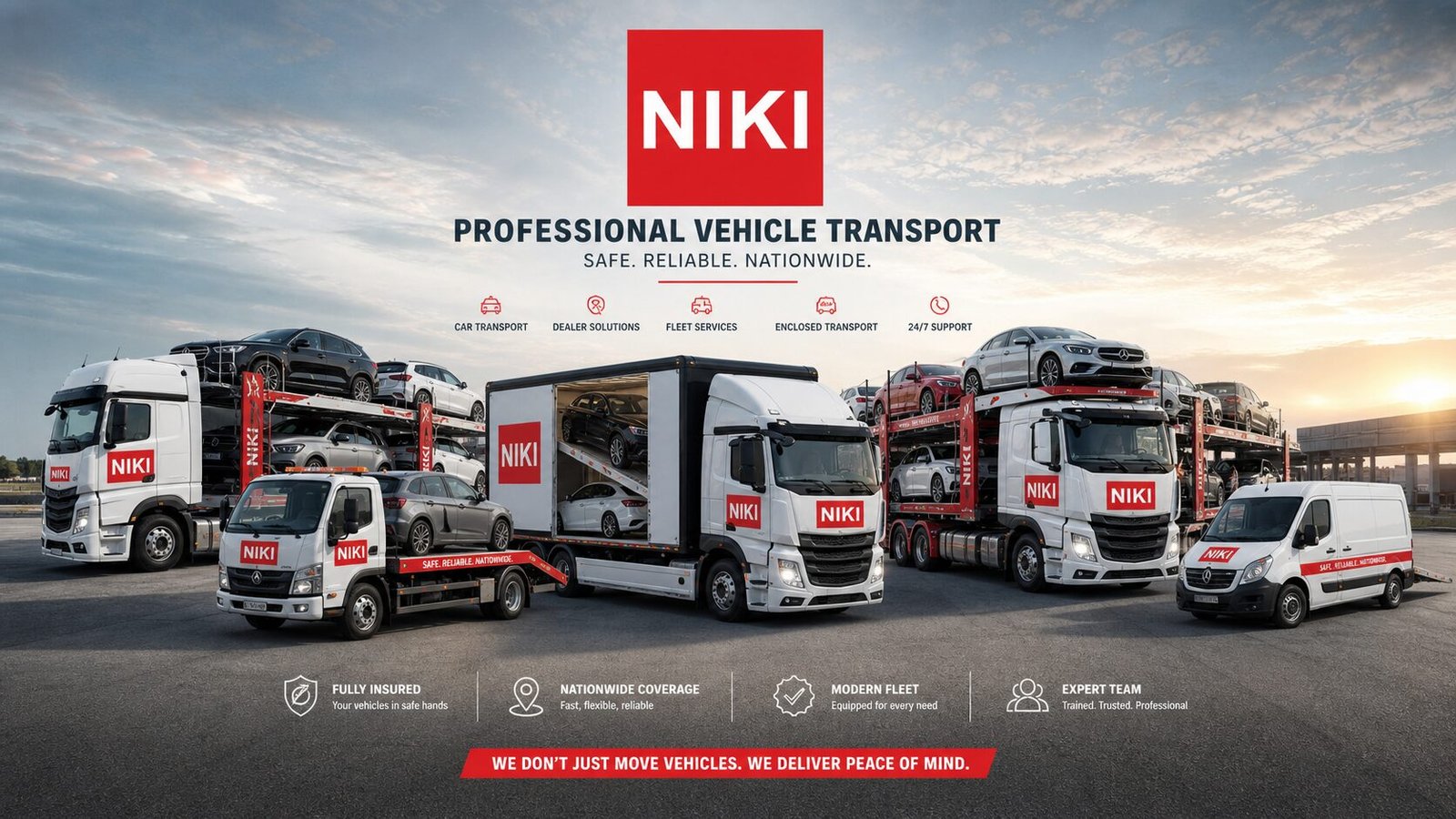
Open auto transport is the standard choice for most operable daily drivers. It offers broad capacity and efficient multi-vehicle loading, while the vehicle remains exposed to normal weather and road conditions. Preparation and condition photographs still matter, just as they do for every service type.
Enclosed auto transport adds a covered environment and is often considered for collector, exotic, restored, luxury or especially low-clearance vehicles. The correct trailer also depends on ramp angle, lift-gate needs, vehicle width and tie-down requirements. “Enclosed” is not a substitute for disclosing modifications.
If the vehicle does not start, steer, roll or brake normally, say so before booking. A winch can help load some inoperable vehicles, but it does not solve locked wheels, unsafe tires, inaccessible garages or missing forklift support at a salvage yard. Equipment matching is part of the quote, not a detail to reveal when the truck arrives.
Timing and Access Are Part of the Service
Pickup timing depends on a carrier being close enough, having a compatible trailer position and continuing toward the destination. A flexible date window usually creates more workable options than a single mandatory hour. Expedited service can prioritize a narrow requirement, but it cannot remove traffic, weather, inspections, other scheduled stops or safety limits after pickup.
Door-to-door car shipping means service as close to the requested addresses as the truck can safely and legally reach. Auto haulers are long, tall and difficult to turn. Apartment drives, residential islands, campuses, hospitals, ports, military installations and older city blocks may require a nearby retail lot or broad public road.
Choose a meeting point with room to enter, load and exit without backing through traffic. Confirm permission if the property is private. If pickup or delivery occurs after dark, use a well-lit location so the condition report remains meaningful. A five-minute access conversation can prevent hours of delay.
Three Scenarios That Need Different Plans
A regularly driven vehicle where availability and value matter most
This is usually the simplest version of cross country auto carrier. Accurate ZIP codes, open equipment, a practical date window and easy truck access support a broad carrier search. The customer still needs photographs, reachable contacts and a careful delivery inspection.
A collector, luxury or low-clearance vehicle requiring additional handling
This move needs additional review before price is compared. Dimensions, condition, authorization, release hours or protection requirements may narrow the carrier pool. Written details prevent the wrong truck from arriving and give every party the same operating plan.
A time-sensitive move with limited access at one or both addresses
Schedule and location may matter as much as mileage. A safe meeting point, flexible backup contact or separately priced expedited option can be more useful than assuming ordinary dispatch will meet an inflexible deadline.
Cross Country Auto Carrier: How to Compare Providers and Services FAQs
What information is needed to plan cross country auto carrier?
Provide exact pickup and delivery ZIP codes, the year, make and model, operability, modifications, preferred equipment, the first available date and any access restrictions. Complete details make the quote and carrier search more useful.
Is a car shipping quote a guaranteed final price?
A useful quote should clearly state its assumptions, included services, payment terms and what could cause a change. Vehicle condition, location, equipment or timing changes should be disclosed before dispatch.
How early should customers arrange auto transport?
Many customers begin one to three weeks before the first available pickup date. Busy seasons, remote locations, enclosed equipment and narrow schedules can benefit from additional lead time.
Does door-to-door service mean the truck will enter every driveway?
It means pickup and delivery are arranged as close to the requested addresses as safely and legally practical. Low branches, tight turns, weight restrictions or gated access may require a nearby meeting point.
Should the vehicle be empty during transport?
Remove valuables, household goods and loose items unless the assigned carrier expressly approves a limited amount. Personal property can create weight, visibility, security and coverage issues.
What happens if the vehicle does not run?
Disclose whether it rolls, steers and brakes and whether keys are available. The carrier may need a winch and sufficient straight, firm access for loading, which can affect equipment and price.
How is vehicle condition documented?
The driver and customer review the vehicle at pickup and record visible condition on the bill of lading. Repeat the inspection at delivery before signing and keep dated photographs from both handoffs.
How can customers verify an interstate auto transport provider?
Confirm the company identity and role, review written terms and use the FMCSA resources linked in this guide to check interstate broker or carrier registration. Ask who will operate the truck before pickup.
Build the Shipment Around Real Details
Cross Country Auto Carrier: How to Compare Providers and Services becomes easier when the quote, equipment and handoffs all describe the same vehicle and schedule. NIKI coordinates interstate vehicle transportation through properly registered motor carriers and keeps pickup and delivery expectations clear.