★★★★★
Thank you for your great service and giving me the best price. I would like to recommend NIKI Auto Transport to everyone.

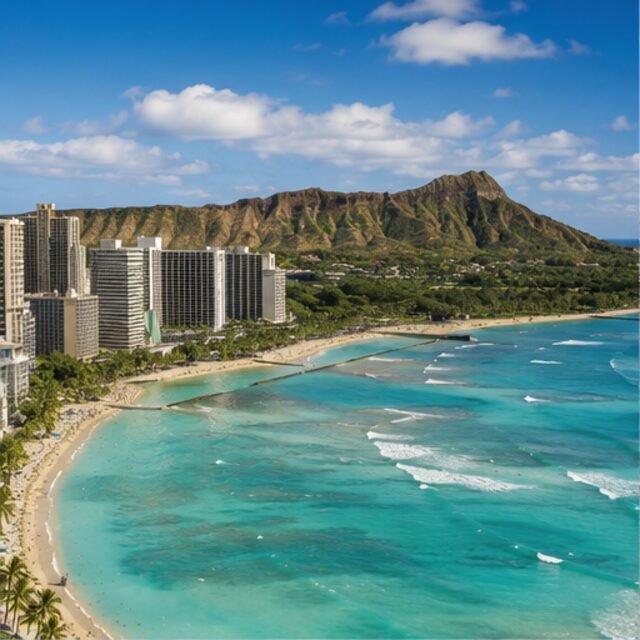
Hawaii vehicle shipping · islands and mainland
NIKI Auto Transport arranges the whole trip, from a pickup at your mainland door to the sailing into Honolulu, Kahului, Hilo, Kawaihae or Nawiliwili, and back again. One quote, one coordinator, one itinerary.
Takes 30 seconds. No credit card, no obligation.
A NIKI shipping coordinator will reach out shortly. In a hurry? Call (818) 732-1805.
Send us a written Hawaii car shipping quote from any licensed competitor for the same route, vehicle, dates and service, and NIKI beats it. Your price is itemized, locked for 30 days under the TruePrice Guarantee, and you pay $0 until a carrier is secured.
Quick answer: shipping a standard car to Hawaii costs about $1,500 to $2,100 from a West Coast port and $2,500 to $3,800 with door pickup from the Midwest or East Coast. The trip takes 2 to 4 weeks from the West Coast and 4 to 6 weeks from the East Coast. Cars sail with Matson or Pasha Hawaii from Long Beach, Oakland, Tacoma or San Diego and arrive at Honolulu, Kahului, Hilo, Kawaihae or Nawiliwili.
Every Hawaii quote has three parts: mainland trucking, the ocean crossing and port handling. The ranges below are what NIKI customers typically pay for a running vehicle on an open mainland carrier and roll-on/roll-off ocean service.
| Pickup region | Sedan or coupe | SUV or crossover | Pickup truck or van |
|---|---|---|---|
| West Coast port drop-off (CA, WA) | $1,500–$2,100 | $1,800–$2,500 | $2,000–$2,900 |
| West Coast door pickup | $1,800–$2,500 | $2,100–$2,900 | $2,400–$3,300 |
| Mountain & Southwest (AZ, NV, UT, CO) | $2,100–$2,900 | $2,500–$3,300 | $2,800–$3,700 |
| Texas & Midwest | $2,500–$3,300 | $2,900–$3,800 | $3,200–$4,200 |
| East Coast & Southeast | $2,900–$3,800 | $3,300–$4,300 | $3,600–$4,800 |
Ranges assume a running vehicle, flexible pickup dates and standard dimensions. Neighbor-island ports (Kahului, Hilo, Kawaihae, Nawiliwili) usually add $150 to $400. Enclosed mainland trucking adds roughly 40 to 70 percent to the trucking leg; a dedicated ocean container can double the ocean leg. Hawaii-to-mainland shipments typically run $1,000 to $2,000 from the port to a West Coast address.
Not included unless you add them: island delivery from the port to your door, extra declared-value coverage, port storage after the free period, and inoperable-vehicle handling.
See how NIKI car shipping prices are built or read the TruePrice Guarantee, which locks your quote for 30 days.
Add up four blocks: the truck to the port, waiting for the next sailing, the ocean crossing and port processing after the ship docks.
| Sailing port | Ocean crossing to Honolulu | Neighbor islands | Door-to-port total (West Coast pickup) |
|---|---|---|---|
| Long Beach / Los Angeles, CA | 5–7 days | +2–7 days | 2–3 weeks |
| Oakland, CA | 5–7 days | +2–7 days | 2–3 weeks |
| Tacoma / Seattle, WA | 7–9 days | +2–7 days | 2–4 weeks |
| San Diego, CA | 6–8 days | +2–7 days | 2–3 weeks |
From the East Coast, the realistic total is 4 to 6 weeks. If your flight lands before the car does, NIKI can tell you the exact release date so you can book a rental for only the days you need it.
We can move a pickup to the front of a carrier's schedule and book the next available sailing, but we cannot make a ship sail sooner. Expedited service is worth it when your pickup date is fixed; it does not shorten the crossing. How expedited pickup works.
Two ocean carriers handle nearly every car that sails to Hawaii. NIKI books the sailing and schedules the mainland truck to meet its cutoff.
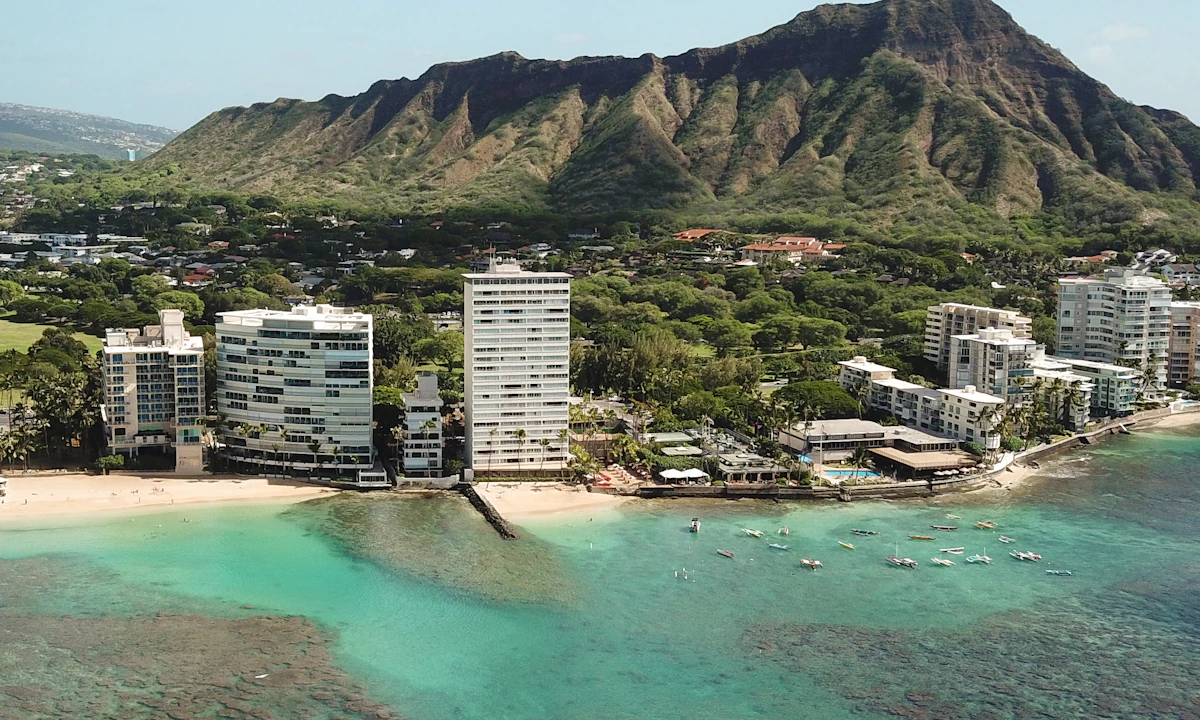
The largest Hawaii ocean carrier, sailing from Long Beach, Oakland and Tacoma to all five main ports. Matson's vehicle rules are strict on fuel level, personal items and, since 2025, electric vehicles. NIKI checks the current Matson rule sheet before your car goes to the port.
Sails from Long Beach and San Diego with dedicated vehicle ships. Pricing is often competitive for Southern California origins and for larger vehicles. Pasha Hawaii's vehicle shipping requirements are published online and we quote against them.
Six steps from quote to keys. Your coordinator stays the same person the whole way.

Use the form above or call (818) 732-1805. You get the trucking, ocean and port charges on separate lines, locked for 30 days.
We reserve space with Matson or Pasha for your island and confirm the port cutoff. No deposit is charged until a carrier is assigned to your pickup.
A vetted carrier collects the car at your door, completes the bill of lading inspection with you, and drives it to the port before the cutoff.
The port inspects the car, confirms it meets the carrier's rules and loads it onto the ship. You receive the booking number and sailing date.
After docking, the port discharges and processes the vehicle. We send you the release date and the terminal's pickup hours.
Pick up at the terminal with photo ID and your booking number, or let NIKI deliver the car to your door on Oahu, Maui, Kauai or Hawaii Island.
You choose the mainland method and the ocean method separately. Most customers pair open trucking with roll-on/roll-off service.
Open transport carries your car on a standard multi-car trailer and is the right choice for daily drivers. Enclosed transport uses a covered trailer for classic, exotic or freshly restored cars and costs 40 to 70 percent more on the trucking leg. Compare open and enclosed shipping.
Roll-on/roll-off (RoRo) means the car is driven onto the ship and parked on an enclosed vehicle deck. It is the standard, lowest-cost ocean method and the car travels inside the ship, protected from weather. Container service seals the car in a dedicated 20-foot container; it costs roughly double and is usually chosen for high-value cars or when household goods are shipped in the same container.
Important: booking an enclosed truck does not put your car in a container at sea. If you want full enclosure for the whole trip, ask your coordinator to quote enclosed trucking plus container ocean service.
EV rules are the most common surprise in Hawaii car shipping right now. Carrier policies on lithium-battery vehicles changed during 2025 and 2026, and at least one major ocean carrier paused standard electric vehicle bookings. Plug-in hybrids and fully electric cars may face different acceptance rules, charge-level limits and additional documentation from conventional hybrids.
What NIKI does: before quoting, we confirm the current EV policy with the ocean carrier for your sailing, tell you the required state of charge at drop-off, and book container service if RoRo is not available for your vehicle. If an EV cannot be shipped on your dates, you hear that before you pay anything.
Pearl Harbor–Hickam, Schofield Barracks, Kaneohe Bay, Fort Shafter and Tripler bring thousands of service members to Oahu every year. With PCS orders, the government usually ships one privately owned vehicle through the official POV program. Many families need a second car, a motorcycle, or a vehicle that the orders do not cover.
NIKI handles those shipments with a military discount, pickup timed to your report date and a coordinator who understands that your travel claim depends on the paperwork being right. We also ship cars home when you PCS out. Military car shipping details and discounts.
The reverse trip is simpler and usually cheaper. Space on the eastbound sailing is easier to get, and the ocean leg ends at a West Coast port with carriers available every day.
Typical cost from a Hawaii port to a West Coast address is $1,000 to $2,000. Add $600 to $1,500 for delivery east of the Rockies. Students leaving the University of Hawaii, retirees heading back to the mainland and families ending a PCS tour are our most common outbound customers.
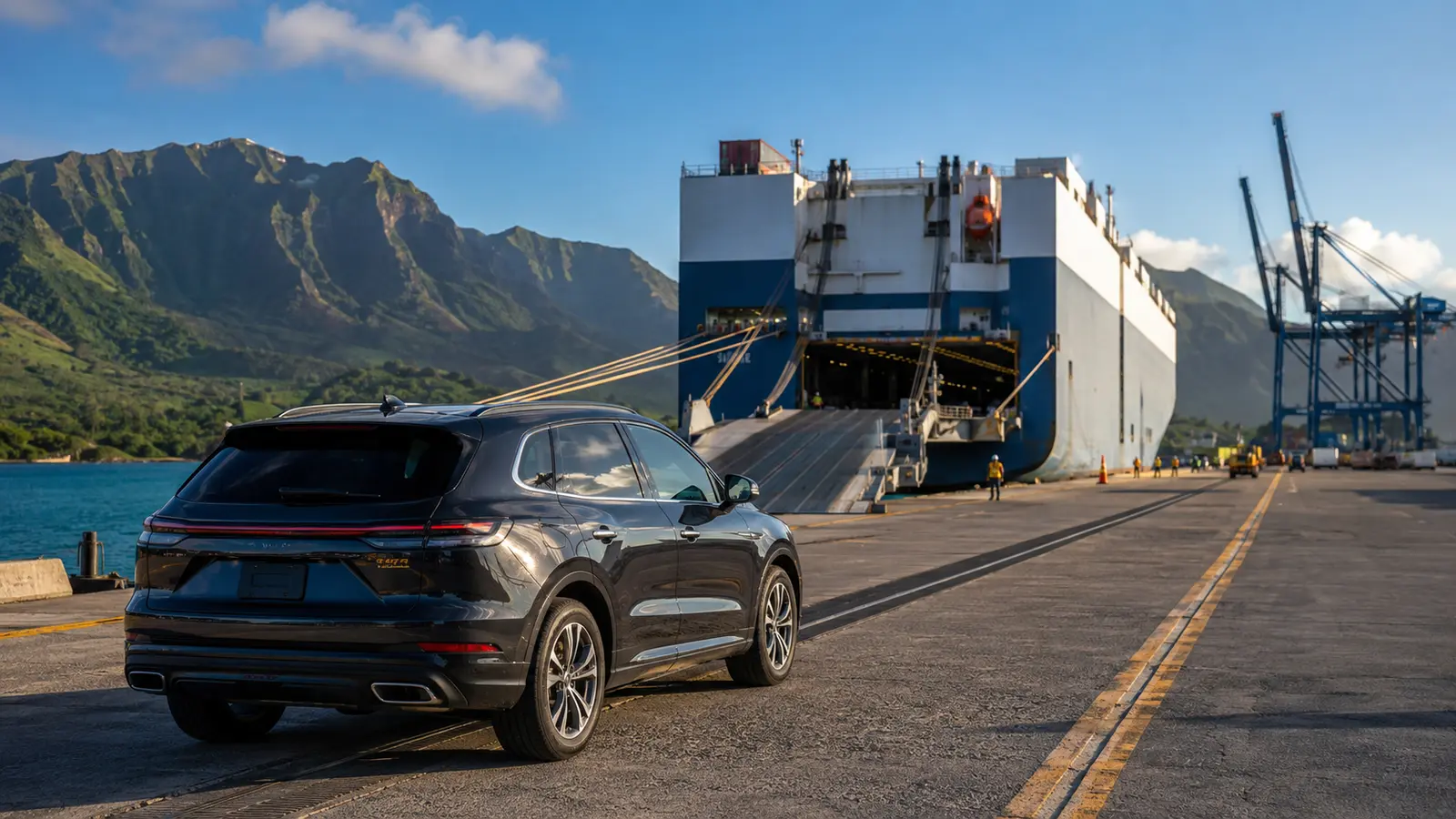
Hawaii ports refuse cars that break the ocean carrier's rules, and a refused car means a missed sailing. These rules apply to both Matson and Pasha; your coordinator sends the current version for your sailing.
NIKI sends a one-page checklist and the lienholder letter template after you book.
Collection, inspection and the registration steps that catch most newcomers.
Bring photo ID and the booking number. Walk around the car and compare it with your pickup photos before you leave the terminal; note anything new on the delivery receipt and sign only after that. Terminals charge daily storage after the free period, so collect within a few days of release.
Hawaii registers vehicles by county, not through a state DMV. Out-of-state cars need a Hawaii safety inspection, proof of Hawaii no-fault insurance, the shipping receipt and the title. Apply at the county office where you live: City and County of Honolulu (Oahu), Maui County, Kauai County or Hawaii County.
Your mainland policy usually keeps covering the car in transit, but most insurers require a Hawaii policy once the car is garaged on the island. Arrange the Hawaii policy before the car is released so the safety inspection and registration can happen the same week.
New to the islands? The State of Hawaii newcomers guide covers licenses, registration and residency, and GoHawaii covers island life.
Used cars in Hawaii generally sell for 15 to 25 percent more than mainland equivalents because every car on the lot was shipped in. Shipping makes sense when your car is paid off, worth more than about $8,000, or is the model you want and cannot easily find on the island. Shipping a car worth less than its shipping cost rarely pays unless you need it on day one.
NIKI is a licensed auto transport broker, which means we do not own the ships or every truck. We book the ocean carrier, assign a vetted mainland carrier, and stay accountable to you for the whole itinerary.
Trucking, ocean, port and tax on separate lines, locked for 30 days under the TruePrice Guarantee. No mystery port fees on delivery.
Every trucking carrier is checked for active FMCSA authority and cargo insurance before dispatch, and you receive the carrier's name and insurance certificate.
The same person books the sailing, dispatches the truck and sends your release date. Call (818) 732-1805 and you reach a human.
These are general NIKI reviews from Trustpilot and direct customer feedback; read all customer reviews.
Thank you for your great service and giving me the best price. I would like to recommend NIKI Auto Transport to everyone.
Absolutely amazing service from start to finish. They were professional, the rate was competitive, and the process was headache-free.
They were easy to reach, patient with my questions, and clear about what would happen next. My car was delivered safely.
Most standard cars cost about $1,500 to $2,100 to ship from a West Coast port to Honolulu, and roughly $2,500 to $3,800 with door pickup from the Midwest or East Coast. SUVs, trucks, enclosed trucking and container service cost more. Request a NIKI quote for an exact itemized price.
Plan on 2 to 4 weeks from a West Coast pickup and 4 to 6 weeks from the East Coast. The ocean leg from California to Honolulu takes about 5 to 7 days; neighbor-island deliveries add several days, and ports need 2 to 5 business days to process a vehicle after the ship docks.
On the mainland, vehicles sail from Long Beach and Los Angeles, Oakland, Tacoma/Seattle and San Diego. In Hawaii, cars arrive at Honolulu (Oahu), Kahului (Maui), Hilo and Kawaihae (Hawaii Island) and Nawiliwili (Kauai). Lanai and Molokai are served by interisland barge.
Carrier policies on EVs changed in 2025 and 2026, and some ocean carriers paused or restricted electric vehicle bookings. NIKI confirms the current EV and hybrid policy with the ocean carrier before you book, so you are not surprised at the port.
No. Ocean carriers to Hawaii require the vehicle to be empty apart from factory equipment, a jack and a spare tire. Household goods in the car can cause the port to refuse the vehicle. Ship belongings separately.
You or an authorized adult must collect the vehicle at the Hawaii port with photo ID and the booking reference, unless you add island delivery to your door. NIKI can arrange on-island trucking from the port to your address on Oahu, Maui, Kauai and Hawaii Island.
Yes. NIKI arranges the reverse route: port drop-off in Hawaii, the sailing to a West Coast port, and trucking to any mainland address. Hawaii-to-mainland shipments usually cost less than the inbound direction.
Service members with PCS orders to Hawaii can usually ship one privately owned vehicle at government expense through the official POV program. If you need to ship a second vehicle, or your orders do not cover a POV, NIKI arranges it at a military discount.
Register with the county where you live, not the state: Honolulu for Oahu, Maui County, Kauai County or Hawaii County. You will need the title or lien information, the shipping receipt, a Hawaii safety inspection and proof of Hawaii auto insurance.
The bill of lading is the inspection and receipt document completed at pickup and delivery. It records your car's condition at each handoff, so compare it with your own photos and note any new damage on it before signing at the port.
Tell us the island, the mainland address and the car. You get an itemized price for the truck, the sailing and the port, locked for 30 days.