
Exporting a car from the United States is not hard, but it is strict. U.S. Customs and Border Protection (CBP) checks every used vehicle leaving the country by sea, and missing a document or a filing deadline can leave your car sitting at the port, missing its ship or facing penalties. This guide walks you through how to export a car from the USA in 2026, step by step: the 72-hour rule, the export filing, title and lien requirements, getting the car to the port, and the mistakes that cause the most delays.
NIKI Auto Transport handles the U.S. truck transport to the export port or your freight forwarder’s warehouse. Learn more on our international car shipping page.

On this page
- The basic rules for exporting a used car
- Documents you need to export a car
- How to export a car from the USA, step by step
- Title problems that delay exports
- Exporting a car as a foreign buyer
- Can you export a financed car?
- Preparing the car for export
- After the car leaves: U.S. registration and insurance
- What exporting a car costs
- Common export mistakes to avoid
- Car export checklist
- Frequently asked questions
The basic rules for exporting a used car
- Export information must be filed electronically in the Automated Export System (AES) for every used self-propelled vehicle, regardless of its value, condition or destination.
- The filing must be made at least 72 hours before export, and the AES Internal Transaction Number (ITN) must appear on the export documents.
- The original title or other proof of ownership must be presented to CBP at the port of export.
- Penalties for late, missing or false filings can reach $10,000 per violation.
Most people let an FMC-licensed freight forwarder handle the filing and the port paperwork. You still need to supply the right documents on time.
Documents you need to export a car
| Document | What it is | Notes |
|---|---|---|
| Original certificate of title | Proof of ownership | Copies are generally not accepted; a certified copy may be accepted in some cases |
| Salvage or junk certificate | Ownership document for some damaged vehicles | Common for auction cars; check destination rules |
| Manufacturer’s certificate of origin (MCO) | Ownership document for new, untitled vehicles | Used for new cars bought from dealers |
| Lienholder authorization | Permission to export a financed or leased car | Usually a notarized letter from the lender |
| Bill of sale | Proof of purchase and price | Helps support the value in the filing |
| Owner ID and tax ID | Passport or license, plus EIN or other identifier | Foreign buyers without an EIN use a U.S. authorized agent |
| Booking or dock receipt | The forwarder’s shipment details | Needed to deliver the car to the right place |
How to export a car from the USA, step by step
- Check the destination country’s import rules. Look at age limits, emissions and safety standards, left-hand-drive rules, salvage bans, import permits, duty and VAT. Some cars simply cannot be imported to some countries.
- Make sure you own the car outright, or get written permission from the lienholder. Financed and leased cars cannot be exported without it.
- Choose an FMC-licensed forwarder or NVOCC. Compare quotes for RoRo and container shipping. See RoRo vs container car shipping.
- Send the forwarder your documents, including the original title, as early as possible. Many forwarders want them a week or more before the cutoff.
- The forwarder files the export information in AES and receives the ITN.
- Ship the car to the port or warehouse. NIKI can pick it up anywhere in the continental U.S. See car shipping to U.S. export ports.
- CBP reviews the documents and the vehicle at least 72 hours before export. The car may be inspected.
- The car is loaded onto a RoRo ship or into a container and sails.
- Destination clearance: a customs broker clears the car, you pay duties and taxes, and the car is released.
- Register the car in the destination country after any required inspections or modifications.
Title problems that delay exports
- The title is not in the seller’s or your name. Make sure the chain of ownership is complete.
- The title is still with the lender. Pay off the loan or get a lienholder letter.
- Auction titles arrive late. Some auctions mail titles days or weeks after the sale.
- The VIN does not match. The VIN on the title must match the car exactly.
- Branded titles such as salvage, flood or non-repairable may be accepted for export but refused by the destination country.
- A lost title must be replaced by the state DMV before export, which can take weeks.
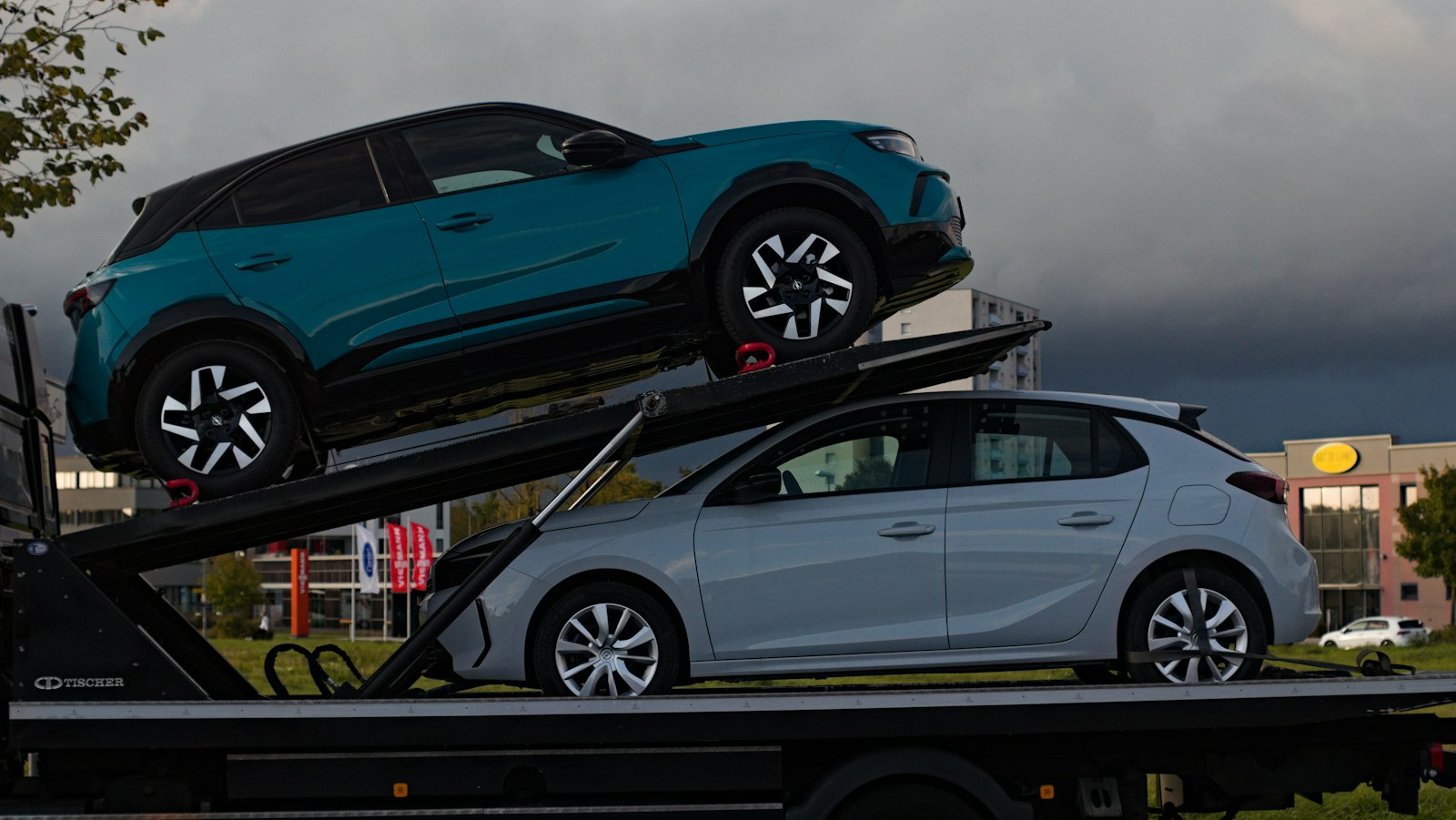
Exporting a car as a foreign buyer
If you live outside the U.S. and bought a car from a U.S. dealer, private seller or auction, you can still export it. Without a U.S. EIN, you authorize a U.S. agent, usually your freight forwarder, to file the export information on your behalf, and the agent provides the identification CBP requires. Your forwarder will also tell you where to have the car delivered. NIKI can pick up the car from the seller or auction and deliver it there. See auction car shipping to export ports.
Can you export a financed car?
Only with the lender’s permission. CBP needs proof of ownership, and lenders hold the title on financed cars. Ask the lender for a letter that authorizes export, usually notarized and on the lender’s letterhead, with the VIN and the destination. Many lenders will not allow export until the loan is paid, and leased cars almost always need to be bought out first.
Preparing the car for export
- Leave no more than a quarter tank of fuel.
- Remove personal items unless your forwarder allows them in a container.
- Clean the car thoroughly, including the underside, especially for Australia, New Zealand and other countries with strict biosecurity rules.
- Take dated photos and record the mileage.
- Remove toll tags and U.S. license plates if your state requires you to return them.
- Tell your forwarder about electric or hybrid batteries, which can require hazardous-materials handling.
- Keep copies of every document, and keep the spare key with you.
After the car leaves: U.S. registration and insurance
Once your car has been exported, cancel or adjust your U.S. insurance (after confirming marine coverage for the ocean trip), and follow your state’s rules for plates and registration. Some states ask you to surrender plates or notify the DMV that the vehicle has left the country. Keep the export documents; you may need them to register the car abroad or to prove it was exported.
What exporting a car costs
- U.S. transport to the port: about $350 to $1,900, depending on distance
- Ocean freight: about $1,000 to $3,500 for a sedan, depending on destination and method
- Export filing and documentation: often included by the forwarder or a modest fee
- Marine insurance: a percentage of the car’s value
- Destination charges, duty and taxes: vary widely by country
See the full breakdown in how much it costs to ship a car overseas.
Common export mistakes to avoid
- Shipping the car to the port before the title is ready
- Assuming a financed car can be exported without the lender
- Buying a car the destination country will not accept
- Missing the forwarder’s document deadline, which is often earlier than 72 hours
- Leaving belongings in a RoRo car
- Not buying marine insurance
- Using a company that is not FMC-licensed to book the ocean shipment
- Underestimating destination taxes
Car export checklist
- Destination import rules checked
- Original title (or MCO or salvage certificate) in hand
- Lienholder letter if financed
- Bill of sale if recently bought
- Owner ID and EIN, or a U.S. agent authorization
- FMC-licensed forwarder booked and documents sent
- Door-to-port transport booked before the cutoff
- Car cleaned, empty and with a quarter tank or less
- Marine insurance arranged
Related guides
- International car shipping
- Cost to ship a car overseas
- RoRo vs container car shipping
- Car shipping to U.S. export ports
- Military car shipping
Frequently asked questions
What is the 72-hour rule for exporting a car?
For used self-propelled vehicles, export information must be filed in AES and the vehicle and its documents presented to CBP at least 72 hours before export. The rule applies regardless of the car’s value or destination.
Do I need the original title to export a car?
Yes. CBP requires the original title or other acceptable proof of ownership, such as a salvage certificate or a manufacturer’s certificate of origin for a new car.
Can I export a car that still has a loan?
Only with written permission from the lender, usually a notarized letter authorizing export. Many lenders require the loan to be paid off first.
Can a foreign buyer export a car from the USA?
Yes. A foreign buyer without a U.S. EIN can authorize a U.S. agent, usually the freight forwarder, to file the export information.
How long does it take to export a car?
Allow at least one to two weeks to gather documents and get the car to the port, plus the 72-hour CBP period, ocean transit of 1 to 8 weeks and destination clearance.
Does NIKI handle export paperwork?
No. NIKI arranges the U.S. truck transport to the port or forwarder warehouse. Export filing and ocean booking are handled by your FMC-licensed freight forwarder or NVOCC.