
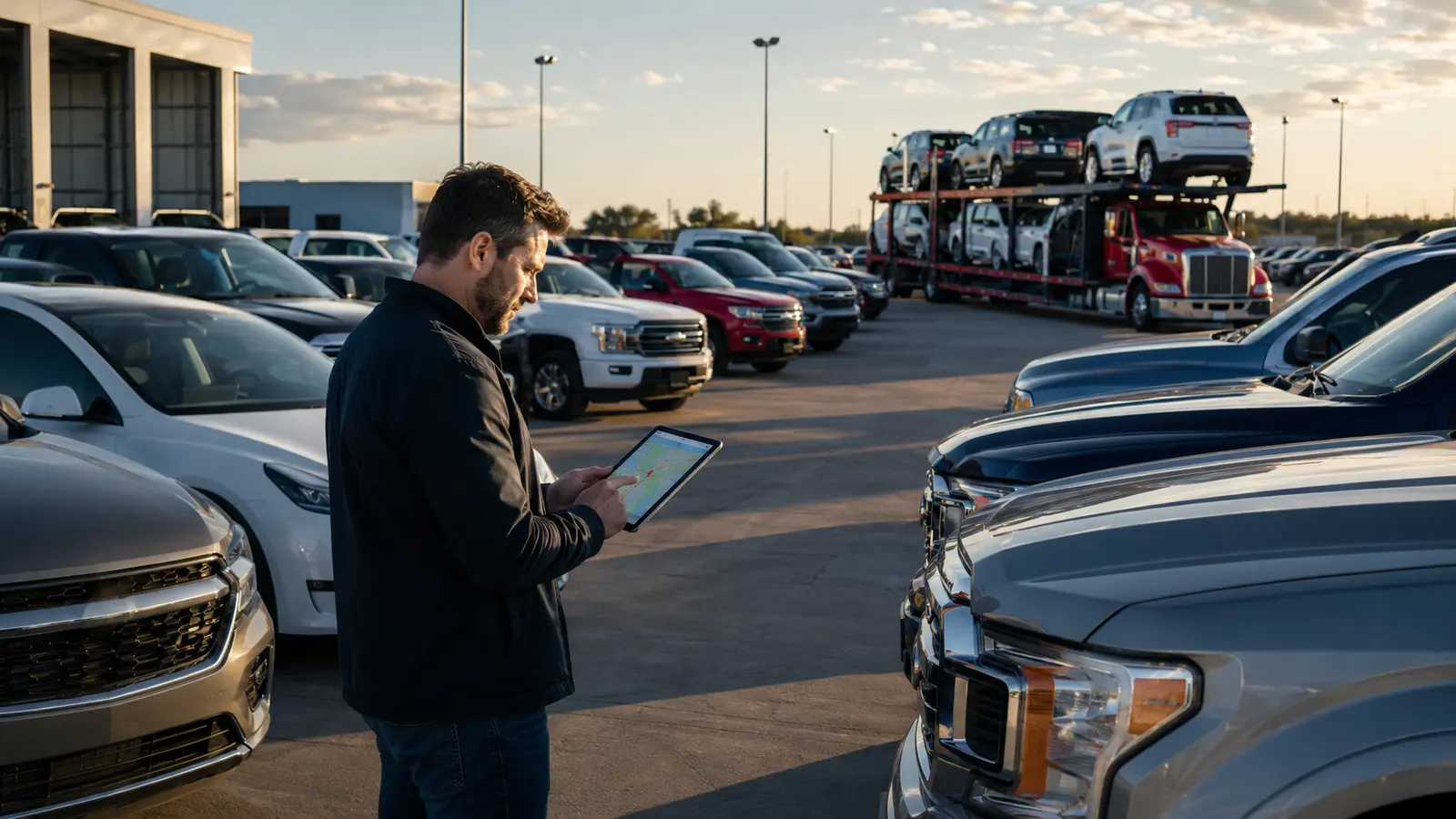
There is no universal best state. Compare inventory, climate, title risk, total delivered cost and inspection access before arranging transport home.
Read customer reviews on Facebook →The best state to buy a used car depends on the vehicle you want and the risk you can evaluate. California may offer extensive EV, luxury and enthusiast inventory. Texas can provide trucks, SUVs and large metropolitan dealer markets. Florida has broad seasonal, rental and luxury supply. Arizona and Nevada attract buyers looking for dry-climate bodies. Georgia and the Carolinas sit near active dealer and auction lanes. Midwestern states can offer fleet and truck selection, but road-salt exposure deserves close inspection.
A state label never proves condition. Florida and Texas vehicles can have flood history. A desert car can have sun-damaged paint, rubber and interior. A California vehicle may face emissions or registration questions in the buyer’s home state. A northern vehicle may be mechanically excellent despite surface rust, while a supposedly rust-free car can hide repairs. The VIN, records and hands-on inspection matter more than a stereotype.
This guide does not rank one state as universally cheapest or safest. It shows how to compare market depth, delivered cost, title and theft data, climate exposure, inspection access, taxes, registration and transport. NIKI Auto Transport can arrange the interstate move with an independent motor carrier after the buyer has selected and verified the vehicle; NIKI does not inspect, warrant or certify the purchase.
What makes a state good for used-car shopping?
A useful market combines selection, transparent history, inspection access and a delivered price that survives fees and transportation. A large inventory helps only if the buyer can identify a sound vehicle and legally title it at home.
Inventory depth and vehicle specialization
States with large populations, fleets, auctions and dealer networks produce more listings. Specialization can matter more than raw volume: trucks may be plentiful in Texas, EVs and imports in California, convertibles and luxury vehicles in Florida, and fleet units in commercial Midwest markets. Search by model, trim, drivetrain and service history rather than state alone.
A rare configuration may justify long-distance shopping, but an ordinary model might not. Compare similar local cars first. The out-of-state vehicle should offer enough advantage in condition, specification or price to cover inspection, travel, transport and administrative risk.
- Model and trim availability
- Dealer and auction volume
- Fleet or rental supply
- Enthusiast and specialty markets
- Independent inspection access
Total delivered value
Delivered value includes sale price, buyer fees, taxes, registration, title, inspection, repairs, temporary permits, transport and possible storage. Add a contingency for tires, battery, fluids or undisclosed maintenance. A car that appears $1,500 cheaper can become more expensive after a $2,500 combination of fees and corrections.
Ask for an itemized buyer’s order before sending money. When buying from a dealer, review the FTC Buyers Guide and put promises in writing. For private sales, verify the seller’s identity, title and payoff process through secure channels.
States and regions worth comparing
The following markets are useful starting points, not objective winners. Each offers selection advantages and a matching inspection question. A buyer should expand or narrow the search based on the specific vehicle.
California and Texas
California’s scale supports EV, luxury, import, collector and fleet inventory, especially around Los Angeles, the Bay Area, San Diego and inland auction corridors. Buyers should check title history, battery health for EVs, emissions compatibility and destination registration. Coastal air and sun exposure vary by location.
Texas has enormous truck, SUV, dealer, fleet and auction markets around Dallas–Fort Worth, Houston, Austin and San Antonio. Inspect for hail, flood exposure, heavy towing or work use and heat-related wear. The actual city matters because Texas transport mileage can vary by hundreds of miles.
- California: EV, luxury, import and enthusiast depth
- Texas: trucks, SUVs, fleet and auction volume
- Check emissions and registration compatibility
- Inspect flood, hail, heat and use history
Florida, Arizona and Nevada
Florida offers seasonal, rental, luxury and broad used-vehicle inventory. Inspect carefully for flood or storm history, salt and humidity exposure, sun damage and intensive rental use. A clean title does not replace physical inspection or a history report.
Arizona and Nevada attract buyers seeking reduced road-salt exposure. Dry climates can preserve underbodies, but intense UV and heat can damage paint, dashboards, seals, batteries, cooling systems and tires. Las Vegas and Phoenix inventory may also include rental and fleet units. Look underneath and inside, not only at a clean exterior.
Georgia, the Carolinas and Midwestern fleet markets
Atlanta and Southeast dealer or auction corridors can provide useful variety, while the Carolinas combine growing metros, coastal markets and inland vehicles. Check flood, storm and title history, particularly for cars moved between states after a major event.
Ohio, Michigan, Illinois, Indiana and neighboring fleet markets can offer trucks, commercial units and lease returns at competitive prices. Inspect frames, brake and fuel lines, suspension mounting points and body seams for corrosion. A professional lift inspection is more informative than assuming every northern car is unusable.
| Market | Potential inventory advantage | Inspection emphasis |
|---|---|---|
| California | EV, luxury, import and specialty selection | Battery, emissions, sun/coastal exposure |
| Texas | Truck, SUV, fleet and auction depth | Hail, flood, heat and heavy use |
| Florida | Seasonal, rental and luxury inventory | Flood, salt, humidity and rental wear |
| Arizona/Nevada | Dry-climate bodies | UV, rubber, cooling, interior and battery |
| Midwest | Fleet, truck and lease-return supply | Structural and line corrosion |
Check title, odometer and theft history
A remote purchase should start with the VIN. History data can reveal issues that change value or stop registration, but no database shows every repair. Use multiple sources and match records to the physical vehicle.
Use NMVTIS-based information
The National Motor Vehicle Title Information System provides consumers access through approved providers. Reports can include current title state, title brands, odometer data, certain total-loss or salvage information and certain theft records. Compare dates, states and mileage for inconsistencies.
A brand such as salvage, rebuilt, flood or junk can affect financing, insurance, warranty, resale and registration. Ask the destination DMV whether it will title the vehicle and what inspection or documentation is required before purchase.
- VIN matches vehicle and documents
- Current title state
- Title brands
- Odometer sequence
- Salvage or total-loss entries
- Theft information
Add NICB VINCheck and document review
NICB VINCheck can indicate certain unrecovered theft or salvage records reported by participating insurers. It is a useful free screen, not a comprehensive report. Also review the title, registration, lien payoff, service records, recall status and seller identity.
Be cautious if the seller avoids showing the title, requests payment to a different person or pressures you to skip inspection because another buyer is waiting. Verify bank and payoff instructions independently.
Arrange an independent pre-purchase inspection
Long-distance buying increases the value of an independent inspection because the seller’s photos and description are the only view otherwise. Choose an inspector who represents you and has access to the vehicle.
Mechanical, structural and electronic checks
Request a road test when legal, diagnostic scan, fluid and leak review, brake and tire measurement, suspension check and lift inspection. For collision concerns, inspect structural points, paint depth, panel alignment and airbag systems. For EVs, request battery-health data from a qualified source and inspect charging operation.
Tailor the checklist to the region: corrosion underneath northern cars, flood indicators in storm-prone markets, hail on Texas vehicles, sun and rubber damage in desert states, salt exposure near coasts and heavy work wear on fleet trucks.
- Diagnostic scan
- Lift inspection
- Brake and tire measurements
- Structural/paint review
- Flood and corrosion checks
- Battery health for EVs
Get findings in writing
Ask for photographs, measurements and a written report. A phone statement that the car “looks good” is not enough for a remote decision. Use findings to renegotiate, require a documented repair or walk away.
If the seller refuses a reasonable independent inspection, treat that as information. Auction vehicles may have limited inspection access, so lower the bid or increase the contingency accordingly.
Climate risks buyers commonly misunderstand
Every climate creates wear. The goal is not to find a state with no risk but to inspect for the risk that environment makes more likely and to detect vehicles moved from another region.
Flood, salt and corrosion
Flood damage can occur in coastal and inland states after hurricanes, river floods and severe storms. Look for silt in hidden areas, mismatched corrosion, musty odor, water lines, replaced modules and title movement after an event. History reports help but may not capture every unreported case.
Road salt and coastal salt affect different areas. Inspect frame rails, brake lines, fasteners, subframes, seams and electrical grounds. Surface rust and structural corrosion are not the same; a qualified inspector should explain severity.
- Silt and water lines
- Odor and upholstery replacement
- Electrical module history
- Frame and subframe corrosion
- Brake/fuel line condition
- Title moves after major storms
Heat, sun, hail and work use
Heat accelerates battery, tire, seal and interior aging. UV can fade paint and weaken plastics. Hail repairs may be cosmetic or may involve extensive paintless work and replaced panels. Work trucks can have towing, idling and off-road wear invisible in a polished listing.
Ask for maintenance and use records, inspect the roof and hood under angled light and check cooling performance. A dry underbody does not guarantee a healthy powertrain or cabin.
Taxes, title, emissions and destination rules
The state where the vehicle is listed does not decide every obligation. The buyer’s residence and destination DMV often control registration, tax credit, inspection and emissions. Rules change, so verify before sending a nonrefundable deposit.
Dealer purchase documents
Ask for the itemized buyer’s order, FTC Buyers Guide, odometer disclosure, title status, warranty terms and any promised repair. The FTC recommends obtaining promises in writing. Determine whether the dealer collects destination-state tax and processes out-of-state title work.
Confirm temporary tag or transit-permit rules. A vehicle carried on a truck may not need to be driven, but the receiver still needs a legal plan after delivery. Do not rely on a salesperson’s broad statement that paperwork works in every state.
- Buyer’s order
- FTC Buyers Guide
- Odometer disclosure
- Title and lien status
- Written warranty or as-is terms
- Destination registration plan
Private sale and auction documents
Verify the seller has authority to transfer title and that lien payoff is secure. Never accept a title with unexplained alterations or a VIN mismatch. Auctions may sell under special title types and as-is terms. Read the announcement and branch rules.
Contact the destination DMV about branded titles, emissions, VIN inspections or rebuilt-vehicle procedures. The fact that a car can be transported does not mean it can be registered.
Plan out-of-state transport before paying
Use the actual seller or auction ZIP, exact vehicle and destination to estimate transport. If the purchase only makes sense under a generic low shipping number, it is not ready for payment.
Choose open, enclosed or specialized service
Open transport is common for operable everyday vehicles. Enclosed service may suit valuable, rare or low-clearance cars and normally costs more. A non-running or damaged vehicle needs accurate rolling, steering and braking information. Oversize trucks require measurements.
Provide seller hours, dealer or auction release details, keys and a reachable contact. Confirm whether the location can accept a large carrier. A downtown dealership garage may use a nearby lot.
- Exact pickup address
- Vehicle dimensions and operability
- Seller release hours
- Open or enclosed choice
- Destination access
- Authorized contacts
Use condition records at custody
The independent inspection evaluates the purchase; the carrier’s bill of lading records transport custody. Both are needed. Ask the seller or inspector for pre-pickup photos, and have the carrier document visible condition when loading.
At delivery, compare before signing. If there is a possible new transport issue, note it specifically and follow the carrier’s claim instructions. Purchase disputes and transport claims are separate.
| Purchase situation | Transport starting point | Extra document |
|---|---|---|
| Dealer daily driver | Open carrier | Buyer’s order and release contact |
| Collector or exotic | Consider enclosed | Detailed inspection and loading requirements |
| Auction non-runner | Winch/special equipment | Lot release and operability photos |
| Private sale with lien | Transport after secure payoff | Title/lien release plan |
Out-of-state buying mistakes to avoid
Remote buyers are most vulnerable when excitement replaces verification. A rare trim or low price should increase diligence, not reduce it.
Purchase mistakes
Do not skip the VIN, history and inspection; wire funds to an unverified account; accept title promises by phone; or assume a clean state stereotype. Do not ignore destination emissions, branded-title or registration rules.
Calculate delivered cost and keep a repair contingency. If the seller blocks inspection or rushes payment, be willing to leave the deal.
- No VIN mismatch
- No unverified wire
- No inspection refusal
- No title assumptions
- No ignored destination rules
Transport mistakes
Do not order a standard operable-car carrier for a non-running or oversized vehicle. Do not send a truck before the dealer, private seller or auction can release. Do not treat pickup timing as a guaranteed appointment unless documented.
Verify broker and carrier identities and keep the origin and delivery bills of lading. Transport should begin only after the purchase and release are secure.
Plan your shipment with route-specific details
Send the actual seller or auction ZIP, destination, vehicle details, operability, value-sensitive equipment preference and release contact before buying. NIKI can provide a route-specific transport estimate to include in delivered cost.
Best-state used-car buying and shipping FAQs
These answers cover common planning questions. Your assigned motor carrier’s written terms, operating requirements and pickup instructions control the actual shipment.
What is the cheapest state to buy a used car?
There is no consistently cheapest state after taxes, fees, condition, repairs and transport. Compare specific vehicles by total delivered cost rather than statewide advertised averages.
Which states have the most rust-free cars?
Dry and low-road-salt regions may reduce corrosion exposure, but individual history matters. Desert vehicles can have heat and UV damage, and vehicles move between states. Inspect the underbody.
Is Florida a good place to buy a car?
Florida offers broad inventory, including seasonal, rental and luxury vehicles. Inspect for flood, salt, humidity, sun and rental wear and verify title history.
Is Texas a good state for trucks?
Texas has large truck, SUV, fleet and auction markets. Inspect for hail, flood, heat, towing and commercial use, and remember that Texas city-to-city distances are large.
Why consider California?
California offers extensive EV, luxury, import and specialty inventory. Check battery health, emissions and destination registration, plus sun or coastal exposure.
Are Arizona and Nevada cars always rust-free?
No. Reduced road salt can help, but prior-state history and localized corrosion still matter. Heat and UV can damage batteries, interiors, tires, seals and paint.
What history report should I use?
Use an NMVTIS-approved provider and supplement it with NICB VINCheck, service records, title review and inspection. No report captures every mechanical or collision issue.
Should I inspect a car I cannot visit?
Yes when possible. Hire an independent qualified inspector and request photos, measurements, diagnostics and a written report tailored to regional risk.
Will my home state accept an out-of-state branded title?
Rules vary. Contact the destination DMV before purchase about branded, rebuilt, salvage, flood and VIN-inspection requirements. Transport eligibility does not guarantee registration.
Should I ship or fly out and drive home?
Compare transport with airfare, time, hotels, fuel, wear, temporary tags and the risk of driving an unfamiliar car. A newly purchased vehicle may need repairs before a long trip.
When should I request the shipping quote?
Before finalizing the purchase, using the exact location and actual vehicle condition. Update the quote if the car, city or release timing changes.
Does NIKI inspect or guarantee the vehicle?
No. NIKI arranges transportation as a broker. Use an independent inspector, history resources and the appropriate legal and mechanical professionals for the purchase.
Authoritative resources used for this guide
- NMVTIS consumer information — official title, brand, odometer and certain theft-history access
- NICB VINCheck — free theft and salvage screening from participating insurer data
- FTC buying a used car from a dealer — Buyers Guide, warranty and written-promise guidance
- FMCSA automobile transporter consumer advisory — broker and motor-carrier verification
External requirements and marketplace procedures can change. Check the linked official source and your shipment documents for the current rule that applies to your vehicle.
Continue planning your vehicle shipment
NIKI Auto Transport is an FMCSA-authorized auto transport broker that arranges vehicle transportation with independently operated motor carriers. NIKI is not the motor carrier. Pickup and delivery dates are estimates unless a written agreement states otherwise.