
Shopping for a used car online lets you search thousands of vehicles across the country from your couch. The hard part is knowing which used car websites to use, how to avoid scams, and how to get the car home once you find it in another state. This guide covers the best websites to buy used cars in 2026, grouped by how you want to buy: from dealers, from private sellers, at auction or fully online. It also explains how to check a car you cannot see in person and how to ship it to your door.
NIKI Auto Transport ships cars bought online from dealers, private sellers and auctions across the country. If you have already found your car, request a quote for delivery on our car shipping for online car buyers page.
In this guide
- Types of used car websites
- Best dealer and private-seller marketplaces
- Online retailers that deliver
- Peer-to-peer and local listings
- Enthusiast and auction sites
- Research and pricing tools
- Comparison table
- Buying a car out of state
- How to check a car you cannot see
- Avoiding online car scams
- Getting the car home
- FAQ
The main types of used car websites
Not all used car sites work the same way. Knowing the type helps you choose the right one:
- Marketplaces and listing sites show cars for sale from many dealers and private sellers. You contact the seller and buy from them.
- Online retailers sell their own inventory online and often deliver the car to you.
- Peer-to-peer and local listings connect you with private sellers, usually nearby.
- Auction sites let you bid on cars, from enthusiast vehicles to salvage and dealer auctions.
- Search aggregators pull listings from several sites into one search.
- Research tools help you check prices, reliability and history before you buy.
Best used car marketplaces for dealer and private listings
Autotrader
One of the longest-running car listing sites, Autotrader shows new and used cars from dealers and private sellers nationwide. Its filters make it easy to narrow by price, mileage, features and distance, including nationwide searches when you are willing to ship a car.
Cars.com
Cars.com lists inventory from thousands of dealers, along with dealer reviews and price comparisons. It is useful for comparing similar cars across dealerships and reading what other buyers say about a dealer before you call.
CarGurus
CarGurus is known for its deal ratings, which compare each car’s price with similar listings. It also shows how long a car has been listed and its price history, which can help when you negotiate.
Edmunds
Edmunds combines listings with expert reviews, ownership-cost estimates and pricing guidance. It is a strong place to research a model before you shop.
TrueCar
TrueCar shows what others have paid for similar vehicles and connects buyers with participating dealers. It is helpful for understanding a fair price in your area.
AutoTempest
AutoTempest is a search aggregator. Instead of searching each site separately, you can search many listing sites at once and compare results in one place. It is especially useful for rare models, where the right car may be listed on only one site.

Online used car retailers that deliver
Carvana
Carvana sells its own inventory entirely online, with financing, trade-ins and home delivery or pickup in many areas. Check the current return policy and delivery fees for your location before you buy.
CarMax
CarMax sells used cars online and through its stores, and lets you start or complete much of the purchase online. It offers a return window and can transfer cars between locations for a fee. Check current policies and transfer costs before you commit.
Dealer websites
Many franchise and independent dealers now sell online, with remote paperwork and delivery arranged by the dealer or a car shipping company. Buying from a dealer in another state is common and often saves money, especially on in-demand models.
Peer-to-peer and local listing sites
Facebook Marketplace
Facebook Marketplace has a huge number of local private-party listings. Prices can be good, but quality varies widely, and you need to be careful about scams. Meet in a safe public place, and never pay before you have seen the car and the title.
Craigslist
Craigslist still has many local car listings, especially older and lower-priced vehicles. Use the same caution as with any private sale.
eBay Motors
eBay Motors offers both auctions and fixed-price listings from dealers and private sellers nationwide. Buyers often purchase cars in other states and arrange shipping. Read the listing, the seller’s feedback and the purchase protection terms carefully.
Enthusiast and auction sites
Bring a Trailer
Bring a Trailer is a popular online auction site for enthusiast, classic and collector vehicles. Listings include detailed photos and active comment threads where the community asks questions. Buyers pay a buyer’s fee of 5% of the final price, with a minimum of $250 and a maximum of $7,500, based on current published fees.
Cars & Bids
Cars & Bids focuses on modern enthusiast cars from the 1980s onward. Its published buyer’s fee is 4.5% of the final price, with a minimum of $225 and a maximum of $4,500.
Hemmings
Hemmings is a long-standing marketplace for classic and collector cars, with classified listings and auctions. See our review of whether Hemmings is legit.
Copart and IAA
Copart and IAA (Insurance Auto Auctions) sell salvage, damaged and repairable vehicles, often from insurance companies. They can offer bargains for experienced buyers and rebuilders, but many vehicles have branded titles, hidden damage or do not run. Learn more in our Copart and IAA car shipping guide and our page for auto auction buyers.
Fees on any auction site can change. Always check the current buyer’s fee, documentation fee and payment deadlines before you bid, and remember that auction cars usually have strict pickup deadlines, so arrange shipping in advance.
Research and pricing tools
- Kelley Blue Book and Edmunds for estimated fair market values
- Vehicle history reports such as Carfax and AutoCheck for accident, title and ownership history
- The National Highway Traffic Safety Administration (NHTSA) recall lookup by VIN
- The National Motor Vehicle Title Information System (NMVTIS) for title brands such as salvage or flood
Best used car websites at a glance
| Website | Type | Best for |
|---|---|---|
| Autotrader | Marketplace | Broad dealer and private inventory nationwide |
| Cars.com | Marketplace | Comparing dealers and reading dealer reviews |
| CarGurus | Marketplace | Deal ratings and price history |
| Edmunds | Marketplace and research | Expert reviews and ownership costs |
| TrueCar | Marketplace | Seeing what others paid |
| AutoTempest | Search aggregator | Searching many sites at once |
| Carvana | Online retailer | Fully online buying with delivery |
| CarMax | Online and in-store retailer | Online buying with physical stores |
| Facebook Marketplace | Peer-to-peer | Local private-party deals |
| eBay Motors | Auction and fixed price | Nationwide private and dealer listings |
| Bring a Trailer | Enthusiast auction | Classic and collector cars |
| Cars & Bids | Enthusiast auction | Modern enthusiast cars |
| Hemmings | Classifieds and auctions | Classic cars |
| Copart / IAA | Salvage auction | Rebuilders and experienced buyers |
Which used car site is best for your budget and needs?
Under $10,000
Older and higher-mileage cars are often listed by private sellers on Facebook Marketplace, Craigslist and Autotrader. Prices can be good, but condition varies widely. Always get a pre-purchase inspection and check the title carefully.
$10,000 to $40,000
This is where large marketplaces such as Autotrader, Cars.com and CarGurus shine, with lots of dealer inventory, certified pre-owned options and price comparisons. Online retailers such as Carvana and CarMax are also strong choices if you want a simpler, mostly online purchase.
Enthusiast, classic and collector cars
Bring a Trailer, Cars & Bids and Hemmings attract knowledgeable sellers and buyers. Listings often include detailed photos, service history and community questions. Expect competition for desirable cars and budget for the buyer’s fee and enclosed shipping.
Project cars and rebuilds
Copart and IAA offer salvage and repairable vehicles at lower prices, but they are best for experienced buyers who understand branded titles, repair costs and inspection requirements in their state.
Rare models and specific trims
Use an aggregator such as AutoTempest to search many sites at once, set alerts, and be ready to buy out of state and ship the car home.
How to negotiate when you buy a used car online
- Know the market price. Compare similar cars on several sites and check pricing tools before you make an offer.
- Use the history report. Accidents, multiple owners or a long time on the market can justify a lower price.
- Factor in shipping and fees. Make sure you compare the total cost, including dealer fees, taxes, registration and transport.
- Ask about the out-the-door price. Dealers can add documentation and preparation fees; ask for a full written breakdown.
- Be ready to walk away. With nationwide inventory, there is almost always another similar car.
Arrange financing and insurance before you buy
If you need a loan, get pre-approved by your bank or credit union before you shop. A pre-approval gives you a clear budget and makes it easier to compare dealer financing. Call your insurance company before you buy, too. You will need coverage starting on the day you take ownership, even if the car is on a truck heading to you. Ask your insurer how they handle a car that is in transit after purchase.
Out-of-state used car buying checklist
- Find the car and confirm the price, including all fees, in writing.
- Run a vehicle history report and check recalls.
- Book an independent pre-purchase inspection near the seller.
- Verify the seller’s identity and the title.
- Arrange financing and insurance.
- Pay the seller using a secure, traceable method.
- Get a bill of sale, the signed title and any lien release.
- Book a licensed car shipping company and confirm pickup details with the seller.
- Inspect the car carefully when it arrives.
- Register and title the car in your home state.
Buying a used car out of state: what to know
Shopping nationwide gives you far more choice and can save thousands of dollars, especially for rare models or when prices differ between regions. A few things to plan for:
- Taxes: In most cases you pay sales tax in the state where you register the car, not where you buy it. Ask the dealer how they handle out-of-state buyers.
- Title and registration: You register the car in your home state. Some dealers handle paperwork for out-of-state buyers; private sales require you to manage the title transfer yourself.
- Temporary tags: If you plan to drive the car home, ask about temporary plates. If you ship it, you usually do not need them.
- Emissions: If you live in California or another state with strict emissions rules, make sure the car meets your state’s requirements before you buy. See our guide to bringing a car into California.
- Shipping cost: Add the cost of shipping to the price when you compare cars in different states. A car that is $2,000 cheaper 1,000 miles away may still be the better deal after shipping.
How to check a car you cannot see in person
- Get the VIN and run a vehicle history report.
- Check for open recalls using the VIN on NHTSA’s site.
- Ask for a video walk-around with the engine running, including a cold start.
- Book a pre-purchase inspection with an independent mechanic or mobile inspection service near the seller.
- Ask for maintenance records and photos of the title.
- Confirm the seller’s identity matches the name on the title.
- Review the return policy or inspection period, if any, in writing.
Dealer vs. private seller: which is better online?
| Dealer | Private seller | |
|---|---|---|
| Price | Often higher, plus dealer fees | Often lower, no dealer fees |
| Paperwork | Dealer usually handles title and documents | You manage the title transfer |
| Warranty | Certified pre-owned and optional warranties available | Usually sold as is |
| Financing | Dealer financing available | You arrange your own loan |
| Inspection | Many dealers allow independent inspections | Depends on the seller |
| Shipping pickup | Easy: dealers are used to releasing cars to carriers | Seller must be present or authorize release |
Buying a car from an online auction
Online auctions can be exciting and can offer great prices, but they move fast. Before you bid:
- Read the listing completely, including disclosures, title status and any known problems.
- Ask questions in the comments or contact the seller before the auction ends.
- Get an inspection if the seller allows it.
- Set a maximum bid that includes the buyer’s fee, taxes and shipping.
- Know the payment deadline and the pickup deadline, and line up a transport company in advance.
How to avoid online used car scams
- Prices that are too good to be true, especially when the seller says they are deployed, moving abroad or need a quick sale.
- Requests to pay by wire transfer, gift cards or cryptocurrency before you have seen the car or the title.
- Fake escrow or “eBay protection” emails that are not actually from the platform.
- Sellers who insist on using their own shipping company, sometimes a fake one, and ask you to pay the “shipper” first.
- Title problems: no title, a title in another person’s name, or a branded title the seller did not disclose.
When you arrange shipping yourself through a licensed company you have checked, you control who handles the car and the payment. See our guide to choosing a car shipping company.
How to get your car home after buying online
Option 1: Fly and drive
You fly to the seller, inspect the car in person and drive it home. This works for shorter distances and lets you see the car before paying, but it adds a flight, hotel, fuel and miles on the car.
Option 2: Dealer delivery
Some dealers and online retailers deliver for a fee. Compare their delivery price with an independent shipping quote.
Option 3: Ship it with a car transport company
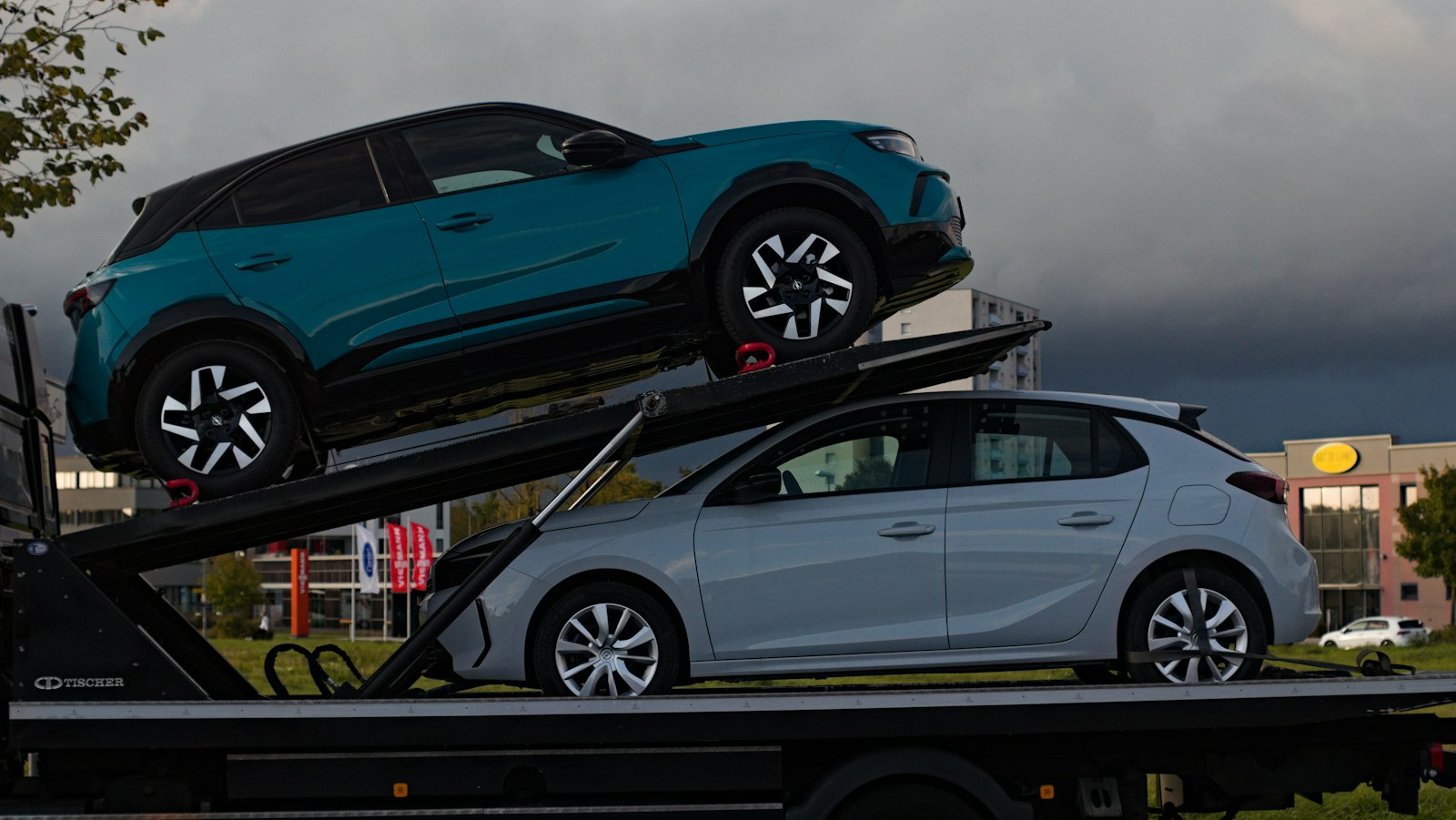
For most out-of-state purchases, shipping is the simplest option. A licensed carrier picks the car up from the dealer, private seller or auction yard and delivers it to your door.
- Confirm the pickup address, contact and hours with the seller.
- Request a quote with the vehicle details and whether it runs.
- Arrange payment to the seller and make sure the car will be released to the carrier.
- Ask the seller to be present for the pickup inspection, or authorize someone to release the car.
- Inspect the car carefully at delivery before signing.
Auction purchases often have strict pickup deadlines and storage fees, so book transport as soon as you win. For high-value classic or enthusiast cars from sites such as Bring a Trailer, consider enclosed car transport. For everyday cars, open car transport is the most affordable choice. See our car shipping cost guide for typical prices.
What to do when your car arrives
- Inspect the car with the driver in good light and compare it with the pickup report and the seller’s photos.
- Note any new damage on the bill of lading before you sign.
- Check the paperwork: make sure you have the signed title, bill of sale and any lien release.
- Test drive the car and check for warning lights, noises and leaks while any return or inspection window is still open.
- Register the car in your home state within its deadline. If you just moved, see our guides to moving with a car to New York, Texas and Florida.
- Schedule any required inspection in your state, such as an emissions or safety check.
- Book a maintenance visit with your own mechanic to start a fresh service record.
Ship your online car purchase with NIKI
NIKI Auto Transport is a licensed and bonded auto transport broker (USDOT 4535689, MC-1799148). We pick up cars from dealers, private sellers and auction yards nationwide and deliver them door to door, with a written price backed by NIKI’s Price Guarantee. Visit our car shipping for online car buyers page or request a quote on our car shipping quote page. You can also call (818) 732-1805.
Buying a car online is easier when you plan the purchase, the paperwork and the shipping together. These guides cover the next steps after you find the right car, from booking transport to meeting auction pickup deadlines and choosing the right type of carrier.
Related guides for online car buyers
- How to choose a car shipping company: checks to make before you book transport for your purchase
- Car shipping for auto auction buyers: meeting pickup deadlines and avoiding storage fees
- Car haulers and car carriers explained: open, enclosed and hotshot trucks
- Best states to buy a used car: where prices and selection may be better
Frequently asked questions
What is the best website to buy a used car?
It depends on how you want to buy. Autotrader, Cars.com and CarGurus have broad dealer and private inventory, Carvana and CarMax sell online with delivery options, and Bring a Trailer and Cars & Bids are popular for enthusiast cars.
Is it safe to buy a used car online?
Yes, if you use reputable sites, check the vehicle history, get an independent inspection, verify the title and seller, and never pay by wire transfer or gift card before seeing the car and title.
Can I buy a used car in another state?
Yes. You usually pay sales tax and register the car in your home state. Many buyers ship the car home instead of driving it.
How much does it cost to ship a car I bought online?
It depends on distance, vehicle size, open or enclosed transport and pickup location. Request a quote with the seller’s address and the vehicle details for an exact price.
What is AutoTempest?
AutoTempest is a car search aggregator that lets you search listings from many used car sites at once.
What are Bring a Trailer’s buyer fees?
Based on current published fees, Bring a Trailer charges buyers 5% of the final price, with a $250 minimum and a $7,500 maximum. Check the site for the latest fees before you bid.
Website features, fees and policies change. NIKI Auto Transport is not affiliated with any of the websites listed. Check each site’s current terms before you buy.