
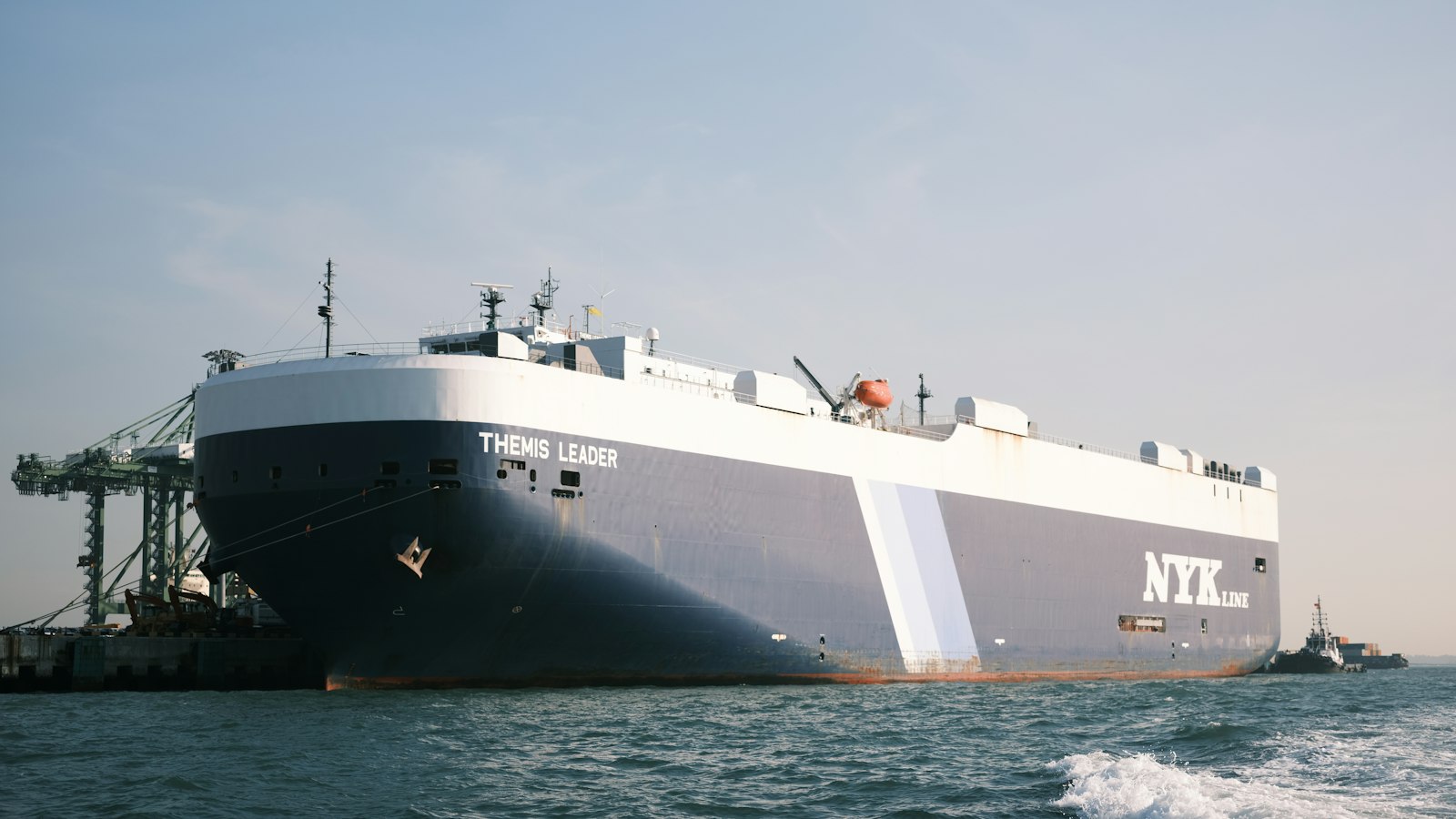
Shipping a car to another country is a chain of steps: a truck ride to a U.S. port, export paperwork with U.S. Customs, an ocean crossing by roll-on/roll-off ship or container, and customs clearance at the destination. This guide explains how international car shipping works in 2026, what it costs, which method to choose and which documents you need. It also explains where NIKI Auto Transport fits in: we pick up your car anywhere in the continental U.S. and deliver it to the export port or your freight forwarder before the cutoff.
Have your ocean booking already? Request a door-to-port quote on our car shipping quote page or call (818) 732-1805.
On this page
- How international car shipping works
- How much does it cost to ship a car overseas?
- RoRo or container: which shipping method?
- Documents for shipping a car internationally
- U.S. ports for international car shipping
- Destination costs: duties, taxes and rules
- How to prepare your car for international shipping
- How NIKI helps with international car shipping
- International car shipping FAQ
How international car shipping works
- Check the destination rules first. Many countries limit vehicle age, require emissions or safety approval, ban salvage vehicles or charge high duties. Confirm your car can be imported before you ship.
- Book the ocean shipment with an FMC-licensed freight forwarder, NVOCC or ocean carrier. They choose the port, sailing and method.
- Prepare your documents: the original title, a lienholder letter if the car is financed, the bill of sale and your ID.
- Ship the car to the port. NIKI picks it up at your home, dealership or auction and delivers it to the terminal or warehouse.
- Export filing: your forwarder files the export information with CBP at least 72 hours before export and presents the title.
- Ocean transit by roll-on/roll-off ship or container.
- Destination clearance: a customs broker clears the car, you pay duties and taxes, and the car is released for delivery or pickup.
How much does it cost to ship a car overseas?
Ocean freight for a standard sedan usually costs about $1,000 to $3,500, depending on the destination and the shipping method. Typical port-to-port ranges in 2026:
| Destination region | RoRo | Container | Typical ocean transit |
|---|---|---|---|
| Northern Europe (Germany, the Netherlands, Belgium) | $1,000–$1,800 | $1,100–$2,200 | 2–4 weeks |
| United Kingdom | $1,100–$1,900 | $1,100–$2,200 | 2–4 weeks |
| Middle East (UAE, Saudi Arabia) | $1,200–$2,000 | $1,100–$2,200 | 3–6 weeks |
| West Africa (Nigeria, Ghana) | $1,200–$2,500 | $1,500–$3,000 | 4–6 weeks |
| Caribbean and Central America | $1,000–$2,500 | $1,500–$3,500 | 1–3 weeks |
| South America | $1,500–$3,000 | $1,500–$3,500 | 2–5 weeks |
| Asia (Japan, Korea, the Philippines) | $1,500–$3,000 | $1,800–$3,500 | 3–6 weeks |
| Australia and New Zealand | $2,000–$3,500 | $2,200–$4,000 | 4–8 weeks |
Industry estimates for ocean freight only, port to port, for a standard running sedan. U.S. inland transport, export filing, marine insurance, destination port charges, customs brokerage, duties and taxes are extra. Your forwarder’s written quote is the final ocean price.
Add the cost of getting the car to the port. Inland transport to a U.S. port usually costs about $500 to $1,900, depending on distance. See car shipping to U.S. export ports and our detailed guide on how much it costs to ship a car overseas.
RoRo or container: which shipping method?
| Roll-on/roll-off (RoRo) | Shared container | Exclusive container | |
|---|---|---|---|
| How it works | The car is driven onto a vehicle deck | 2–4 cars share a 40-foot container | Your car alone in a 20- or 40-foot container |
| Cost | Usually lowest for one car | Low per car | Highest |
| Personal items | Usually not allowed | Sometimes, with limits | Often allowed, with a packing list |
| Protection | Good | Very good | Best |
| Non-running cars | Usually not accepted | Accepted | Accepted |
For a full comparison, read RoRo vs container car shipping.

Documents for shipping a car internationally
- Original title (or salvage certificate, or manufacturer’s certificate of origin for a new car)
- Lienholder letter authorizing export if the car is financed or leased
- Bill of sale for a recent purchase
- Passport or driver’s license of the owner
- EIN or other ID for the export filing, or a U.S. agent for foreign buyers
- Destination documents, such as import permits, residency papers or proof of ownership period for tax relief
U.S. Customs and Border Protection requires export information for every used self-propelled vehicle to be filed in the Automated Export System (AES) at least 72 hours before export, and penalties for late or missing filings can reach $10,000 per violation. See our step-by-step guide on how to export a car from the USA.
U.S. ports for international car shipping
- New York / New Jersey: Europe, the Middle East and West Africa
- Baltimore: Europe and West Africa
- Savannah and Brunswick, Georgia: West Africa, Europe and Latin America
- Houston: Latin America, West Africa and the Middle East
- Los Angeles and Long Beach: Asia, Australia and the Pacific
Destination costs: duties, taxes and rules
The ocean freight is often not the biggest cost. Most countries charge import duty, value-added tax (VAT) or both, based on the car’s value, age or engine size. People relocating may qualify for reduced duty if they have owned the car for a minimum period, but rules differ by country. Some countries also require the car to meet local emissions or safety standards, or limit how old an imported car can be. Always check with the destination’s customs authority or a local customs broker before you ship.
How to prepare your car for international shipping
- Wash the car inside and out, including the underside. Some countries inspect for soil and pests.
- Leave no more than a quarter tank of fuel.
- Remove personal items unless your forwarder allows them in a container.
- Take dated photos and record the mileage.
- Make sure the battery is charged and the car runs, especially for RoRo.
- Tell your forwarder if the car is electric or a plug-in hybrid. Lithium batteries can require special handling.
- Buy marine cargo insurance. Ocean carriers limit their liability.
How NIKI helps with international car shipping
NIKI Auto Transport is a licensed and bonded auto transport broker (USDOT 4535689, MC-1799148) for transport within the United States. We pick up your car from your home, a dealership, a private seller or an auction and deliver it to the export terminal or your forwarder’s warehouse, on time for the cutoff. The ocean shipment is booked with an FMC-licensed ocean transportation intermediary (a freight forwarder or NVOCC) or directly with an ocean carrier; we do not book ocean freight or file export documents ourselves. Ask your forwarder for the delivery instructions, then request a door-to-port quote.
- Auction car shipping to export ports for Copart and IAA buyers
- Military car shipping, including a second car for an overseas move
- Puerto Rico, Hawaii and Alaska car shipping, which are domestic shipments
International car shipping FAQ
How much does it cost to ship a car internationally?
Ocean freight for a sedan usually costs about $1,000 to $3,500 port to port, depending on the destination and method. Add U.S. inland transport to the port, insurance, destination port fees, duties and taxes.
How long does international car shipping take?
Ocean transit takes about 1 to 8 weeks, depending on the destination. Including transport to the port, the 72-hour export filing and destination customs, plan for about 4 to 10 weeks in total.
What is the cheapest way to ship a car overseas?
Roll-on/roll-off is usually the cheapest option for one running car. A shared container can also be affordable if several cars are going to the same destination.
Do I need the original title to ship a car overseas?
Yes. U.S. Customs requires the original title or other proof of ownership, and the export information must be filed at least 72 hours before export.
Can I ship personal items in my car overseas?
Usually not on a RoRo ship. In an exclusive container, many forwarders allow personal items with a packing list, but destination customs may charge duty on them.
Does NIKI ship cars internationally?
NIKI arranges the U.S. truck transport to the export port or forwarder warehouse. The ocean leg is booked with an FMC-licensed freight forwarder, NVOCC or ocean carrier.