Door-to-Door Auto Transport Coordinated Around Your Route
NIKI coordinates open and enclosed vehicle shipping from Arizona to Texas through licensed and insured motor carriers. Build your plan around the exact ZIP codes, vehicle, condition, access and first available date.
Vehicle delivery photography for NIKI Auto Transport.
Route overview
Distance, Transit Time and Current Pricing
Plan your Arizona to Texas vehicle shipment with broad route guidance, then request a live quote based on exact ZIP codes, vehicle details, condition and first available date.
5-Star RatingCustomer-focused service and communication.20 Years in BusinessAuto transport experience since 2006.Thousands of Happy CustomersNationwide vehicle-shipping support.
Experience and federal authority
20 Years of Auto Transport Experience, Backed by Verifiable Registration
NIKI Auto Transport combines long-term vehicle-shipping experience with active federal property-broker authority. NIKI arranges transport; the assigned licensed and insured motor carrier physically moves the vehicle.
20+20 Years of ExperienceAuto transport experience serving customers since 2006.FFMCSA Registered BrokerFederal property-broker registration is maintained by NIKI Auto Transport LLC.USUSDOT RegisteredFederal registration is maintained for NIKI Auto Transport LLC.✓Federal Broker AuthorityAuthorized broker of property, excluding household goods.
The route is about 700–1,100 miles. The exact trip changes with the pickup and delivery cities, carrier lane, weather, traffic and legally available roads.
Arizona shipments include household relocations, seasonal residents, university moves, online purchases and vehicles moving between major Southwest markets. At the pickup end, Phoenix and Tucson support frequent long-haul carrier movement, while northern mountain towns and rural desert addresses can require extra repositioning.
Texas generates year-round vehicle shipping through household moves, energy and technology jobs, military bases, dealerships and long-distance relocations. At delivery, Major metro areas support high carrier volume, but Texas distances are large and a border, Panhandle or rural address can add substantial repositioning.
A shipment between Phoenix and Houston is not identical to a move from Flagstaff to Fort Worth. The carrier may travel hundreds of additional local miles, cross toll facilities or schedule stops in a different order. NIKI uses full ZIP codes and vehicle details to evaluate the real lane instead of quoting from two state centroids.
Door-to-door coordination does not require a driver to enter an unsafe or restricted street. Auto carriers are long, tall and slow to turn. When direct access is not practical, the pickup contact and carrier choose a nearby commercial lot, dealership, truck stop or wide public street where inspection and loading can occur safely.
What shapes the shipment
Key Arizona to Texas Route Factors
Distance
The broad route is about 700–1,100 miles. Exact mileage changes with the pickup and delivery cities, commercial-truck access, legal roads and the carrier’s scheduled stops.
Route
Common corridors can involve I-10, I-17, I-40 and I-8 at origin and I-10, I-20, I-30, I-35 and I-45 near delivery. Rural detours, toll facilities and restricted streets can change the plan.
Season
Extreme summer heat, monsoon storms, winter conditions near Flagstaff and fall or spring snowbird volume can affect availability. Extreme heat, Gulf storms, flash flooding, winter ice events and major-city congestion can influence timing. Weather and one-way demand can affect pickup availability, transit estimates and live carrier pricing.
Vehicle Type
Sedans, SUVs, pickups, low-clearance vehicles and inoperable units use different trailer space or loading equipment. Accurate dimensions and condition prevent failed pickups.
Ready to Ship a Car from Arizona to Texas?
Get current route pricing based on the exact ZIP codes, vehicle, condition, trailer preference and first available pickup date.
A useful quote is specific to the shipment. NIKI does not publish a made-up guaranteed price that ignores the ZIP codes, equipment, date and current market.
01
Exact pickup and delivery ZIP codes
The carrier evaluates real travel to each address, not the geographic center of Arizona or Texas. Locations close to active lanes can be easier to combine with other vehicles.
02
Vehicle size, clearance and condition
A sedan, oversized SUV, lifted pickup, low-clearance collector car and inoperable vehicle use different space or loading equipment. Accurate details prevent a failed pickup.
03
Open or enclosed equipment
Open carriers offer the broadest availability for everyday vehicles. Enclosed trailers add a covered environment and commonly cost more because the equipment is specialized.
04
Timing, direction and carrier capacity
Fuel, season, weather, route direction and the number of suitable trucks near the origin influence a current quote. A flexible window normally provides more dispatch options.
Rate changes are not necessarily random. A carrier already scheduled near Phoenix may have room toward Houston, while a truck would need a substantial empty detour for a remote pairing. A wider pickup window can make it easier to match your vehicle with a compatible route. Very limited dates, enclosed equipment or special loading requirements narrow the carrier pool.
Ask what the quote includes, provide honest operability information and review the dispatch terms before booking. If a vehicle is modified, lowered, lifted, oversized or unable to roll, steer and brake, describe it before a price is finalized. Photographs and measurements can help identify the correct equipment.
Prices and dates remain estimates until shipment details and carrier availability are confirmed. No web page can guarantee every city pair at one rate.
How Long Does Arizona to Texas Auto Transport Take?
After pickup, about 2–4 carrier travel days is a broad planning reference. Dispatch time is separate from carrier travel time.
about 700–1,100 milesBroad route distance
about 2–4 carrier travel daysGeneral post-pickup transit
Estimated, not guaranteedTraffic, weather and prior stops matter
Dispatch is the period used to identify a suitable motor carrier and confirm pickup. Transit begins only after the vehicle is loaded. A seven-day travel estimate does not mean the truck automatically arrives seven days after the order is submitted. The driver must comply with hours-of-service rules and may be transporting several vehicles on a compatible route.
Pickup order, delivery order, road closures, inspections, mechanical issues, severe weather and customer availability can change the schedule. The carrier typically narrows the estimated arrival as the truck gets closer. Keep both contact phones active and avoid booking a flight, hotel checkout or other time-sensitive event without a reasonable cushion.
Door-to-Door Car Shipping from Arizona to Texas
The carrier coordinates pickup and delivery as close to each supplied address as safe and legal access permits.
At the Arizona end, major corridors include I-10, I-17, I-40 and I-8. Resort entrances, gated communities, apartment drives and low desert landscaping may require a nearby open loading area. Share gate codes, receiving hours, parking limits, construction notices and any road that a commercial truck cannot use. If a dealership or auction is releasing the vehicle, confirm the stock number, buyer number, gate pass and business hours before dispatch.
At the Texas end, routes commonly involve I-10, I-20, I-30, I-35 and I-45. Gated communities, ranch roads, construction zones and dense urban streets may require a safer meeting location. The receiving adult should be available by phone, understand the inspection process and have authority to sign the delivery bill of lading.
Door-to-door service is a coordination standard, not a promise to stop directly in front of a home. Low branches, narrow turns, parked cars, bridge limits, school zones, private-road rules and soft shoulders can make another location safer. Selecting that location before the truck arrives protects the vehicle, the carrier and surrounding property.
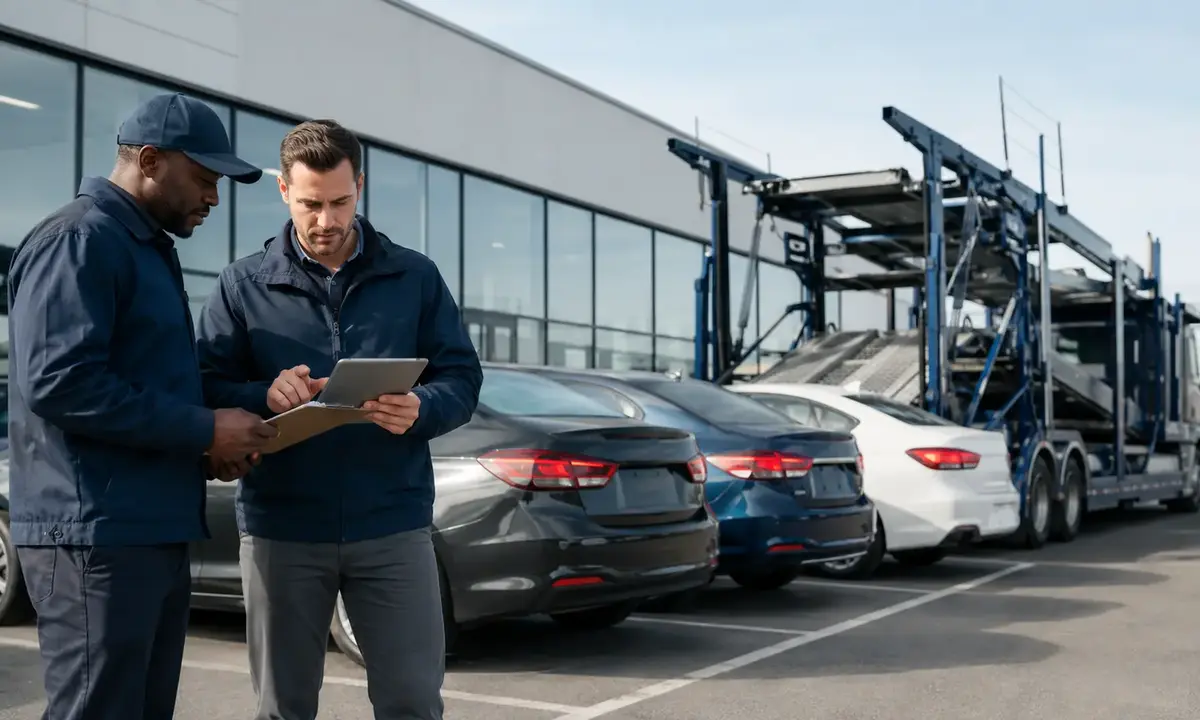
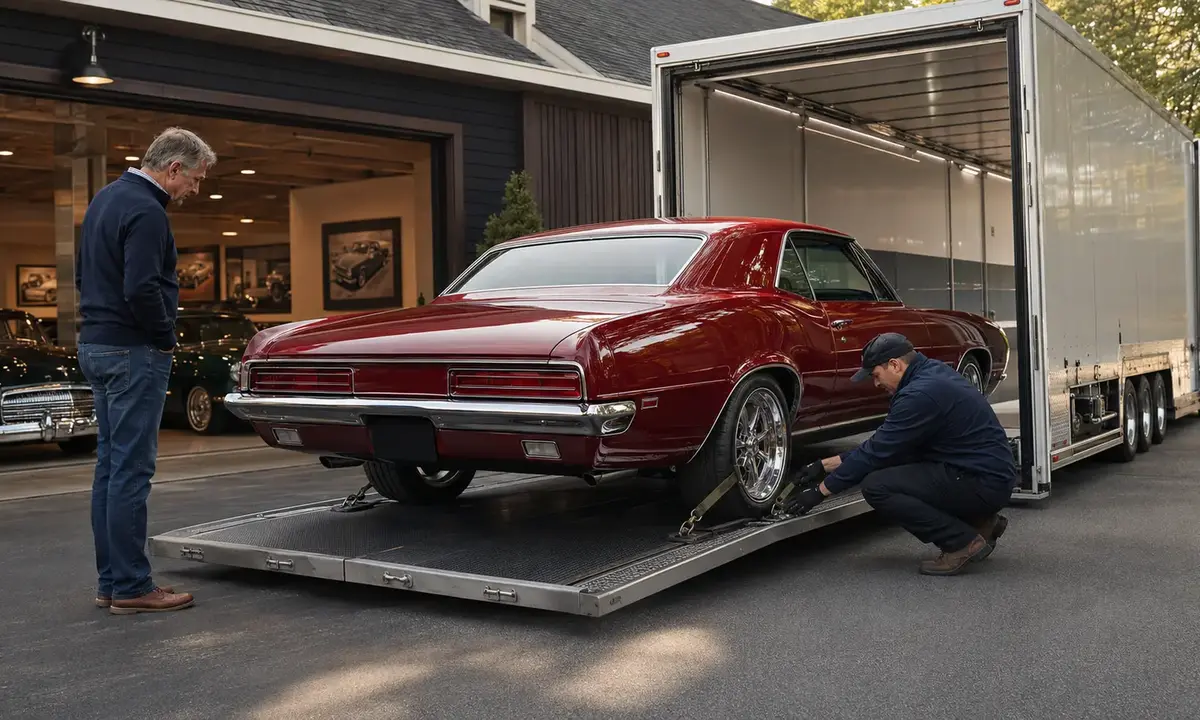
Real open auto carrier photograph.Real enclosed auto transport photograph.
How Does Arizona to Texas Car Shipping Work?
Four clear stages keep the route, equipment, inspection and contacts organized.
1
Request a route-specific quote
Provide both ZIP codes, vehicle year, make and model, running condition, modifications, service preference and first available pickup date. This creates a meaningful Arizona to Texas request.
2
Confirm contacts, access and schedule
Review the pickup and delivery contacts, address restrictions and realistic date window. NIKI coordinates the order through a licensed and insured motor carrier with suitable equipment and route availability.
3
Prepare and inspect at pickup
Clean the vehicle, remove loose or valuable items, leave roughly one-quarter tank of fuel, photograph all sides and provide one working key. The carrier and responsible adult document condition on the bill of lading.
4
Inspect before signing at delivery
Keep the receiving phone available as the truck approaches. Compare the vehicle with pickup photos and the original inspection before signing the delivery bill of lading.
Open vs. Enclosed Auto Transport
Select the trailer for the vehicle’s needs and your protection preference, not only for the lowest displayed number.
Open Car Transport
Open carriers are the most common option for standard sedans, SUVs, crossovers and pickups. Several vehicles share compatible trailer space, which supports broad lane coverage and practical value.
The vehicle is exposed to the normal highway environment, similar to driving it on the road, while secured to purpose-built equipment. Pickup and delivery inspections remain important.
Enclosed trailers add walls and a roof around the shipment. Customers commonly request them for classic, exotic, luxury, restored, rare or especially low-clearance vehicles.
Equipment is more specialized and normally costs more. Share clearance, modifications and photographs so an appropriate loading method can be evaluated.
When the available dates are narrow, NIKI can review faster pickup options against current carrier capacity. Expedited service affects price and still depends on safe equipment and a feasible route.
Tell the coordinator the real deadline before booking. A carrier cannot safely or legally guarantee a schedule that ignores traffic, weather and driving-hour rules.
A non-running vehicle can often be moved when it rolls, steers and brakes and a winch-equipped carrier is available. A locked wheel, seized brake or missing part can require different equipment.
Describe the actual condition before dispatch. An inaccurate operability statement can cause a failed pickup, added cost or delay.
Carrier access is generally strongest near Phoenix, Tucson, Mesa and Houston, Dallas, Austin. Service can be coordinated beyond those metros, but mountain communities, rural counties, islands, gated areas and dense city neighborhoods may need more lead time or a safe meeting location.
Do not choose a route based only on the closest interstate shown on a map. Drivers consider legal commercial routes, bridge and weight restrictions, pickup order, delivery order, weather and the locations of other vehicles on the trailer. NIKI communicates the specific addresses so the assigned carrier can plan realistically.
Seasonal Planning for the Arizona–Texas Route
At origin, Extreme summer heat, monsoon storms, winter conditions near Flagstaff and fall or spring snowbird volume can affect availability. At destination, Extreme heat, Gulf storms, flash flooding, winter ice events and major-city congestion can influence timing.
Seasonal demand can change in both directions. A lane may have many vehicles moving one way and fewer returning the other way, which affects how quickly a carrier can build a practical load. Holidays, school calendars, snowbird peaks and major regional events can also reduce available equipment.
Flexible dates help, but flexibility should be truthful. Provide the first day the vehicle can actually be released and disclose the final acceptable date. If a trusted relative, friend, dealership or facility can meet the carrier, add that person’s name and phone number before dispatch. Good contact information prevents the driver from arriving without an authorized adult.
Weather delays are handled for safety. A driver may slow down, reroute or wait when roads are unsafe. That decision protects the vehicle and other road users. Continue to treat arrival times as estimates and keep communication open as the truck approaches.
How to Prepare a Vehicle for Interstate Shipping
Wash the exterior enough to make existing marks visible, then photograph the front, rear, both sides, roof, wheels and interior in good light. Save the dated images. Remove valuables, toll tags, loose accessories and detachable equipment. Fold mirrors when appropriate, check tire pressure, confirm the battery is secure and identify leaks.
Leave roughly one-quarter tank of fuel unless the assigned carrier or ocean terminal gives a different instruction. Too much fuel adds weight, while too little can make loading difficult. Disable alarms and provide one working key. Do not assume household belongings are permitted; personal property is generally not treated as insured vehicle cargo, and carrier rules vary.
Tell NIKI if the vehicle is modified, oversized, lifted, lowered, inoperable or has unusually low ground clearance. Share dimensions and photographs. A vehicle described inaccurately may not fit the assigned trailer or loading angle.
Confirm both ZIP codes and contact names
Remove loose or valuable items
Take dated pickup photographs
Leave about one-quarter tank of fuel
Provide one working key
Disclose leaks and mechanical limits
Discuss gates, low trees and narrow roads
Keep the bill of lading
Pickup and Delivery Inspections
At pickup, the carrier and responsible adult review the vehicle and record its condition on the bill of lading. Read the document before signing and keep a copy. The photographs supplement the written inspection but do not replace it.
At delivery, inspect the vehicle before signing the final bill of lading. Compare it with the pickup photos and condition notes. If there is a concern, write it on the delivery document while the carrier is present, take clear photographs and keep all paperwork. Signing without reviewing the vehicle can make later documentation more difficult.
Why Choose NIKI for Arizona to Texas Vehicle Shipping?
NIKI Auto Transport focuses on accurate shipment details, realistic communication and equipment-matched coordination. We arrange transportation through licensed and insured motor carriers rather than claiming that every truck or driver is owned by NIKI. The assigned carrier performs the physical transport and completes the pickup and delivery inspections.
The most useful questions are practical: Is the vehicle operable? Does it have low ground clearance? Can both addresses accommodate a long trailer? How flexible are the dates? Does the customer prefer open or enclosed equipment? Are there gate, auction, dealership or terminal rules? Addressing those points early creates a more dependable dispatch plan.
No company can honestly promise an exact nationwide rate or delivery moment without live shipment details and carrier confirmation. NIKI uses the information you provide to explain the variables, coordinate a suitable option and keep the process straightforward from quote through delivery.
For a personalized estimate, use the quote form or call (818) 732-1805. The full ZIP codes, exact vehicle, running condition and first available date allow the team to review current capacity on the Arizona to Texas lane.
Answers about price, timing, trailer choice, access, preparation and inspection.
How much does Arizona to Texas car shipping cost?
The price depends on the exact ZIP codes, vehicle size and condition, open or enclosed service, dates, route direction and current carrier capacity. A live NIKI quote is more useful than a fixed statewide average.
How far is the Arizona to Texas route?
The route is about 700–1,100 miles, depending on the exact cities and carrier routing. Mileage is only one part of the quote because local pickup and delivery access also matter.
How long does car shipping from Arizona to Texas take?
After pickup, about 2–4 carrier travel days is a broad planning reference. Dispatch time is separate, and weather, traffic, legal driving hours, terminal schedules and prior stops can change the estimate.
Is door-to-door vehicle shipping available?
Yes, NIKI coordinates service as close to the supplied addresses as safely and legally possible. The assigned carrier may suggest a nearby open area when a street, gate, bridge, tree or turn is unsuitable for a long trailer.
Should I choose open or enclosed transport?
Open transport is commonly selected for standard daily drivers and offers the broadest availability. Enclosed service adds protection from outside exposure and is often requested for classic, luxury, exotic, restored or low-clearance vehicles.
Can an inoperable vehicle be shipped on this route?
Often yes, if it rolls, steers and brakes and a suitable winch-equipped carrier is available. The exact mechanical condition must be disclosed before pricing and dispatch.
How early should I schedule the shipment?
One to three weeks is helpful for many standard moves. More lead time is recommended for remote addresses, enclosed equipment, peak seasons, inflexible dates or an ocean segment.
What should I remove before pickup?
Remove valuables, toll tags, loose accessories and personal items that are not expressly accepted by the carrier. Personal property is generally not treated as insured vehicle cargo.
What happens during the pickup inspection?
The carrier and pickup contact note the vehicle condition on the bill of lading. Take clear dated photos, keep a copy of the document and repeat the inspection before signing at delivery.
Does NIKI own the truck that transports my vehicle?
NIKI coordinates transportation through licensed and insured motor carriers. The assigned carrier performs the physical transport and documents pickup and delivery on the bill of lading.
Get a Personalized Arizona to Texas Car Shipping Quote
Share the exact ZIP codes, vehicle, condition and first available date for a route-specific estimate.